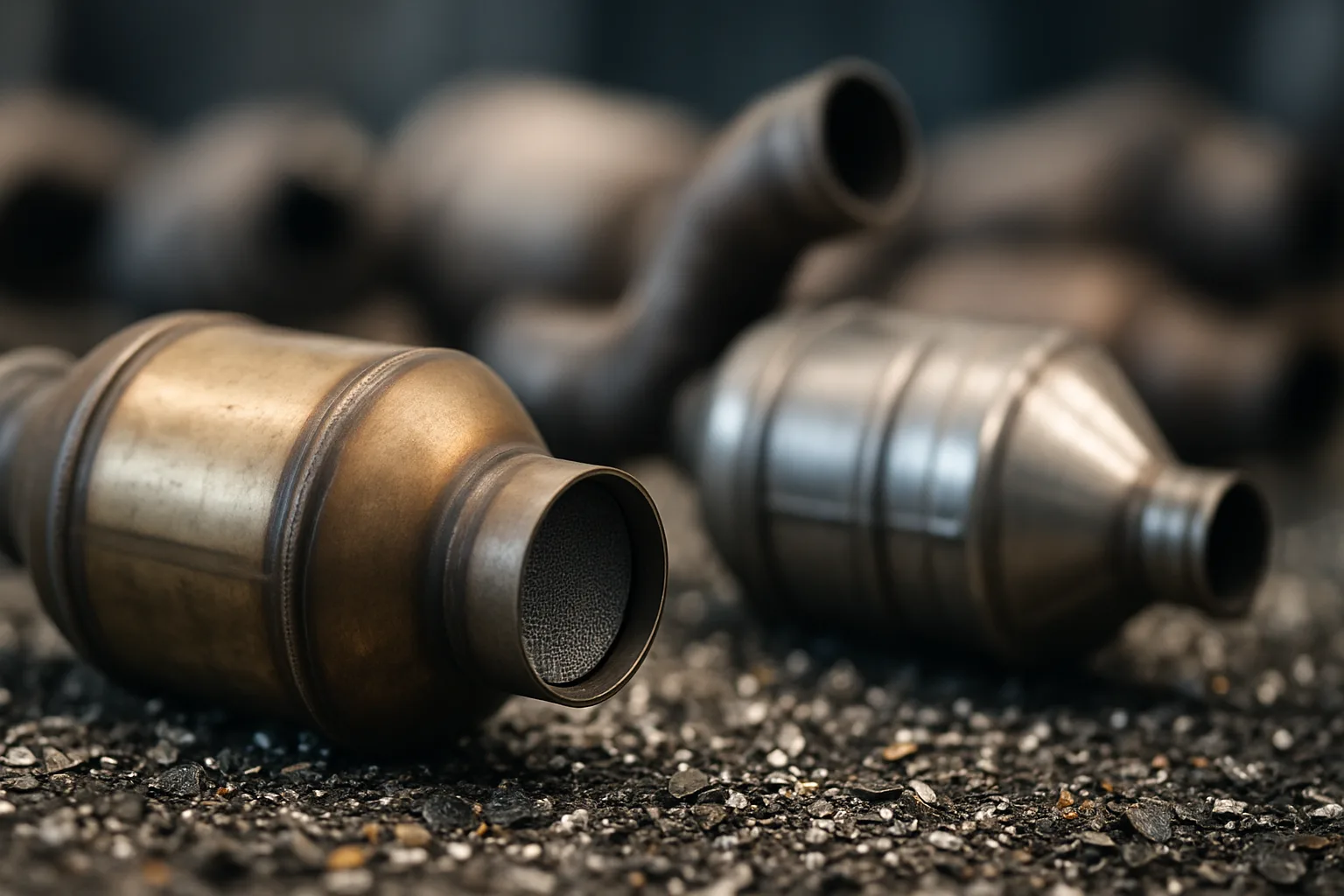
OEM vs Aftermarket Catalytic Converters: Why Your Scrap Cat Value Isn't What You Think
Most sellers walk into a scrap yard assuming every catalytic converter is worth roughly the same. They're wrong — sometimes by hundreds of dollars. The difference between an OEM (original equipment manufacturer) unit and an aftermarket replacement can swing your catalytic converter scrap value dramatically, and most people selling in Yorkton and across Saskatchewan don't know why. Understanding what's actually inside your converter before you sell is how you stop leaving money on the table.
This guide breaks down exactly why OEM and aftermarket cats price out so differently, what buyers are actually paying for, and how to make sure you're getting a fair return — whether you've got one unit or a full load.
What Buyers Are Actually Paying For: Precious Metal Content
When a buyer quotes your catalytic converter, they're not pricing the steel shell. They're pricing what's inside the ceramic or metallic substrate — specifically the platinum group metals (PGMs): platinum, palladium, and rhodium. These are the active catalysts that neutralize harmful exhaust emissions. They're also among the most valuable metals on the periodic table.
Palladium in particular has seen significant price volatility in recent years, and the palladium price today directly impacts what a buyer will pay for any cat containing it in meaningful quantities. Rhodium, despite lower volumes, can represent the single largest dollar contribution in a high-grade OEM unit. When market prices for these metals shift, converter values shift with them — sometimes overnight.
- Platinum (Pt): Common in older diesel-era converters and some OEM units
- Palladium (Pd): Dominant in modern gasoline vehicle converters, especially OEM
- Rhodium (Rh): Present in small amounts but often the highest-value metal per gram
A legitimate buyer assays the substrate to determine actual PGM loading — the grams of each metal per unit. That number is what drives price. Everything else is secondary.
OEM Catalytic Converters: Higher Loading, Higher Scrap Value
OEM converters are built to meet strict emissions standards set by the vehicle manufacturer and regulatory bodies. To do that reliably over the life of the vehicle — often 160,000 km or more — they need a higher PGM loading. More precious metal means more catalytic activity, more durability, and, critically for you, more scrap value.
A factory-installed converter from a late-model North American vehicle can carry significantly more palladium and rhodium loading than a budget aftermarket replacement. This isn't a marginal difference. Depending on the vehicle, an OEM cat can be worth multiple times what a comparable aftermarket unit fetches at assay. Full-size truck and SUV OEM units — the kind of vehicles common to farm country and communities like Yorkton — tend to sit at the higher end of the value range because of their larger substrate volume and higher PGM loadings.
If you're pulling cats off fleet vehicles, work trucks, or full-size SUVs, there's a good chance you're holding OEM units. That matters. Don't quote yourself short.
Aftermarket Catalytic Converters: Lower PGMs, Lower Prices — But Not Zero Value
Aftermarket converters serve a legitimate purpose: they're cheaper replacements that still pass emissions testing. To hit that lower price point, manufacturers use less precious metal. The substrate may be lower-density ceramic, the PGM wash coat thinner, and the ratio of metals different from the OEM specification.
That doesn't mean aftermarket cats are worthless as scrap — they're not. They still contain recoverable PGMs. But the spread between an OEM unit and a budget aftermarket replacement can be significant enough that misidentifying one as the other seriously impacts your return. A buyer with proper assay data will pay you accordingly. A buyer guessing on sight may underpay you on OEM units or overpay on aftermarket ones — and that second scenario doesn't stay in practice long for anyone running a real operation.
The problem for most sellers is that OEM and aftermarket units can look nearly identical from the outside. Same shape, similar weight, same heat shield markings. The difference lives inside the substrate — which is exactly why documentation, serial tracking, and working with buyers who know their assay data matters so much when you sell catalytic converters online or through any competitive channel.
How to Identify What You Have Before You Sell
Proper identification before you sell is the single most important step to maximizing your catalytic converter scrap value. Here's what actually helps:
- Serial numbers and part stamps: OEM units typically carry manufacturer serial numbers, part numbers, or vehicle-specific stamps. Photograph these before anything else. They're your primary identification tool.
- VIN lookup: If you know the vehicle the converter came off, a VIN lookup can confirm whether it was factory-equipped or a previous replacement. Platforms like SMASH use VIN lookup tools specifically for this reason — it removes guesswork from the equation.
- Weight and substrate density: OEM units often weigh more. Not always, but it's a starting data point. A digital scale and a reference guide gets you in the right ballpark.
- Photo documentation: Clear images of the unit from multiple angles, including the serial plate and substrate opening if visible, give buyers the information they need to quote accurately. Vague photos produce vague quotes.
- Foil vs. ceramic substrate: Some OEM units use metallic foil substrates instead of ceramic honeycomb. These process differently and price differently. Know what you're looking at.
If you're selling in Saskatchewan and regularly handling mixed loads — some OEM, some aftermarket — separating and documenting them before you go to market will almost always produce better outcomes than lumping everything together at a single average price.
Sell Catalytic Converters Saskatchewan: Why Local Competition Matters
If you've been selling to a single local buyer and accepting whatever price they quote, you're not discovering the market — you're accepting one person's interpretation of it. That's a meaningful distinction. When only one buyer sees your inventory, competition doesn't exist. When multiple vetted buyers see it, you find out what it's actually worth.
This is especially relevant if you're based in a smaller market. Yorkton scrap metal services connect sellers to buyers beyond the local area, which means you're not limited to whatever the nearest yard happens to be paying this week. Saskatchewan sellers who move to a competitive format — where multiple buyers bid on documented inventory — often discover the gap between what they were accepting and what the market will actually pay.
Platforms like SMASH Recycling — where verified buyers bid on your metal exist precisely because this gap is real and widespread. The auction format creates actual competition. More buyers seeing the same documented load means better price discovery. It's not complicated — it's just how markets work when they're functioning properly.
To get a fair price for your scrap catalytic converters in Canada, you need buyers competing for your inventory, not a single quote you accept because it's the only one available.
Using SMASH to Maximize Your Scrap Cat Return
SMASH is built for exactly this situation. You document your inventory — serial numbers, photos, VIN data where available, substrate type — and vetted buyers compete for it through an auction format. No subscription fees. No guessing. The platform handles auto-invoicing, packing list generation, and the documentation chain that serious buyers require. SMASH only wins when you win. That alignment matters.
For yards and sellers in Yorkton and across Saskatchewan handling a mix of OEM and aftermarket units, this kind of structured, documented process is the difference between reactive selling and actually running your scrap cat business like a business. If you're ready to find the best scrap cat prices in Canada, the first step is making sure buyers can see exactly what you have — and compete for it.
The Canadian scrap catalytic converter guides on the blog cover more detail on specific units, precious metal market conditions, and how to prepare your inventory for sale. Worth reading before your next load goes out.
Disclaimer: Catalytic converter prices fluctuate with precious metal markets including platinum, palladium, and rhodium. Always check current rates before selling. The values referenced in this article are general in nature and not a guarantee of specific pricing.
Frequently Asked Questions
Q: How do I know if my catalytic converter is OEM or aftermarket?
Look for a manufacturer serial number or part stamp on the converter body — OEM units almost always have them. If you know the vehicle it came from, a VIN lookup can confirm whether it's factory-original or a replacement. Aftermarket units often carry generic part numbers from brands like Walker, Magnaflow, or Eastern Catalytic rather than OEM vehicle manufacturer codes.
Q: Why is the catalytic converter scrap value so different between similar-looking units?
The visible steel shell tells you almost nothing about value. What matters is the precious metal loading inside the substrate — the grams of platinum, palladium, and rhodium per unit. OEM converters are built with higher PGM loading to meet long-term emissions standards. Aftermarket units use less precious metal to hit a lower retail price point. Same exterior appearance, very different assay results.
Q: Can I sell catalytic converters online from Saskatchewan?
Yes. Platforms designed for competitive converter sales allow you to document your inventory and reach vetted buyers across North America, not just your local market. This is particularly useful if you're in a smaller centre like Yorkton, where local buyer options may be limited. Proper documentation — serial numbers, clear photos, VIN data — is what makes remote selling work effectively.
Q: Does the palladium price today affect what I get paid for my scrap cats?
Directly, yes. Palladium is one of the primary PGMs in modern gasoline vehicle converters, and its spot price on the metals market is a key input in what buyers are willing to pay. When palladium prices rise, converter values typically rise with them. When prices fall, so does your payout. Checking current precious metal spot prices before you sell gives you a realistic benchmark for evaluating any offer.
Q: Is there a catalytic converter price list I can reference to check my unit's value?
General reference guides and price lists exist — some buyers publish them for common OEM units identified by serial number or part code. These can give you a directional sense of value, but they're not a substitute for a current quote based on actual assay data and live metal prices. Use price lists as a starting point for comparison, not as a final answer. Working with multiple buyers through a competitive format gives you a more accurate real-world picture than any static list.
When you're ready to stop guessing and start getting competitive offers on your inventory, best-scrap-cat-prices.ca is where Canadian sellers go to find out what their cats are actually worth. Get a free quote and let the market do its job.
Stay current on scrap metal market trends and catalytic converter pricing shifts — follow SMASH on LinkedIn for industry updates and insights that actually help you sell smarter.