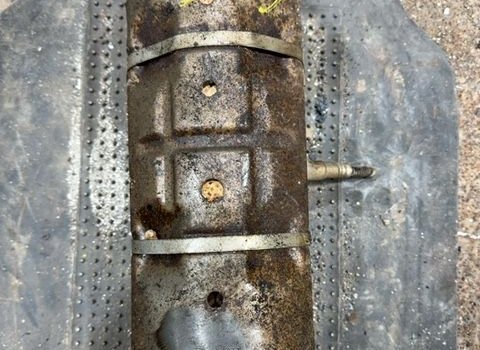
Rhodium Is Worth More Than Gold — Here's Why It Dominates Catalytic Converter Scrap Value
Most scrap sellers know catalytic converters are worth money. Fewer know why — and understanding that difference can put real dollars in your pocket. The short answer: rhodium. This metal is rarer than platinum, more expensive than gold, and it lives inside the converter sitting in your parts bin right now. Knowing how rhodium drives catalytic converter scrap value isn't trivia. It's the foundation of every smart selling decision you make.
If you're in Montreal or anywhere across Quebec offloading cats without understanding what's inside them, you're negotiating blind. This article fixes that.
What Makes Rhodium So Valuable Inside a Catalytic Converter
Rhodium is a platinum-group metal (PGM) — and it does something no other metal does as efficiently: it neutralizes nitrogen oxide emissions. Regulations in Canada, the U.S., and Europe demand that vehicles cut NOx output to near zero. Rhodium is the primary tool for that job. Without it, a catalytic converter fails emissions standards. There is no cheap substitute.
That functional irreplaceability is what drives the price. Rhodium supply is extraordinarily limited. It doesn't exist in standalone deposits — it comes almost entirely as a byproduct of platinum and palladium mining, primarily from South Africa and Russia. Global production runs in the tens of thousands of kilograms per year. Demand, meanwhile, keeps climbing as vehicle emissions regulations tighten across every major market.
Here's what the PGM breakdown typically looks like inside a standard catalytic converter:
- Platinum — oxidizes hydrocarbons and carbon monoxide
- Palladium — handles additional oxidation, particularly in gasoline engines
- Rhodium — the NOx reducer; present in smaller quantities but often the highest-value component gram for gram
The actual amounts vary significantly by vehicle make, engine type, and model year — but rhodium consistently punches above its weight in terms of value contribution. That's why two converters that look identical on a pallet can be worth completely different amounts. The substrate content is what matters, not the shell.
Palladium Price Today and How It Competes With Rhodium
Rhodium holds the crown, but palladium is a serious contender. Over the past several years, palladium has surged dramatically — at points trading higher than platinum and attracting the kind of attention that used to be reserved for gold. As of 2026, palladium prices remain volatile, driven by ongoing supply constraints from Russian mining operations and steady demand from gasoline engine manufacturers who lean heavily on palladium-rich converter formulations.
What this means practically: if you're selling cats from gasoline-powered passenger vehicles built in the last decade, palladium content is a major component of your payout. High-mileage converters from popular sedans and crossovers often carry meaningful palladium loads. Diesel converters tend to be more platinum-heavy with lower palladium and rhodium content — which is part of why diesel cats are priced differently than their gasoline counterparts.
The takeaway is simple. Palladium price today directly affects what you get paid for a load of cats. Buyers who quote flat rates without referencing PGM spot prices are either uninformed or hoping you are. Either way, you're not getting a fair shake. Platforms that create real competition — like SMASH — force buyers to price based on actual market conditions, not whatever they think they can get away with.
Why Catalytic Converter Scrap Value Varies So Dramatically Between Units
Walk into any recycling yard in Montreal and you'll see converters stacked with prices that seem arbitrary. They're not. The variation comes from a handful of measurable factors, and once you understand them, the numbers make sense.
Vehicle type and engine size matter enormously. A large V8 truck converter carries more substrate — more PGM-coated surface area — than a compact four-cylinder unit. Larger converters aren't just heavier; they often hold significantly more precious metal content.
OEM versus aftermarket is another key distinction. Original equipment manufacturer converters are loaded with PGMs by design to meet factory emissions specs. Aftermarket units, especially cheap replacements, use far less precious metal to keep costs down. An aftermarket cat might look identical to an OEM unit on the outside. The scrap value can be a fraction of the original.
Condition of the substrate also affects value. Converters that have been overheated, flooded with coolant, or physically damaged can have degraded or melted substrate. Less intact substrate means less recoverable PGM — and a lower payout.
This is exactly why a used catalytic converter price lookup tool is worth using before you sell. Knowing the serial number, VIN, or manufacturer codes on a converter gives you a baseline for what it should be worth. Walking into a negotiation with that data changes the conversation entirely. You're not guessing. You're quoting.
How to Sell Catalytic Converters in Quebec Without Leaving Money Behind
The old playbook in Quebec — and everywhere else in Canada — was to call one buyer, take the quote, and move on. For low-value material, that's fine. For cats loaded with rhodium and palladium? That approach is expensive. A single buyer has no incentive to give you their best number when they know you're not shopping the load.
That's where competition changes everything. When multiple vetted buyers see your inventory and bid against each other, price discovery happens. You find out what the market actually thinks your load is worth — not what one buyer decided to tell you over the phone on a Tuesday morning.
For yards and sellers looking to sell catalytic converters in Quebec, the process doesn't have to be complicated. Document your load with photos. Record serial numbers and any identifiable codes. Use a catalytic converter scrap price lookup tool to establish a baseline. Then put that load in front of multiple buyers simultaneously. Platforms like SMASH make this straightforward — vetted buyers, competitive bids, and no subscription fees eating into your margin before you've moved a single unit.
Montreal's scrap market is active. There's real demand for quality cat loads from buyers who process PGMs seriously. The question isn't whether there's a buyer — it's whether you're reaching enough of them to get a fair price. If you want to get a fair price for your scrap catalytic converters in Canada, the answer is almost always more competition, not more phone calls to the same three contacts.
You can also tap into local support — Montreal scrap metal services connect Quebec sellers with buyers who understand the local market and the PGM value in your load.
Documenting Your Load: Why It Directly Impacts Your Payout
Here's something most casual cat sellers don't know: how you document a load affects what buyers will pay for it. A pallet of converters with clear photos, serial numbers, and accurate counts signals to serious buyers that you're a professional seller. It reduces their risk. Lower risk means they can bid more aggressively.
A pile of converters with no documentation, mixed types, and unclear photos tells a buyer to price in uncertainty — which means pricing down. They don't know what's in the pile. They'll bid accordingly.
The mechanics of good cat documentation aren't complicated:
- Photograph each unit — top, bottom, and the code stamped on the body
- Record serial numbers where visible — these connect to known PGM content data
- Separate OEM from aftermarket — mixed loads get valued at the lower end
- Note condition — rattle-free substrate commands better pricing than visibly damaged units
- Count accurately — buyers need a real unit count to generate a meaningful bid
SMASH's inventory tools support photo documentation and serial tracking at the load level. That's not a small thing. That structure directly supports better price discovery because buyers have the information they need to bid with confidence. To find the best scrap cat prices in Canada, the documentation behind the load matters as much as the load itself.
Selling Smart: What the Best Scrap Cat Sellers in Canada Do Differently
The yards and independent sellers getting the strongest returns on their cat loads share a few common habits. They track PGM spot prices — not obsessively, but enough to know whether the market is running hot or cooling off before they move a load. They document properly. And critically, they don't sell to a single buyer out of habit or convenience.
They also know when to hold. If rhodium has just pulled back sharply and you're not under cash flow pressure, sitting on a load for a few weeks while the market stabilizes is a legitimate strategy — one that casual sellers never consider because they don't know what's driving the price in the first place.
For Quebec sellers specifically, working with platforms designed to connect you with multiple cat converter buyers across Canada means you're not limited by geography. A buyer in Toronto, Vancouver, or across the border might bid more aggressively than your local contact on any given week. That reach matters. You can sell your scrap metal on SMASH Recycling and access vetted buyers across North America without the cold calls.
And for the broader picture — whether it's cats, non-ferrous loads, or mixed metal — you can read Canadian scrap catalytic converter guides to keep building the market knowledge that turns a decent sale into a great one.
If you're ready to stop guessing and start selling with real data behind you, the path is straightforward. Document your load. Get it in front of multiple buyers. Let competition do the work. That's how you get the best Canadian scrap cat prices — and it starts at best-scrap-cat-prices.ca.
Disclaimer: Precious metal prices — including rhodium, palladium, and platinum — fluctuate daily based on global market conditions. All pricing information in this article reflects general market dynamics as of September 2026. Always check current spot prices and get multiple quotes before selling your catalytic converters.
Frequently Asked Questions
Q: Why is rhodium more valuable than platinum or palladium in a catalytic converter?
Rhodium performs a function — reducing nitrogen oxide emissions — that no other metal handles as efficiently at scale. It's also significantly rarer, with global supply tied almost entirely to byproduct mining from platinum and palladium operations. That combination of functional necessity and extreme scarcity keeps rhodium priced above other PGMs on a per-gram basis.
Q: How does catalytic converter scrap value get calculated?
Buyers assess scrap value based on the estimated PGM content in the converter's substrate — the honeycomb ceramic or metallic core. Factors include the vehicle make and model, OEM versus aftermarket origin, substrate condition, and current spot prices for rhodium, palladium, and platinum. Serial numbers and manufacturer codes help match a unit to known PGM content data.
Q: Where can I sell catalytic converters in Montreal or Quebec for a fair price?
Montreal has active buyers for scrap cats, but getting a fair price means getting multiple bids — not just calling one local contact. Using a platform like SMASH alongside a catalytic converter scrap price lookup tool gives you both market data and buyer competition. That combination consistently produces better outcomes than a single-buyer transaction.
Q: Does it matter if my catalytic converter is from a diesel or gasoline vehicle?
Yes — significantly. Gasoline engine converters typically carry higher palladium and rhodium content, while diesel converters lean more toward platinum. Because palladium and rhodium prices often trade higher than platinum per gram, gasoline cats frequently yield better scrap returns. Always identify the fuel type when documenting a load.
Q: How do I use a used catalytic converter price lookup before selling?
Most lookup tools ask for the serial number or code stamped on the converter body, or the vehicle VIN in some cases. That code connects to a database of known PGM content by converter type. The result gives you a price range based on current spot prices — a solid baseline before you enter any negotiation or submit a load for auction.
---Follow SMASH on LinkedIn for ongoing scrap metal market updates, PGM price movements, and practical guides for getting the most out of every load you sell.