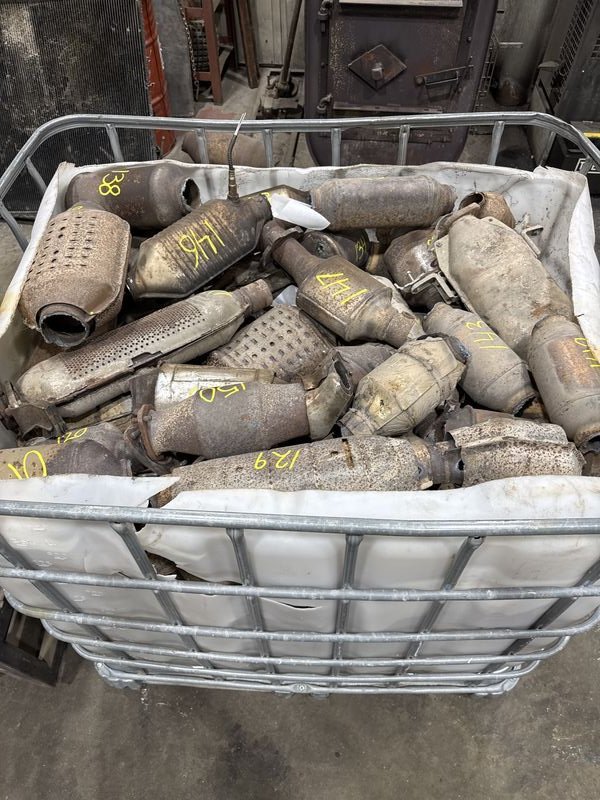
Most yards won't tell you this: a damaged catalytic converter is worth significantly less than an intact one. Crack the substrate, burn out the wash coat, or strip the housing — and you've just turned a solid payout into a scrap metal consolation prize. If you're sitting on a junk vehicle in Saint John and wondering how to pull the cat yourself before selling, the removal process matters as much as where you sell it. This guide walks you through safe, smart removal and connects you to the buyers who will actually pay based on precious metal content — not a lowball guess.
Before we get into the steps, understand what drives catalytic converter prices today: platinum, palladium, and rhodium content. Those metals sit inside the ceramic or metalite substrate. Damage the substrate, and you damage the payout. Everything in this guide is built around protecting that value.
---What You Need Before You Start: Tools and Safety Basics
Rushing a cat removal without the right setup is how people get hurt — or end up with a cracked converter that's worth a fraction of what it should be. Take fifteen minutes to prepare properly and you'll save yourself a lot of frustration.
Here's what you need on hand before you get under the vehicle:
- Floor jack and jack stands (rated for the vehicle's weight) — never use a tire jack alone
- Safety glasses and heavy work gloves — exhaust components have sharp edges and rust flakes
- Breaker bar or impact wrench — exhaust bolts are almost always seized
- Penetrating oil (PB Blaster or equivalent) — spray the flange bolts and clamps 24 hours before if possible
- Pipe cutter or reciprocating saw with a metal blade — for welded-in converters
- Wire brush — to clean around connection points
- Heat-resistant gloves if the vehicle ran recently — cats hold heat for a long time
One hard rule: the vehicle must be fully cool before you go under it. A catalytic converter that's been running can hit temperatures above 400°C. In a closed space like a garage, that's a serious burn risk. Let the vehicle sit overnight if it was driven. If it's a junk vehicle that hasn't run, still check the housing temperature with the back of your hand before you start working.
Step-by-Step: How to Remove a Catalytic Converter Without Damaging It
The goal here is clean removal. Buyers — including platforms like SMASH — assess cats based on condition, weight, and the integrity of the substrate. A clean pull protects all three. Follow these steps in order.
- Secure the vehicle. Park on flat, solid ground. Engage the parking brake. Chock the rear wheels if you're jacking from the front. Use jack stands — never work under a vehicle supported only by a floor jack.
- Locate the converter. On most vehicles, the cat sits in the exhaust line between the exhaust manifold and the muffler. Some vehicles have two converters (pre-cat and main cat). If you're unsure, find the best scrap cat prices in Canada and confirm converter count for your specific make before you start.
- Soak the bolts. Spray penetrating oil on the inlet and outlet flange bolts, any clamps, and the oxygen sensor(s) if they're nearby. Let it sit. Seriously — an hour minimum, overnight is better.
- Remove the oxygen sensors first (if present). Use an O2 sensor socket (a slotted socket that accommodates the wire). If the sensor is seized, apply heat from a torch carefully and avoid directing flame at the cat housing itself.
- Break the flange bolts. Use your breaker bar with slow, steady pressure. Fast jerks snap seized bolts. If a bolt snaps, you may need to cut the flange pipe. That's fine — just don't let the saw blade contact the converter housing itself.
- Cut if needed. If the cat is welded in (common on older or modified vehicles), cut the pipe several inches from each end of the converter — not flush against the housing. This keeps the housing intact and avoids vibration damage to the substrate.
- Lower and inspect. Once the converter is free, inspect the housing. No visible cracks, no loose rattling when you shake it gently? Good. If it rattles heavily, the substrate may be broken — still worth selling, but disclose that to the buyer.
Store the removed converter in a rigid container or hang it so the housing isn't resting on the substrate end. Even a short drop on a concrete floor can crack the ceramic inside.
What Damages Converter Value — and How to Avoid It
There's a direct line between how you remove a cat and what you get paid for it. Buyers checking catalytic converter prices today are pricing based on recoverable precious metals. Here's what tanks that number fast.
- Cracked substrate — the internal honeycomb structure holds the PGMs (platinum group metals). Cracking it means material loss and lower recovery. Rough handling, drops, and saw cuts too close to the housing all cause this.
- Aftermarket or "biscuit" converters — aftermarket cats have minimal or zero PGM content. They will not get the same price as OEM units. Know what you have before you expect an OEM price.
- Burned-out wash coat — caused by engine running rich or overheating for extended periods. The cat may look fine externally but have degraded precious metal content. A reputable buyer will identify this during assay.
- Cut too short — some buyers require minimum pipe length on each end for handling and processing. Check buyer specs before cutting.
- Mixed with wrong materials — keep cats separate from other scrap. A bin of mixed non-ferrous complicates pricing and can result in the entire lot being discounted.
If you're running a yard or pulling cats regularly in New Brunswick, documenting condition at removal — photos of the housing, the pipe cuts, any visible damage — gives you leverage when you negotiate. Sell your scrap metal on SMASH Recycling with full documentation attached, and serious buyers can price with confidence instead of discounting for unknowns.
How to Find the Best Catalytic Converter Price in Saint John After Removal
You've pulled the cat cleanly. Now the question is: where do you sell it and how do you know you're getting a fair price? This is where most people leave money on the table — not in the removal, but in the sale.
The traditional path in Saint John looks like this: call one local yard, get a number, take it or leave it. That number is based on what the yard thinks the market is — or what they think you'll accept. There's no competition, no transparency, no way to verify whether that quote reflects actual precious metal value or just a margin play.
The better path: use a platform that brings multiple vetted buyers to the table at once. SMASH does exactly that. Instead of one call to one buyer, your cat — with photos, condition notes, and any available VIN or serial data — gets in front of multiple qualified buyers. Competition does what it's supposed to do: it reveals the actual market. More buyers means better price discovery, especially on high-value OEM units where PGM content varies significantly by make and model.
If you're based in Saint John, Saint John scrap metal services connected through SMASH can give you reach beyond local yard pricing. You're not stuck with whoever happens to be buying in your postal code that week.
Want to understand what similar cats are fetching before you list? Read Canadian scrap catalytic converter guides for current context on what drives pricing by converter type and precious metal content.
Documenting Your Cat Before You Sell: What Buyers Actually Want to See
A well-documented cat sells faster and gets priced more accurately. This isn't busywork — it directly affects your payout. Buyers making competitive bids on a catalytic converter auction need enough information to price confidently, and confident buyers bid higher.
Here's what to document before listing or calling a buyer:
- Photos from both ends — show the substrate opening and the pipe cuts
- Photo of the full housing — all sides, showing condition and any visible damage
- Vehicle make, model, year, and engine size — this is often how buyers identify converter type and expected PGM content
- VIN if available — platforms like SMASH support VIN lookup, which speeds up buyer identification significantly
- Weight — weigh the converter before listing if you can; it helps buyers who are bidding on a per-unit or per-pound basis
- Condition notes — intact substrate, heavy rattle, signs of heat damage, or anything else relevant
Yards and individual buyers who receive this level of documentation don't need to build in a big uncertainty buffer in their pricing. That buffer is what eats your payout when you show up with a converter in a bag and no information attached to it.
Across New Brunswick, converter sellers who treat documentation seriously consistently get faster quotes and more competitive offers. It's not a complicated process — it takes five minutes with a phone camera and a notepad.
Catalytic Converter Scrap Prices: What Moves the Market Right Now
Understanding what drives catalytic converter prices today helps you time your sale and set realistic expectations. The three metals that matter are platinum (Pt), palladium (Pd), and rhodium (Rh). Their spot prices fluctuate on global commodity markets — sometimes significantly within a single week.
As of September 2026, the market continues to reflect ongoing shifts in EV adoption, mine supply from South Africa and Russia, and industrial demand from both automotive manufacturers and the petrochemical sector. Rhodium in particular has shown high volatility over the past several years. That volatility cuts both ways — it creates real opportunities for sellers who are paying attention and listing at the right time.
A few practical notes on pricing reality:
- OEM converters from domestic trucks and SUVs often carry the highest PGM loads
- Foreign pre-cats (small, upstream converters) can be high value despite their size
- Aftermarket units are priced dramatically lower — sometimes treated as steel scrap
- Foil cats (metalite substrate) have different recovery characteristics than ceramic — buyers price them differently
Disclaimer: Catalytic converter scrap prices fluctuate daily based on commodity markets. The information in this article reflects general market conditions as of September 2026. Always check current rates before selling — get a fair price for your scrap catalytic converters in Canada with a real-time quote.
---Frequently Asked Questions
Q: How much is a catalytic converter worth for scrap in Saint John right now?
Prices vary significantly by converter type, vehicle make, and current precious metal spot prices. OEM converters from trucks and SUVs tend to be worth the most, while aftermarket units may return very little. For accurate catalytic converter prices today in Saint John, get a quote from a buyer who prices based on actual PGM content — not a flat rate.
Q: Is it legal to remove and sell a catalytic converter for scrap in New Brunswick?
Yes, selling a catalytic converter you legally own — typically from a vehicle registered in your name or purchased as a whole vehicle — is legal. Scrap dealers in New Brunswick are required to verify seller identity and record transactions. Keep your ownership documents and be prepared to show ID. Do not sell converters sourced from vehicles you do not own — that is theft and carries serious criminal penalties.
Q: What's the difference between a catalytic converter auction and selling to a local yard?
Selling to a single local yard means one buyer sets the price with no competition. A catalytic converter auction — like the format used on SMASH — brings multiple vetted buyers to bid on the same unit. Competition tends to reveal the actual market value rather than leaving you dependent on a single buyer's offer.
Q: How do I know if my catalytic converter substrate is damaged?
Shake the converter gently after removal. A heavy rattle indicates broken substrate internally. Externally, look for visible cracks in the housing or signs of a severe impact. A converter that was on a vehicle with an engine running very hot for extended periods may also have a degraded wash coat internally — this is harder to detect visually but affects recovery value.
Q: Can I sell a catalytic converter without the vehicle VIN or paperwork?
Requirements vary by buyer and province. In New Brunswick, scrap dealers are expected to record seller information. Having the vehicle VIN helps buyers accurately identify the converter and price it correctly — it also speeds up the transaction. Without it, you may get a more conservative quote since buyers can't confirm the converter's origin or expected PGM content.
---If you've pulled a cat cleanly and documented it properly, the last thing you want to do is sell it short. Take a few minutes to list it where buyers actually compete for it. Whether you're clearing one converter from a personal vehicle or moving volume out of a Saint John yard, best-scrap-cat-prices.ca is where you start — get a free quote and see what competitive pricing actually looks like.
Follow SMASH on LinkedIn for ongoing scrap metal market updates, pricing trends, and industry news across Canada.