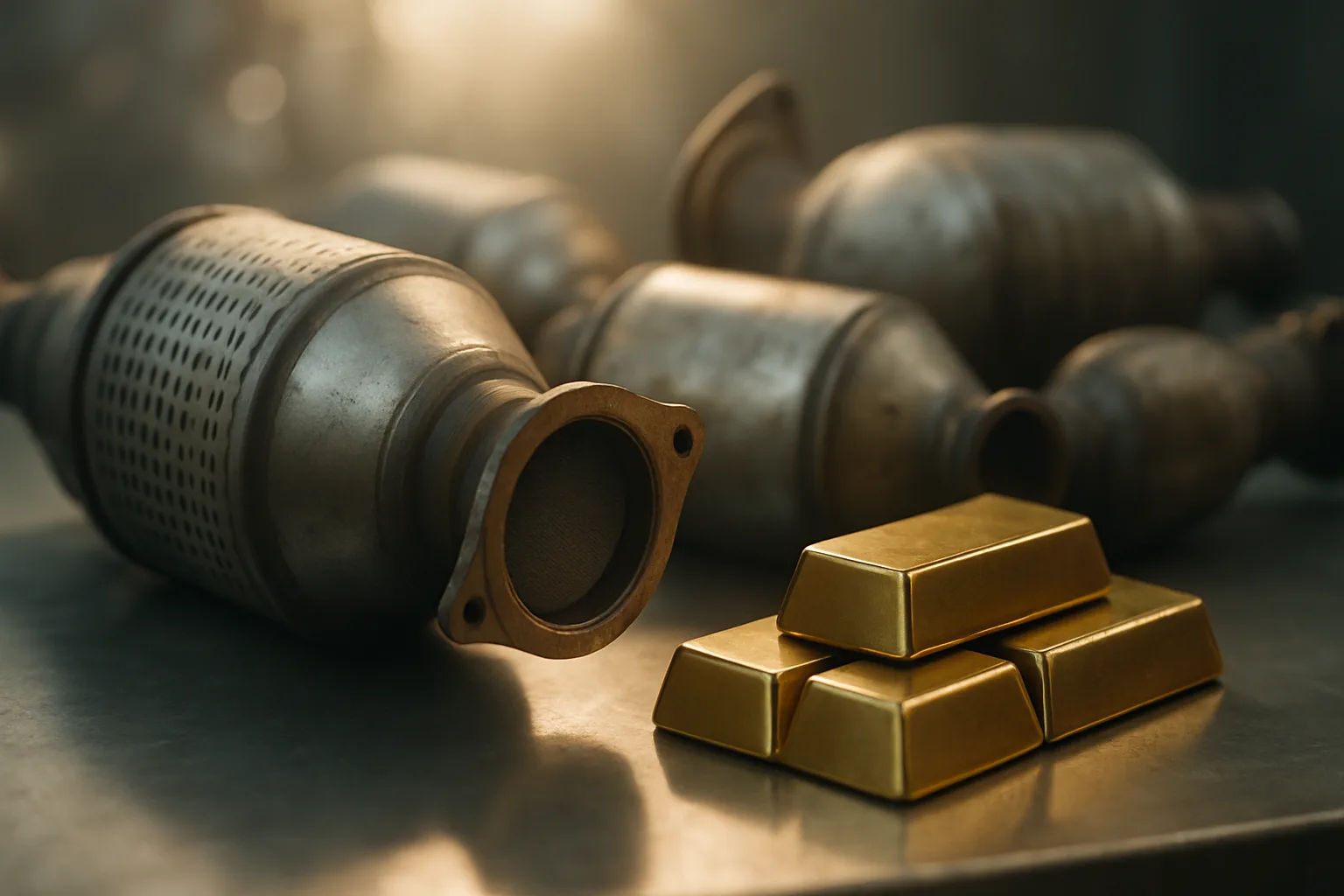
Every catalytic converter sitting in a scrap yard holds up to several grams of platinum, palladium, and rhodium — metals so valuable that recovering them properly isn't just smart business, it's an environmental obligation. Most sellers focus on the money (rightfully so), but understanding what happens to your converter after you sell it changes how you think about who you sell it to.
If you're looking to find the best scrap cat prices in Canada, you're also — whether you realize it or not — making a decision about how those metals re-enter the global supply chain. That decision matters more than most sellers know.
Why Catalytic Converter Recycling Is an Environmental Issue, Not Just a Revenue One
Mining platinum group metals (PGMs) from the earth is one of the most resource-intensive processes in modern industry. Producing a single ounce of platinum from virgin ore can require processing several tons of rock. That means energy, water, land disruption, and significant carbon output — before a single gram ever reaches a manufacturer.
Recycling catalytic converters short-circuits that entire chain. The PGMs recovered from scrap cats re-enter refining operations and get reused in new catalytic converters, electronics, medical devices, and industrial applications. Every converter that goes through a legitimate recycling channel reduces demand for newly mined metal. That's not a marketing line — it's materials science.
The problem is that not every converter gets recycled properly. Some are stripped, sold informally, or end up with processors who don't track content, don't document material flows, and don't return accurate value to the seller. That's bad for the environment, and it's bad for your payout.
What Actually Happens to the Precious Metals Inside Your Converter
Most sellers know their cat has platinum, palladium, and rhodium inside. Fewer know exactly how those metals get recovered — or why that process requires proper documentation and chain-of-custody tracking to work correctly.
Here's the basic flow:
- Collection and sorting — Converters are grouped by type (OEM, aftermarket, foreign, domestic). This is where scrap metal inventory management begins. Accurate sorting at this stage directly affects what a smelter can quote.
- Decanning — The outer shell is removed and the ceramic or metallic substrate (the honeycomb inside) is extracted.
- Sampling and assaying — The substrate is crushed, homogenized, and tested to determine exact PGM content. This is the number that drives your payout.
- Smelting and refining — PGMs are separated from the substrate material in a high-temperature smelter. The recovered metals are refined to market-ready purity.
- Re-entry into manufacturing — Refined platinum, palladium, and rhodium go back to auto manufacturers, electronics companies, and industrial buyers.
When this process is done right, with documented lots and verified assays, you get an accurate return. When it's done informally — no tracking, no documentation, no accountability — metal disappears between steps and someone other than you captures the value.
The Problem With Informal Channels and Why It Affects Scrap Cat Prices Canada-Wide
Catalytic converter theft has made headlines across Canada for years. Hamilton, Ontario has seen its share of theft-related arrests and increased insurance claims tied to cat theft on residential streets and commercial lots. That's the extreme end of the informal market.
But there's a gray zone that's equally damaging: converters sold to unvetted buyers who don't track serial numbers, don't issue proper documentation, and don't operate within a regulated recycling chain. The environmental consequence is real — improperly handled substrates can release hazardous particulate matter, and untracked material flows make it impossible to audit recovery rates or environmental impact.
For sellers, the financial consequence is equally real. Without competitive pricing, transparent assay data, and verified buyer credentials, you're guessing. And in a market where platinum price today can swing meaningfully on supply disruptions or automotive demand shifts, guessing costs you money.
Platforms like SMASH exist precisely to close this gap. When you get a fair price for your scrap catalytic converters in Canada through a competitive, documented process, you're not just protecting your margin — you're ensuring your material enters a legitimate recycling chain.
Proper Recycling Practices Every Seller Should Know Before They Sell Catalytic Converters Online
Whether you're a yard operator in Hamilton sitting on a drum of mixed cats or an individual seller in Calgary with a handful of units, the practices that protect you are the same ones that protect the environment.
Document everything before it leaves your hands. Serial numbers, make, model, condition — all of it. Proper documentation protects you legally, supports accurate pricing, and ensures material is trackable through the recycling chain. SMASH's inventory tools make this straightforward, even for large mixed loads.
Here's what good documentation looks like at the point of sale:
- Photos of each unit, including serial numbers and substrate condition
- VIN lookup where applicable to confirm OEM specs
- Lot descriptions that match what goes into the assay
- Packing lists that accompany shipments and match invoices
- BOL (bill of lading) documentation for transported loads
Know who's buying your material. Vetted buyers who operate within regulated smelting networks provide transparency from sale through recovery. Unvetted buyers — even if they offer an attractive number on the phone — can't guarantee where your material ends up or how it's processed.
If you're in Ontario and want to understand how regional buyers operate, read Canadian scrap catalytic converter guides that break down the buyer landscape province by province.
Hamilton, Ontario as a Case Study: Local Recycling Infrastructure and Seller Responsibility
Hamilton has one of the more established scrap metal ecosystems in Ontario — a legacy of its industrial history and its proximity to major transportation corridors. That means sellers in and around Hamilton generally have access to multiple buyers, which is an advantage when it comes to price discovery.
It also means there's more informal activity in the market. More buyers doesn't automatically mean more transparency. The Hamilton scrap metal services that operate within documented, competitive frameworks offer something that informal buyers simply can't: a verifiable chain of custody from your yard to the smelter.
Sellers using SMASH in the Hamilton area benefit from the auction format — not because it always produces the highest number, but because it produces a market number. Competition among vetted buyers reveals what the material is actually worth on a given day, based on real assay data and real PGM market conditions. That's price discovery, not guesswork.
For sellers looking to sell catalytic converter Calgary or participate in catalytic converter recycling Edmonton, the same principle applies across regions. Local market access matters, but documented competitive processes matter more. You can compare scrap metal bids from Canadian buyers and see what competition actually does to your outcome.
The Long-Term Environmental Case for Selling Through Transparent Platforms
Here's the argument in plain terms: every converter that passes through a documented, competitive, assay-verified recycling chain returns more PGMs to productive use and generates less environmental waste than one that doesn't.
Proper scrap metal inventory management isn't just a business practice — it's an environmental one. When lots are properly catalogued, sampled accurately, and smelted within regulated operations, recovery rates are higher. Higher recovery rates mean less material lost to waste streams. Less material lost means less pressure on virgin mining operations.
That's a real environmental benefit, and it's one that sellers can participate in directly just by choosing who they sell to and how they document their material.
The scrap industry sometimes gets framed as purely extractive. It isn't. Done right, catalytic converter recycling is one of the most efficient forms of urban mining available — pulling high-value, high-impact metals out of end-of-life vehicles and returning them to the supply chain without the environmental cost of virgin extraction.
If you're ready to sell with transparency and accountability, the best place to start is to find the best scrap cat prices in Canada through a platform that takes documentation and buyer vetting seriously. SMASH connects sellers with vetted buyers across Canada — no subscription fees, no guesswork, just competitive bids on documented material.
Disclaimer: Scrap catalytic converter prices fluctuate based on platinum, palladium, and rhodium market conditions. Always check current rates before committing to a sale.
Frequently Asked Questions
Q: Why does it matter where I sell my catalytic converters online?
It matters because unvetted buyers don't always operate within regulated recycling chains — which affects both your payout accuracy and where your material ends up environmentally. Selling through a documented, competitive platform means your converters enter a legitimate recycling process with real chain-of-custody tracking.
Q: How does platinum price today affect what I get for my scrap cats?
Platinum, palladium, and rhodium prices are the primary drivers of scrap cat value. When PGM spot prices are high, converter payouts rise with them — and when they drop, so does your return. Checking current PGM markets before you sell gives you a benchmark for evaluating any offer you receive.
Q: Is it legal to sell catalytic converters in Hamilton, Ontario?
Yes, selling scrap catalytic converters is legal in Hamilton and across Ontario, provided you follow provincial scrap metal regulations, which typically require seller identification and documentation of material origin. Working with a vetted buyer who requires proper documentation keeps you compliant and protects you legally.
Q: What's the difference between selling to a local buyer versus selling catalytic converters online through a platform like SMASH?
A local buyer gives you one number — take it or leave it. An online platform like SMASH creates competition among multiple vetted buyers, which drives price discovery and gives you a market-based result rather than a single buyer's margin. Documentation and audit trails are also stronger through structured platforms.
Q: How do I know if my catalytic converter has been properly recycled after I sell it?
The best indicator is chain-of-custody documentation — packing lists, BOLs, and assay reports that follow your material from your hands to the smelter. Buyers operating within legitimate recycling networks can provide this documentation. If your buyer can't tell you where your material is smelted or how it's processed, that's a red flag.
For more on scrap cat pricing, buyer vetting, and what to expect from the recycling process, follow SMASH on LinkedIn for industry updates and scrap metal market insights delivered straight to your feed.
```