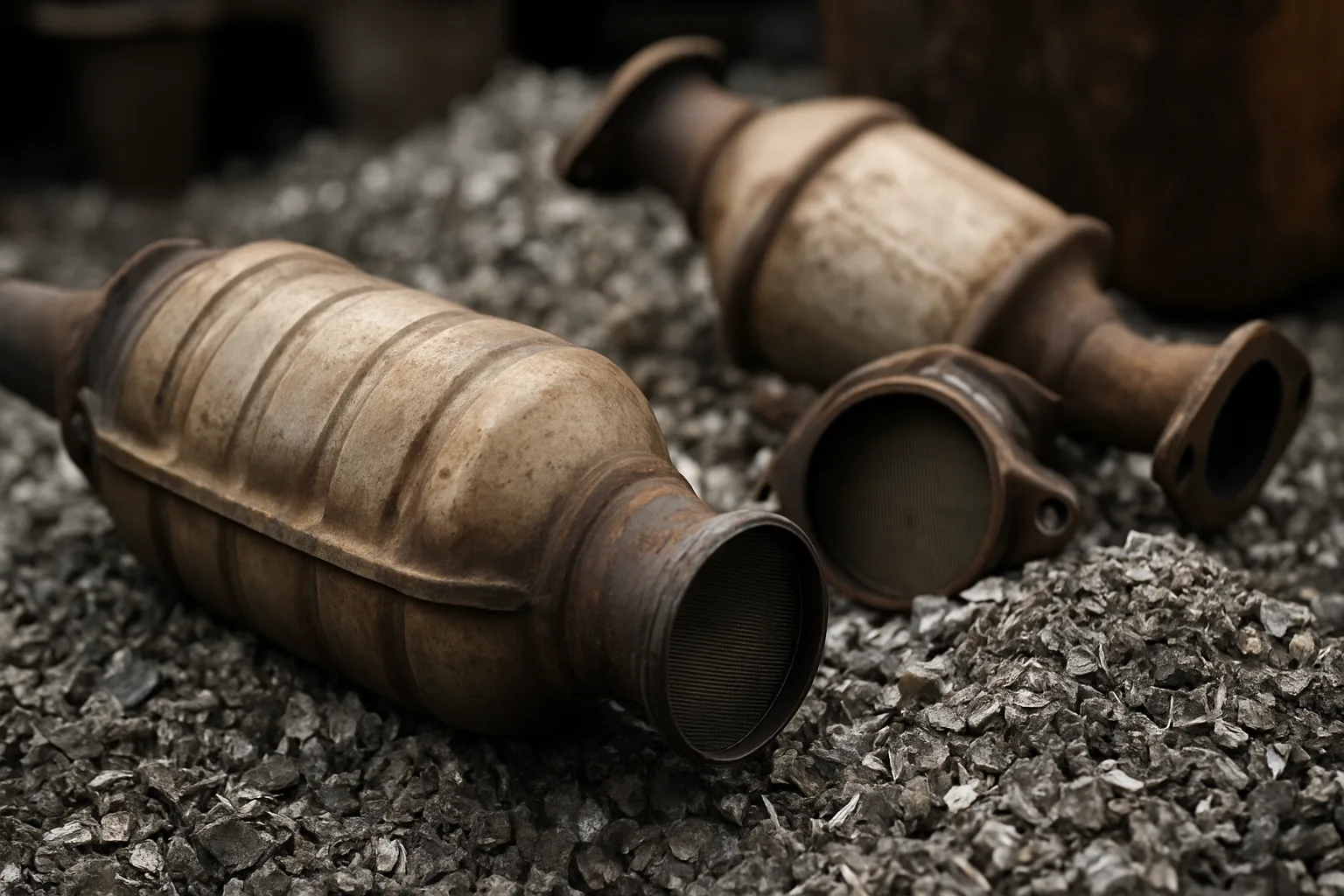
The Scrap Cat Market Has a Scam Problem — Here's How to Protect Yourself
Most sellers getting ripped off on their catalytic converters never know it happened. They got paid. They walked away. They just didn't get anywhere near what those cats were actually worth. That's not a mistake — that's the market working against you. And in 2026, with precious metal prices under constant pressure from mining output, EV adoption curves, and global trade policy, understanding OEM catalytic converter value has never mattered more.
Whether you're clearing out a pile of cores at a recycling yard in Prince George or selling a single cat off a late-model truck, the scams are the same. They just wear different clothes depending on who's buying. This article breaks down the most common tactics used against sellers, how to spot them before you sign anything, and how platforms like the SMASH Recycling auction platform change the equation entirely.
Why Catalytic Converter Scams Are So Common — and So Hard to Spot
Catalytic converters are uniquely vulnerable to buyer manipulation. The value sits inside the unit — in the platinum, palladium, and rhodium locked into the ceramic or metallic substrate. You can't see it. You can't weigh it on a standard yard scale and know what it's worth. Most sellers have no reliable reference point for what they're holding.
That information gap is exactly where scams thrive. A buyer who knows the assay result — or can estimate it from the OEM part number — holds all the leverage. You're negotiating blind. They're not.
The problem is worse than most sellers realize because:
- Precious metal content varies significantly between makes, models, and model years
- OEM converters from certain vehicles contain many times more PGMs than aftermarket units
- A single high-value OEM cat can be worth hundreds more than a buyer's "standard" quote implies
- Visual inspection tells you almost nothing about actual PGM loading
In British Columbia, enforcement around converter theft and resale documentation has tightened considerably — but that doesn't protect you from a buyer simply underpaying. There's no law against lowballing. The only protection is information and competition.
The Most Common Scams Targeting Scrap Cat Sellers Right Now
These aren't hypotheticals. These are the plays that cost sellers real money every day across Canada, including in yards and shops throughout Prince George and the surrounding Interior.
1. The Flat-Rate Lowball
A buyer offers a flat price per unit — "we pay $X per cat, no matter what." Simple. Clean. Sounds fair. It's not. Flat-rate buying is designed to capture the upside on your high-value OEM units while you think you're getting a consistent deal. That Honda Accord cat and that Ford F-250 diesel cat are not worth the same thing. If someone's pricing them identically, they're banking on you not knowing the difference.
2. The "Market's Down" Excuse
Precious metal spot prices move daily. A buyer who claims palladium is "way down" or "the market's soft right now" without showing you current data is using uncertainty as a discount tool. Catalytic converter prices today are tied directly to live PGM spot prices — but most buyers quote you a number they've held for weeks. Always ask when their pricing was last updated and against what benchmark.
3. The Weight-Only Quote
Scrap metal pricing by weight makes sense for ferrous loads. It makes no sense for catalytic converters. The ceramic substrate is heavy. The PGM loading is microscopic. Two cats can weigh the same and be worth wildly different amounts. If a buyer is quoting you by weight alone, they're either confused about the product or deliberately obscuring the real value calculation.
4. The Mystery Deduction
You negotiate a price. Then the final invoice shows deductions you didn't discuss — processing fees, assay costs, moisture penalties, "sampling charges." These post-agreement deductions are common in less transparent buying arrangements. Without a clear written breakdown upfront, you have no recourse. Get everything itemized before the load ships.
5. Bait-and-Switch on Grading
A buyer grades your cats over the phone or from photos and gives you a quote. When the load arrives, they "discover" that several units were aftermarket, damaged, or lower-grade than expected — and adjust the payout down. Sometimes this is legitimate. Often it isn't. Without independent documentation of what you shipped, you can't dispute their revised count or grade.
6. The No-Competition Setup
This one isn't a single tactic — it's the entire structure of the old-way buying market. One relationship, one buyer, one price. No benchmark. No second opinion. No way to know if you left $500 or $5,000 on the table. This is how most scrap cat sellers operate, and it's the most expensive mistake you can make at scale.
How to Know Your OEM Catalytic Converter Value Before You Sell
The single best thing you can do before selling any catalytic converter — especially an OEM unit — is know what you're working with. That means identifying the converter accurately, not just guessing from the vehicle it came off.
Start with the part number stamped on the converter shell. OEM converters carry manufacturer part numbers that link to known PGM loading data. If you can't find the number, the vehicle's VIN can help you work backward to what converter was originally installed. Platforms built for the scrap trade — including tools integrated into the SMASH Recycling auction platform — support VIN lookup and serial tracking specifically because this identification step is where most sellers fall short.
Key steps before you quote:
- Photograph every unit — top, bottom, and the part number stamp
- Look up the OEM part number using a converter reference database
- Separate OEM from aftermarket — they have fundamentally different values
- Check current PGM spot prices to understand the underlying market
- Get multiple quotes — never accept the first number
If you're in Prince George and using a local buyer as your only reference point, you're working with one data point in a market that should give you many. That's a structural disadvantage you can fix.
Why a B2B Scrap Metal Marketplace Changes Everything for Cat Sellers
The reason these scams work is that sellers have historically had no leverage. You have a product. You have one buyer in front of you. They have information. You don't. The deal happens on their terms.
A B2B scrap metal marketplace built on auction mechanics flips that dynamic. When multiple vetted buyers compete for your load, the price discovery happens in the open. You don't need to know the exact OEM catalytic converter value — the competition reveals it. A buyer who knows your cat is worth top dollar has to bid accordingly or lose the load to someone who will.
SMASH operates exactly this way. No subscription fees. No locked-in buyer relationships. Your inventory is documented — photos, part numbers, serial tracking, packing lists — so every buyer is bidding on the same information. That documentation also protects you from the post-shipment downgrade scam, because what you listed is what you shipped, and it's on record.
To find the best scrap cat prices in Canada, you need competition. Not a better relationship with one buyer. Competition. That's the mechanism. Everything else is negotiation theater.
Documentation Is Your Best Defense Against Getting Burned
Whether you use an auction platform or sell direct, documentation is non-negotiable if you want to protect yourself. Most scams succeed because sellers can't prove what they shipped or what they were originally quoted.
Build a documentation habit for every load:
- Photo every converter before it leaves your possession
- Record part numbers, quantity, and condition in writing
- Confirm your quote in writing — email or platform message, not just a phone call
- Get a signed receiving confirmation when the load arrives at the buyer
- Keep your own copy of all BOLs and packing lists
If a buyer pushes back on documentation requirements, that's information. Legitimate buyers — the kind operating on platforms designed for the trade — expect documentation. It makes the transaction cleaner for everyone. If someone wants to buy your cats informally, off the record, with nothing in writing, walk away. That's not how professional buyers operate.
For yards and dealers in Prince George looking to tighten up their selling process, Prince George scrap metal services can help connect you with documented, competitive buying options built specifically for the Canadian market.
You can also read Canadian scrap catalytic converter guides for more detailed breakdowns of converter types, PGM content by vehicle, and how to prepare your inventory before going to market.
The Right Way to Sell Scrap Cats in 2026
The scrap cat market in 2026 is more sophisticated than it was five years ago — but buyer tactics haven't changed. They're still banking on seller ignorance and lack of competition. The difference now is that sellers have better tools to fight back.
Know your converter before you sell it. Separate OEM from aftermarket. Document everything. Get multiple quotes. Use platforms that create real competition among vetted buyers.
If you want to get a fair price for your scrap catalytic converters in Canada, the answer isn't finding a nicer buyer — it's creating a situation where buyers have to compete for your business. That's what SMASH is built to do.
Disclaimer: Catalytic converter prices fluctuate daily based on live PGM spot prices. All pricing references in this article are general in nature. Check current rates before making any selling decisions.
Frequently Asked Questions
Q: How do I find out my OEM catalytic converter value before selling?
Start with the part number stamped on the converter housing. OEM part numbers link to known PGM loading data that determines value. You can also use the vehicle VIN to identify which OEM converter was originally installed. Platforms like SMASH include VIN lookup and serial tracking tools to help with this step before your load goes to market.
Q: What are catalytic converter prices today based on?
Converter prices are primarily driven by live platinum, palladium, and rhodium spot prices — the three precious metals loaded into the substrate. PGM spot prices move daily based on global supply, industrial demand, and currency markets. Any buyer quoting you a flat price without referencing current spot is working from a spread that benefits them, not you.
Q: Is there a reliable catalytic converter scrap yard near me in Prince George?
Prince George has local scrap buying options, but local doesn't always mean competitive. Using a documented, auction-based platform means your load reaches vetted buyers across Canada — not just whoever's nearby. More buyers means better price discovery, regardless of where your yard is located.
Q: How much is my catalytic converter worth by reg free or VIN?
Your vehicle's registration or VIN can help identify the OEM converter originally fitted to the car or truck. From there, you can cross-reference the OEM part number against converter databases that show typical PGM content ranges. This gives you a realistic starting point before you accept any buyer's quote.
Q: How do I avoid getting scammed when selling catalytic converters in British Columbia?
Document everything — photos, part numbers, written quotes, BOLs. Never accept a verbal-only quote. Separate OEM converters from aftermarket before pricing. Get multiple offers rather than relying on one buyer. In British Columbia, regulations around converter documentation have tightened, which also means legitimate buyers expect and accept proper paperwork — if a buyer resists documentation, that's a red flag.
---If you've got cats sitting in inventory and you're not sure you're getting a fair number, the best move is to get a second opinion at scale. Find the best Canadian scrap cat prices and get a free quote at best-scrap-cat-prices.ca — it costs you nothing to find out what the market actually thinks your load is worth.
Stay current on scrap metal market shifts and industry news by following SMASH on LinkedIn: follow SMASH on LinkedIn for updates that actually matter to people in the trade.
```