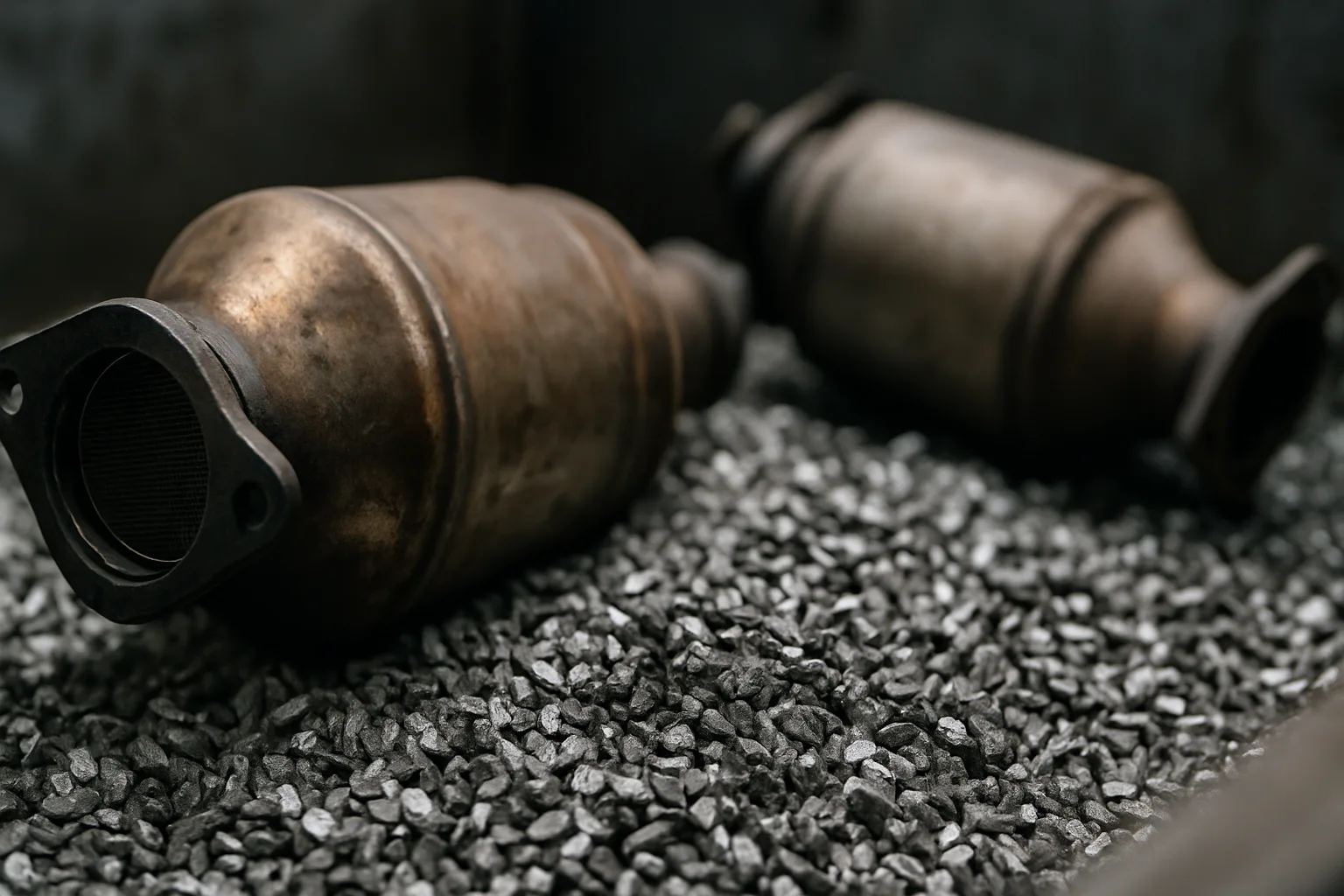
Why Your Catalytic Converter Might Be Worth More Than Your Buyer Admits
Most scrap yards quote you a number. They rarely explain where that number comes from. If you've ever walked away from a transaction wondering whether you left money on the table, you probably did. Understanding how OEM catalytic converter value gets calculated — and how grading tiers work — is the difference between accepting the first offer and knowing what your cats are actually worth.
This guide breaks down the grading system, explains what drives price differences between converter types, and shows you how sellers in Hamilton and across Ontario are getting better outcomes by using competitive platforms instead of single-buyer guessing games.
The Grading Tiers: Not All Cats Are Created Equal
Catalytic converters get sorted into grades based on precious metal content — primarily platinum, palladium, and rhodium. These platinum group metals are what refiners actually pay for. The substrate type, flow volume, and manufacturer all factor into which tier a converter lands in.
Here's a rough breakdown of how the grading system typically works:
- High-Grade (Domestic / OEM) — These are original equipment manufacturer converters from North American vehicles. They tend to carry higher loadings of platinum group metals and command the best prices per unit. Think full-size trucks, SUVs, and late-model domestic cars.
- Mid-Grade — European and some Asian OEM units fall here. Still solid value, but precious metal concentrations vary more widely by make and model.
- Low-Grade / Foreign Small — Compact foreign vehicles, older units, or aftermarket replacements. Lower PGM content means lower payouts. These still have value — just not the same as a domestic cat.
- Aftermarket / Direct-Fit Replacements — These are the converters that replaced OEM units during repairs. They're built to meet emissions standards, not to maximize PGM loading. Their scrap value is significantly lower.
- Bead Cats / Foil Cats — Specialty types with different substrate structures. Bead cats use ceramic beads instead of a honeycomb substrate. Foil cats use metallic foil. Both require separate processing and are typically valued differently.
Where a converter lands in this system matters enormously to your payout. A high-grade domestic OEM unit can be worth multiples of a low-grade foreign small. If your buyer isn't explaining which grade they're assigning to each of your units — and why — that's a problem.
What Actually Drives OEM Catalytic Converter Value
The OEM catalytic converter value comes down to one thing: how much recoverable platinum, palladium, and rhodium is inside the substrate. Everything else is secondary. But there are several factors that influence where a specific converter lands on the price scale.
Vehicle application matters. A converter from a full-size pickup truck or a V8 SUV typically carries a heavier PGM loading than one from a four-cylinder compact. Engine displacement, emissions standards for the model year, and the manufacturer's design specs all play a role. This is why VIN lookup and serial number tracking are so valuable — they let buyers tie a specific unit back to its application before making an offer.
Market prices for platinum group metals fluctuate daily. Palladium in particular has seen significant swings over the past several years. Rhodium has historically been the most volatile of the three. The price you get for a load of cats today reflects live commodity markets, not a fixed rate card. Any buyer quoting you a flat rate without referencing current PGM spot prices deserves some skepticism.
Condition and completeness also factor in. Intact converters with undamaged substrates are easier to process. Cut pipes, cracked shells, or units with blown-out substrates can reduce recoverable yield. Documenting your inventory with photos before it leaves your yard protects you and gives buyers accurate data to price against.
How Hamilton Scrap Yards Can Use Data to Stop Guessing
Hamilton has a strong industrial and recycling ecosystem. Yards in the area handle significant volumes of automotive scrap — and catalytic converters move through that supply chain constantly. But even experienced operators sometimes rely on relationships with one or two buyers, which limits price discovery.
The problem with single-buyer relationships isn't trust — it's information asymmetry. When only one buyer sees your load, you're relying on their assessment of PGM content and their margin targets. You have no benchmark. You don't know if the price is fair because you've never seen what competitive bidding looks like on that same material.
That's exactly what the SMASH Recycling auction platform is designed to address. When multiple vetted buyers compete for your inventory, the price discovery process works the way it's supposed to. You're not guessing. The market tells you what your material is worth.
For yards running Hamilton scrap metal services, putting your cat inventory in front of a competitive buyer pool — rather than one phone call — changes the dynamic entirely. Documentation through photo uploads, serial number tracking, and VIN lookup gives buyers confidence. More confidence means stronger bids.
Catalytic Converter Prices Today: Why Transparency Is the Whole Game
Anyone tracking catalytic converter prices today knows the market doesn't sit still. PGM spot prices move. Demand from refiners shifts. Seasonal volume fluctuations hit the supply side. A converter that was worth a certain amount three months ago might be worth more or less right now — and a buyer working off stale price sheets isn't passing those gains on to you.
Transparency cuts both ways. Yes, prices can go down. But they also go up. If your buyer is adjusting their bids downward when the market dips but keeping margins wide when it rises, you're absorbing the downside without capturing the upside.
A B2B scrap metal marketplace built around auction mechanics changes this. SMASH operates on a no-subscription model — no monthly fees, no retainer. The platform only works when sellers do. That alignment of incentives matters. When you find the best scrap cat prices in Canada, you're working with a system where competition is the mechanism, not a relationship that may or may not serve your interests on a given day.
For Ontario sellers, this means access to a broader buyer pool than any single regional relationship provides. Hamilton yards aren't limited to whoever picks up the phone locally. Vetted buyers from across North America can compete for your inventory — and that's a meaningful shift in leverage.
How to Prepare Your Cat Inventory Before You Sell
Getting the best return on your catalytic converters isn't just about choosing the right platform. It's about presenting your inventory in a way that gives buyers the information they need to bid confidently. Sloppy documentation leads to conservative bids. Detailed, accurate inventory drives competitive ones.
Here's what strong cat inventory preparation looks like:
- Photograph every unit individually. Clear images of the converter body, end caps, and any visible markings give buyers visual confirmation of condition and type.
- Record serial numbers where visible. Serial and part numbers allow buyers to reference application databases and assign accurate grades. A unit with a legible number is easier to price than an unknown.
- Separate your grades before listing. Don't mix high-grade domestic units with aftermarket replacements in the same lot unless you want buyers to price the whole load at the lowest common denominator.
- Note any substrate damage honestly. Blown-out or cracked substrates affect recoverable PGM yield. Disclosing this upfront avoids disputes and builds buyer trust over time.
- Track your volume over time. Consistent sellers with documented transaction history get treated differently than one-time unknown quantities. Building a track record on a platform like SMASH has compounding value.
If you're ready to stop leaving price discovery to chance, you can get a fair price for your scrap catalytic converters in Canada by using a system that puts your inventory in front of the right buyers with the right information.
Using a Competitive Platform vs. Calling One Buyer
The SMASH scrap metal auction model exists because the old way is structurally broken for sellers. One buyer, one price, no visibility. That model made sense when there were no alternatives. There are alternatives now.
Platforms focused on platinum group metals recycling and catalytic converter sales have changed what's possible for yards of all sizes. You don't need to be moving truckloads every week to benefit from competitive bidding. Even smaller, consistent volumes benefit from the price signal that competition creates.
The difference between calling one buyer and running a competitive auction isn't just about price — it's about information. You learn what the market thinks your material is worth. You learn which grades are generating the most interest. You build a data set over time that makes you a smarter seller with every transaction.
To read Canadian scrap catalytic converter guides and stay current on grading, pricing shifts, and platform updates, the blog at best-scrap-cat-prices.ca is built for exactly this audience.
If you're selling cats in Hamilton, Ontario, or anywhere across Canada and you've been relying on a single buyer relationship for your pricing benchmark, it's worth asking what you don't know. The market has an answer. You just have to put your inventory in front of it.
Get a free quote and find the best Canadian scrap cat prices at best-scrap-cat-prices.ca — because the number on your next packing list should reflect what your material is actually worth, not what one buyer decided to offer.
Frequently Asked Questions
Q: What makes an OEM catalytic converter worth more than an aftermarket replacement?
OEM catalytic converters are engineered to the original vehicle spec and typically carry higher loadings of platinum, palladium, and rhodium than aftermarket units. Aftermarket converters are built to meet minimum emissions requirements, not to maximize precious metal content. That difference in PGM loading translates directly to a higher scrap value for OEM units.
Q: How do I know which grade my catalytic converters fall into?
Grading is based on the vehicle application, substrate type, and precious metal content. Serial numbers and part markings on the converter body can often be cross-referenced against buyer databases to identify the correct grade. Using a platform with VIN lookup and serial tracking — like SMASH — helps ensure your units are graded accurately before buyers bid.
Q: Are catalytic converter prices today the same across all buyers in Canada?
No. Different buyers use different pricing models, margin targets, and processing partners. That's why selling to a single buyer without benchmarking against others can leave significant money on the table. Competitive auction platforms exist specifically to close this information gap and give sellers a real market price.
Q: Can Hamilton scrap yards use an online platform to sell catalytic converters?
Yes. Yards in Hamilton and across Ontario regularly use B2B platforms to list and sell catalytic converter inventory to vetted buyers across North America. The process involves documenting your inventory with photos and serial numbers, then allowing multiple buyers to compete — which tends to produce better price discovery than a single-buyer negotiation.
Q: Do I need a large volume of cats to benefit from a competitive marketplace?
Not necessarily. While higher volumes naturally attract more buyer interest, even moderate quantities of well-documented, accurately graded inventory can generate competitive bids. The key is documentation quality and accurate grading — a well-presented smaller load often outperforms a poorly documented larger one.
Follow SMASH on LinkedIn for scrap metal market updates, platform news, and industry insights: linkedin.com/company/scrap-metal-auction-sales-hub.