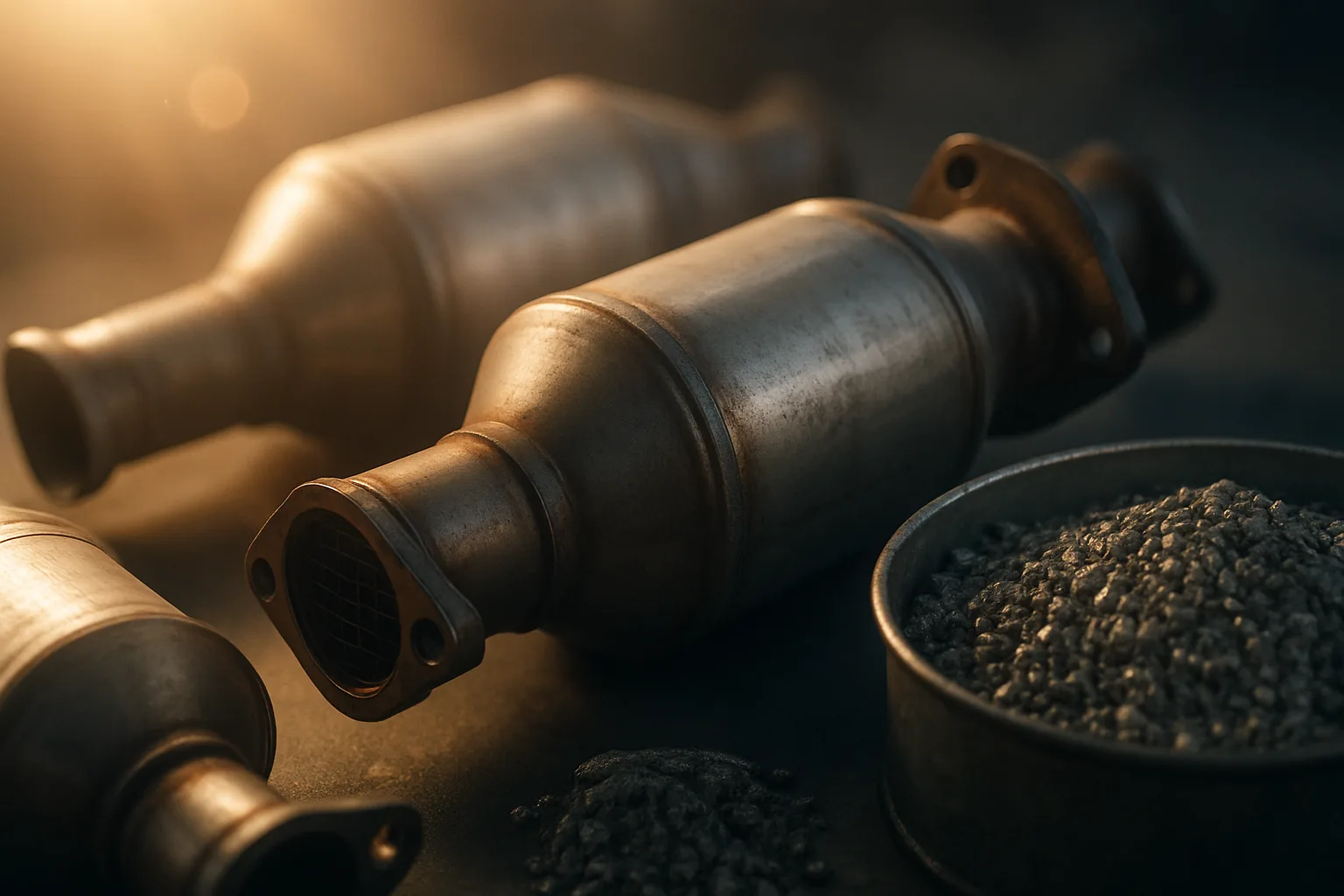
Your phone's camera is worth hundreds of dollars — if you know how to use it. When you sell catalytic converters online, the difference between a sharp, well-lit photo and a blurry snapshot taken in a dark bay can translate directly into money left on the table. Buyers can't touch your cats. They can't hold them up to the light or read the serial stamp with their fingers. All they have is what you give them — and if what you give them is garbage, you'll get a garbage quote.
This isn't about being a photographer. It's about giving buyers the information they need to bid with confidence. More confidence means more competition. More competition means better price discovery. That's the whole game.
Why Photos Matter When You Sell Catalytic Converters Online
A catalytic converter quote is only as accurate as the data behind it. Every cat has a different substrate loading — the amount of platinum, palladium, and rhodium packed into the honeycomb. That loading determines value. And since platinum price today and palladium prices shift constantly with global commodity markets, buyers need every possible edge to price your load correctly.
When a buyer can't read the serial number, can't see the substrate condition, and can't confirm the foil versus ceramic type, they do one of two things: they pass, or they lowball. Neither helps you. A well-documented load removes the guesswork. Buyers bid closer to true market value because they're not pricing in uncertainty.
This is especially true if you're running a recycling yard in British Columbia and working with buyers across the country — or across the continent. You're not handing the cat to someone in a parking lot. The photo is the cat, as far as your buyer is concerned. Treat it that way.
The Five Shots Every Catalytic Converter Listing Needs
You don't need a DSLR. A modern smartphone handles this fine. What you need is a consistent process — the same five shots, every converter, every time. Once you build the habit, it takes under two minutes per unit.
- The serial number shot. This is the most important photo you'll take. The serial or part number stamped on the shell is how buyers match your converter to a catalytic converter price list and database. Get close. Fill the frame with the stamp. Make sure it's in focus and lit — move the cat out of shadow before you shoot. If the stamp is worn, try a low-angle flashlight to create contrast.
- The full-body shot. Step back and get the entire converter in frame, including both inlet and outlet pipes. This lets buyers assess size, confirm the type (small foreign, large domestic, DPF, etc.), and spot any obvious damage.
- The substrate face shot. Looking straight into the opening of the converter, photograph the honeycomb substrate. Is it intact? Partially melted? Rattling and broken? Substrate condition directly affects value. Don't hide it — damaged cats still have value, but hiding damage destroys trust.
- The shell condition shot. Show the body of the converter from multiple angles. Rust, dents, cuts, and previous attempts at core removal all affect the quote. If the foil end caps are cut, show that clearly.
- The batch or load overview shot. If you're selling multiple cats at once, get one wide shot showing all of them laid out side by side. This gives buyers a quick count and a sense of the load's overall composition.
Yards in Chilliwack shipping loads east or to Lower Mainland buyers will find that this documentation dramatically speeds up the quoting process. You send the package, buyers respond fast. No back-and-forth, no "can you send a better photo of the serial."
Lighting, Angles, and the Mistakes That Kill Your Quote
Bad lighting is the single biggest mistake scrap cat sellers make. A dim photo shot in an equipment bay with a fluorescent overhead creates shadows that obscure exactly the details buyers need. The fix is simple: natural light. Roll the cart outside. Set the cats on a pallet or a clean section of yard and shoot in open shade — not direct sun, which creates harsh glare on metal.
If you're shooting indoors, use a work light or position yourself near an open bay door. The goal is even, consistent illumination across the serial number and substrate face. Avoid shooting with the light source directly behind the converter — that backlighting blows out the image and kills detail.
Angle matters too. For serial numbers, shoot straight on and close. For full-body shots, shoot at a slight angle — roughly 45 degrees — so the buyer can see depth and pipe configuration. For substrate face shots, shoot dead straight into the opening. No angle, no parallax. Just the honeycomb, fully lit, fully in focus.
Tap your phone screen on the serial number to lock focus before shooting. It takes one second and dramatically sharpens the result. If your hands shake, rest the converter against something stable and support your elbows. Sharp serial number reads are the difference between a fast, accurate quote and a frustrating follow-up exchange.
Using a B2B Scrap Metal Marketplace to Your Advantage
Once your photos are sharp and your documentation is clean, you need to put them in front of the right buyers. That's where a B2B scrap metal marketplace like SMASH changes the equation entirely.
The old way: you called one buyer, they named a price, you either took it or spent another hour on the phone. You had no idea if that price reflected actual market value for your specific load. No competition, no transparency, no data.
SMASH puts your documented, photo-backed load in front of multiple vetted buyers who compete for it. Because your photos are clean and your serials are readable, buyers can use their databases to match your cats against current market values — including the catalytic converter scrap metal price for that specific substrate type. The result is a bid that reflects the actual market, not one buyer's margin preference.
If you want to get a fair price for your scrap catalytic converters in Canada, documentation quality is the lever you control. SMASH handles the buyer competition side — you handle the photos. Together, that's a significantly better outcome than a single cold call to a local broker.
Sellers across British Columbia are already using this approach — from Chilliwack yards moving regular volumes to smaller operators clearing out a handful of cats from a shop cleanup. The platform works at every scale because the documentation process is the same regardless of load size.
Serial Number Identification: What to Do When the Stamp Is Gone
Some cats come in without a readable serial — worn stamps, cut pipes, missing shields. It happens. Here's how to handle it without losing your quote entirely.
- Try a low-angle light source. A flashlight held nearly parallel to the shell surface can reveal faint stamps that won't show in direct light. Shoot the photo while the light grazes the surface.
- Photograph the vehicle information if available. Year, make, model, and engine size help buyers narrow down likely substrate values even without a serial. If you pulled the cat yourself and know the vehicle, document it.
- Describe the size and type clearly. Measure the converter length and diameter. Note whether it's ceramic or foil, whether it has a bead catalyst, whether it's a DPF or a standard three-way unit. This information narrows the range significantly.
- Show the substrate in detail. When the serial is gone, the substrate face shot becomes even more critical. Buyers use substrate density, cell count, and condition to estimate value when the part number isn't available.
If you're in Chilliwack or anywhere across the Fraser Valley and you're pulling cats regularly, consider using a marker to note vehicle info on the shell before it goes into the pile. Thirty seconds at teardown saves twenty minutes at quoting time.
To find the best scrap cat prices in Canada, your documentation process needs to be consistent. The platform can only return what the data supports. Sharper data, sharper quotes.
Building a Documentation Habit That Scales
One cat, photographed well, gets a good quote. Fifty cats, photographed consistently, get fifty good quotes — and a track record with buyers that builds trust over time. That trust matters in a B2B scrap metal marketplace because vetted buyers on platforms like SMASH remember sellers who deliver clean, accurate documentation.
Build the habit at the point of removal or intake. Don't let cats pile up and then try to photograph a month's worth of inventory in one afternoon. You'll rush it, miss serials, and end up with the kind of blurry, mismatched photos that slow everything down. Instead, make documentation part of your intake process — same as tagging cores or recording VINs.
If you run a team, designate one person as the documentation lead for cat intake. Give them a phone mount, a consistent outdoor shooting spot, and a simple checklist: serial number, full body, substrate face, shell condition, batch overview. Five shots, consistent background, natural light. That's the whole system.
For more strategies on maximizing your scrap converter returns, read Canadian scrap catalytic converter guides — and for competitive buyer access, explore SMASH Recycling — where verified buyers bid on your metal.
If you're ready to put your documentation to work, the next step is simple. Get your load photographed using the five-shot process, pull your serials, and submit your quote request. Whether you're running a full recycling yard in Chilliwack or clearing a few dozen cats from a shop job, the process is the same — and so is the benefit. Clean photos, competitive buyers, real price discovery. That's how you sell catalytic converters online and actually get what your metal is worth. Prices for catalytic converters fluctuate with precious metal markets — always check current rates before committing to a sale.
Find the best Canadian scrap cat prices and get a free quote at best-scrap-cat-prices.ca.
Frequently Asked Questions
Q: Why does photo quality affect the price I get when I sell catalytic converters online?
Buyers price uncertainty into their quotes. If they can't read the serial number or see the substrate condition clearly, they assume the worst-case scenario and bid lower to protect their margin. Sharp, well-lit photos remove that uncertainty, allowing buyers to bid based on actual data rather than guesswork — which typically results in a more accurate, competitive quote.
Q: What's the most important detail to capture in a catalytic converter photo?
The serial or part number stamp is the single most critical element. It's what buyers use to match your converter against pricing databases tied to current precious metal values, including platinum and palladium. Without a readable serial, buyers either pass or estimate conservatively. Get that stamp sharp, in focus, and fully lit every time.
Q: Can I sell catalytic converters online from Chilliwack, or do I need to find a local buyer?
You can absolutely sell online from Chilliwack. Platforms like SMASH connect you with vetted buyers across Canada who can quote your load based on your documentation alone — no in-person meeting required. Your photos and serial data travel just as well as a physical shipment, and you get the benefit of competitive bidding rather than a single local offer.
Q: What if my catalytic converter doesn't have a readable serial number?
Document what you can — vehicle year, make, model, and engine size if available; substrate type and condition; converter dimensions; and close-up photos of the substrate face. Buyers can still provide a quote range based on this information, though a readable serial will always yield a more precise number. Low-angle lighting can sometimes reveal faint stamps that aren't visible under direct light.
Q: How many catalytic converters do I need to sell online for it to be worth the effort?
Even a single converter is worth documenting and quoting properly — the five-photo process takes under two minutes once you've done it a few times. That said, submitting a batch of five or more at once gives buyers better context and often results in stronger interest. Whether you're running regular volume from a British Columbia yard or clearing a one-time lot, the documentation process scales to any size.
Follow SMASH on LinkedIn for scrap metal market updates, industry insights, and platform news: linkedin.com/company/scrap-metal-auction-sales-hub.