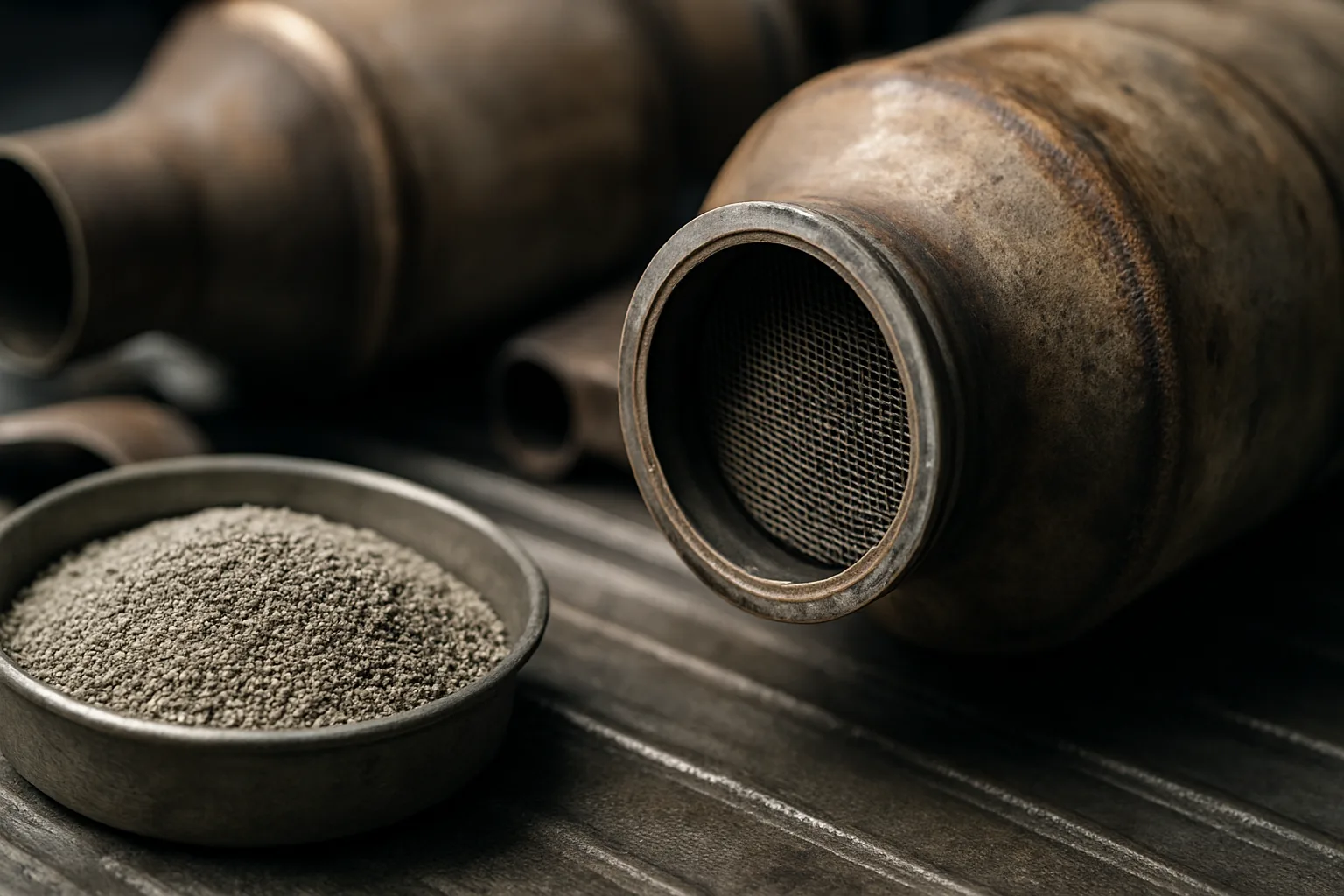
Most scrap yards will tell you what your converter is worth after you show up. But if the removal went wrong — cracked housing, damaged oxygen sensor bung, stripped bolts — you may have already lost money before anyone quoted you a price. Knowing how to remove a catalytic converter properly isn't just a mechanical question. It directly affects catalytic converter prices today, because buyers price based on condition, accessibility, and what they can actually process.
This guide walks you through the right way to pull a cat — whether you're a yard operator prepping inventory, a mechanic clearing vehicles, or an individual seller in Gatineau looking to get fair value. We'll cover tools, safety, the removal process step by step, and how to position yourself to find the best scrap cat prices in Canada once the work is done.
---Why Removal Quality Affects What You Get Paid
Buyers don't just look at what's inside the converter. They look at what's outside too. A converter with a cracked shell, heat-damaged substrate, or contamination from improper cutting tells a buyer two things: the material may be compromised, and the seller didn't care enough to do it right.
Condition matters more than most sellers realize. Intact converters with readable serial numbers command better offers because buyers can identify the substrate content — platinum, palladium, and rhodium — before they even crack it open. Platforms like SMASH use serial number lookups to give buyers real data, which creates real competition. Damage eliminates that advantage and can push your load into a lower price tier.
- Intact housing = identifiable substrate = competitive bids
- Cracked or crushed shell = unidentifiable = lower flat-rate offer
- Missing or damaged serial number = harder to quote, less buyer interest
- Contamination (oil, coolant, moisture) = substrate loss = less precious metal recovered
Do the removal right once. It pays off when you go to sell.
---Tools You Need Before You Start
Don't improvise this. A converter is bolted between the exhaust manifold and the rest of the exhaust system, often with 20+ years of heat cycles and road salt bonding everything together. The right tools make this a 30-minute job. The wrong tools make it a day of frustration and a damaged part.
Here's what you actually need:
- Penetrating oil (apply 24–48 hours before removal — this is non-negotiable on older vehicles)
- Socket set with extensions (metric and imperial — Canadian vehicles include both)
- Breaker bar or impact wrench (exhaust bolts are torqued and heat-seized)
- Reciprocating saw or angle grinder with cutting disc (for welded connections or seized flanges)
- Pipe wrench (backup for spinning hardware)
- Jack stands and floor jack (never work under a vehicle on a floor jack alone)
- Heat-resistant gloves
- Safety glasses
- Marker or paint pen (to mark and preserve the serial number location)
Note the serial number location before anything else. Photograph it. On most converters, it's stamped or laser-etched onto the shell. Knowing how much is my catalytic converter worth by serial number starts with making sure that number survives the removal process.
---Step-by-Step: How to Remove a Catalytic Converter Without Damaging It
Follow this sequence. Skipping steps is where most people damage their converter — or themselves.
- Let the vehicle cool completely. Exhaust systems hold heat for hours. A converter that's been running recently can cause serious burns. Wait a minimum of two hours after the last engine run — longer in summer.
- Apply penetrating oil 24–48 hours in advance. Soak every bolt and flange connection generously. Reapply after 12 hours. This is the single biggest factor in whether your bolts come out clean or snap.
- Lift and support the vehicle properly. Use jack stands rated for the vehicle weight. Position them on the frame, not the exhaust or floor pan. Never rely on a hydraulic jack alone.
- Photograph the serial number and overall converter position before touching anything. This is your documentation. Buyers — especially on a scrap metal auction platform like SMASH — use photos as part of the listing. Good photos mean more confident bids.
- Identify the connection type. Is the converter flanged (bolted on both ends) or welded in? Flanged connections come off with sockets. Welded connections require cutting, and you'll need to cut the pipe, not the converter body itself.
- Remove oxygen sensor(s) first. Most converters have one or two O2 sensors threaded into the housing or adjacent pipe. Remove these with an O2 sensor socket before cutting or unbolting. Damaged sensor bungs reduce the converter's appeal — and if you're selling the vehicle for parts, an intact O2 sensor has separate value.
- Break the flange bolts loose slowly. Use your breaker bar with steady, even pressure. If a bolt spins without moving, apply more penetrating oil and wait. If it snaps, you'll need an extractor kit. Work both ends before removing either.
- Cut welded connections at least 2 inches from the converter body. Never cut into the converter itself. Leave pipe stubs if needed — a buyer would rather see a converter with short pipe stubs than one with a compromised shell.
- Lower the converter carefully. It's heavier than it looks, especially on diesel applications or larger vehicles. Don't let it drop — substrate is ceramic and can crack on impact, reducing precious metal recovery.
- Inspect and document. Once it's out, check the shell for cracks, dents, or rattling (which indicates a damaged substrate). Photograph all four sides. Note the serial number clearly. This documentation is what lets buyers quote confidently.
Understanding What Drives Catalytic Converter Prices Today in Quebec
Once your converter is out, condition is only part of the equation. Precious metal spot prices — specifically platinum, palladium, and rhodium — move constantly, and they drive what catalytic converter buyers Quebec can realistically offer. You can do a perfect removal and still have your price shift between Monday and Friday based on market conditions.
That's why selling into competition matters more than calling one buyer. A single quote from one catalytic converter buyer near me open now gives you a data point. An auction gives you a market. Sellers in Gatineau and across Quebec who use a platform like find the best price for your scrap in Canada are not just getting a quote — they're letting buyers compete for their load.
Key factors that affect your converter's value right now:
- Precious metal spot prices — platinum, palladium, and rhodium fluctuate daily
- Vehicle make and model — some OEMs use significantly higher PGM loadings
- Serial number legibility — allows substrate identification before purchase
- Converter condition — intact substrate, clean shell, no contamination
- Volume — larger loads from yards and fleets attract stronger bids
- Documentation quality — photos and serial numbers increase buyer confidence
If you want to get a fair price for your scrap catalytic converters in Canada, the work starts at removal — and ends with putting your documented, intact converter in front of multiple buyers.
---How SMASH Helps Gatineau Sellers Get Competitive Cat Prices
Here's the old way: you pull your converter, call around, get one or two quotes from local buyers, and accept the best you hear. You have no idea if those buyers are offering full market value or buying low because they can.
Here's what SMASH does differently. As a SMASH scrap seller, you document your converters — serial numbers, photos, condition notes — and list them through the platform. Vetted buyers across North America bid. You see the competition. You accept the offer that makes sense. No subscription fees. SMASH only earns when you sell.
For sellers in Gatineau dealing with Quebec's active salvage and recycling market, this matters. The region generates serious converter volume — from fleet vehicles, repair shops, and auto recyclers. That volume deserves competitive pricing, not a single-buyer phone call made on someone else's terms. If you want to read Canadian scrap catalytic converter guides and understand how to get more from every load, SMASH is where that process starts.
The platform also supports serial number lookups and photo documentation — exactly the kind of professional listing that attracts serious best catalytic converter price Gatineau buyers who are ready to bid confidently rather than lowball because they're uncertain about what they're getting.
---Common Mistakes That Cost You Money at the Sell Stage
Even a good removal can lead to a bad sale if you handle the post-removal stage poorly. Here are the mistakes that consistently hurt sellers:
- Not photographing the serial number — If a buyer can't identify the substrate, they quote conservatively. Every time.
- Storing converters in wet conditions — Moisture degrades the ceramic substrate and can contaminate precious metals. Store dry.
- Cutting too close to the converter body — Damages the shell, makes buyers nervous, reduces bids.
- Selling to the first buyer who answers — One quote is not a market. It's one data point.
- Waiting too long to sell — PGM prices move. A converter worth strong money today may be worth less next month if palladium corrects.
- Not knowing what you have — Serial number lookups exist. Use them. Know your substrate before you negotiate.
Avoid these and you're already ahead of most sellers walking into a yard with a bag of cats and no documentation.
Disclaimer: Catalytic converter prices fluctuate daily based on precious metal spot rates and market conditions. Always check current rates before selling. The information in this article reflects general market dynamics as of July 2026 and should not be taken as a guaranteed price offer.
---Frequently Asked Questions
Q: How do I find out what my catalytic converter is worth by serial number?
Most converter buyers and recycling platforms offer serial number lookup tools that cross-reference the stamped or etched code against known substrate data — platinum, palladium, and rhodium content. Photograph your serial number before removal and use a platform like SMASH to get documented, competitive offers based on actual substrate identification rather than visual guessing.
Q: What are catalytic converter prices today in Canada?
Scrap cat prices in Canada change daily based on PGM spot rates — particularly palladium and rhodium, which are the most volatile. Prices also vary significantly by converter type, vehicle make, and condition. Rather than relying on a single quote, use a competitive platform to let buyers make offers based on current market data. Always check rates on the day you plan to sell.
Q: Where can I find catalytic converter buyers near me in Gatineau or Quebec?
Local buyers exist across Quebec and the Gatineau region, but local doesn't always mean best price. A scrap metal auction platform like SMASH connects you with vetted buyers across North America — not just whoever is open nearby today. More competition typically means better price discovery, regardless of where you're located.
Q: Is it legal to remove and sell a catalytic converter in Quebec?
Yes, selling scrap catalytic converters is legal in Quebec when the converter comes from a vehicle you own or have legitimate authority to dismantle. Regulations around catalytic converter sales have tightened across many provinces, and buyers typically require documentation — proof of ownership, vehicle identification, and seller ID. Always work with compliant, vetted buyers.
Q: Does converter condition really affect the price I get?
Absolutely. A converter with an intact shell, readable serial number, and undamaged substrate gives buyers the confidence to bid competitively. A cracked, crushed, or contaminated converter gets flat-rated or passed over entirely. The removal process directly affects your sale price — which is exactly why getting it right matters before you ever contact a buyer.
---If you're pulling converters — whether it's one or a full pallet — take the time to do the removal right and document what you have. Then put it in front of real competition. You can find the best scrap cat prices in Canada at best-scrap-cat-prices.ca and get a free quote on your converters today. No guessing. No single-buyer phone call. Just documented inventory, vetted buyers, and a process that works in your favor.
Stay current on scrap metal markets and industry moves — follow SMASH on LinkedIn for regular updates on PGM pricing trends, platform news, and Canadian scrap market insights.