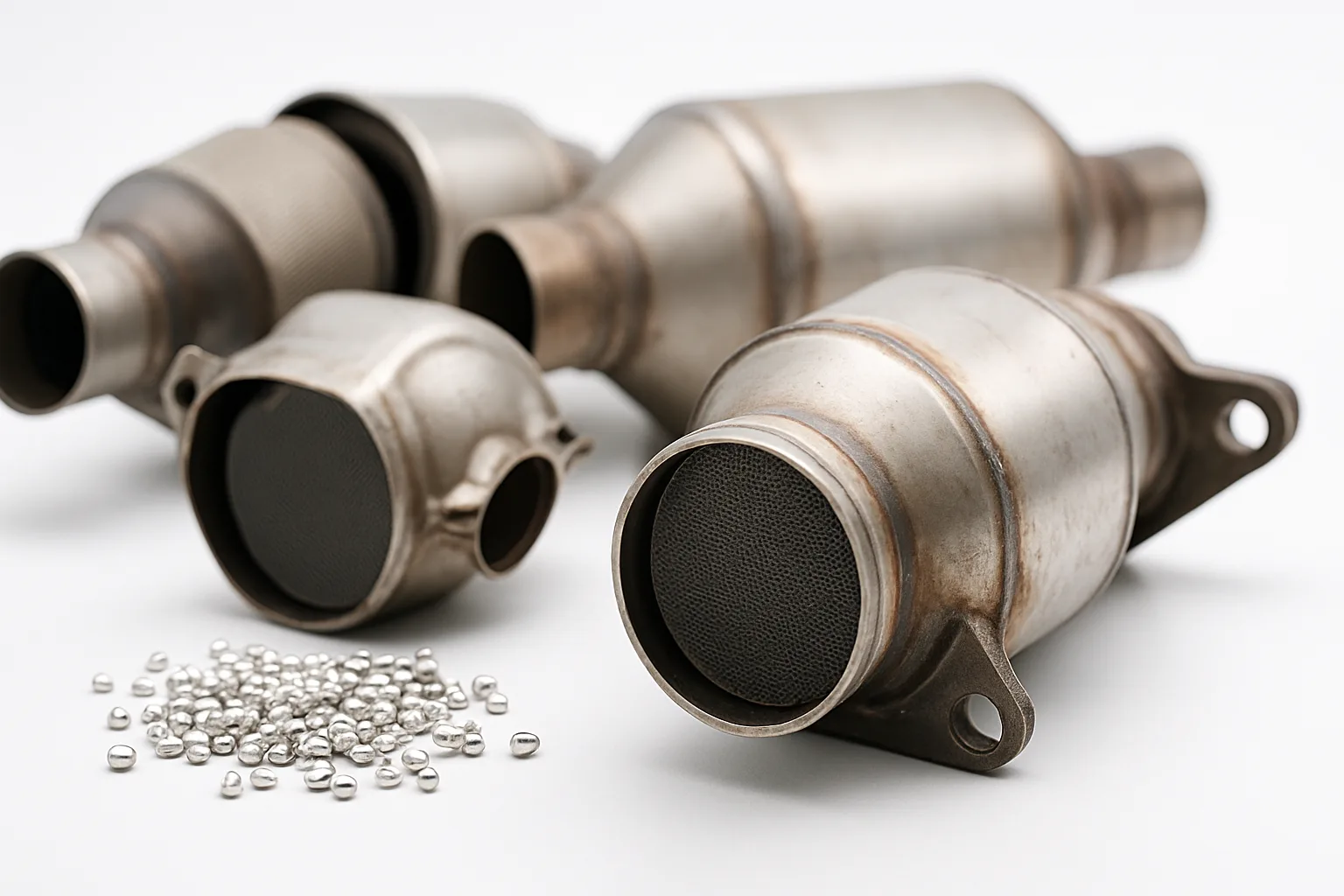
Rhodium Costs More Per Ounce Than Gold — Here's Why That Changes Everything for Scrap Cat Sellers
Most people selling scrap catalytic converters focus on platinum and palladium. Understandable. Both metals move markets. But if you want to understand why a single OEM catalytic converter can be worth hundreds of dollars, you need to understand rhodium. The rhodium price today is the wildcard that separates a good scrap cat payout from a great one — and most sellers in Saskatchewan have no idea they're sitting on it.
This isn't a story about one magic converter. It's a story about what happens when you stop guessing and start getting competitive bids on loads that actually contain high-rhodium units. Sellers who've made that shift — through platforms like SMASH — consistently walk away with better outcomes than the single-buyer, take-it-or-leave-it approach that still dominates the market in smaller centres like Yorkton.
What Makes Rhodium the Most Valuable Precious Metal in a Catalytic Converter
Rhodium is rare. Not "rare for a metal" rare. Genuinely, structurally scarce. Global annual production sits in the low hundreds of thousands of troy ounces. Compare that to gold, which clocks in at over 100 million troy ounces per year, and you start to see the supply picture clearly. Rhodium's scarcity alone drives its price — but scarcity isn't the only factor.
What makes rhodium irreplaceable in catalytic converters is its chemistry. It's the only commercially viable metal that converts nitrogen oxides (NOx) into harmless nitrogen and oxygen gases under real-world exhaust conditions. Without rhodium, a catalytic converter fails to meet modern emissions standards. Automakers can't swap it out. There is no substitute. That locked-in industrial demand, combined with near-zero above-ground stockpiles, is why the rhodium price today moves the way it does — and why it matters so much to your scrap cat value.
- Platinum handles hydrocarbon and CO oxidation
- Palladium is most effective in gasoline engines for CO and hydrocarbon conversion
- Rhodium is the NOx reducer — no commercial substitute exists
In practical terms: a catalytic converter from a European luxury sedan or a North American V8 truck may contain anywhere from a fraction of a gram to several grams of rhodium, depending on the make, model, and emission tier. That spread matters enormously. A high-rhodium unit at today's prices can carry a disproportionate share of a load's total value.
OEM Catalytic Converter Value: Why Factory Units Outperform Aftermarket Every Time
Not all converters are equal. If you've been pulling cats off vehicles and treating them all the same, you're likely leaving money behind. The OEM catalytic converter value story is simple: original equipment manufacturers load their converters with enough precious metal content to pass strict emissions certification. Aftermarket converters are designed to meet a legal minimum — and sometimes barely that.
An OEM unit from a Toyota Prius, a Ford F-250, or a BMW 5 Series will contain measurably more platinum group metals (PGMs) than a generic replacement converter from an aftermarket supplier. That difference shows up directly in your assay results. Buyers who know this — and all serious buyers do — will pay more for confirmed OEM units with proper documentation.
This is where platforms like SMASH Recycling — where verified buyers bid on your metal create real value. When you list a load with documented units — photos, VIN-traced OEM confirmations, proper packing lists — buyers can bid with confidence. That confidence translates into competition. Competition translates into better price discovery. You're not hoping one buyer gives you a fair number. You're letting the market tell you what the load is worth.
For sellers in Yorkton running through vehicle recycling inventory, this distinction between OEM and aftermarket is worth tracking carefully. Sorting your load before you list it isn't extra work — it's how you protect your margin.
The Rhodium Price Today and Why Saskatchewan Sellers Need Real-Time Market Access
Rhodium pricing isn't static. It's one of the most volatile commodity prices in the precious metals market. It has swung by thousands of dollars per troy ounce within a single year. What that means practically: the same physical converter that was worth a certain amount last quarter may be worth significantly more or less today — based entirely on rhodium market movement, not anything you did or didn't do.
This volatility cuts both ways. Sellers who time their loads well, or who at minimum sell into a competitive market rather than a single-buyer relationship, capture more upside when rhodium runs. Sellers locked into informal arrangements with one local buyer often find out after the fact that they sold at a discount.
In a city like Yorkton, the traditional path was: find a local buyer, take their offer, move on. There wasn't much infrastructure for comparison shopping. That's no longer true. The ability to sell scrap metal online through vetted platforms means a Saskatchewan seller can access buyers across North America without physically shipping to multiple locations or making fifteen phone calls. One listing, multiple competitive bids, transparent pricing tied to actual PGM content.
If you want to find the best scrap cat prices in Canada, the starting point is understanding that your price discovery process — not just your physical load — determines your outcome. Selling into a single-buyer market in 2026 is the equivalent of selling a house without listing it publicly. You might get a fair price. You might not. You won't know either way.
How SMASH Helps Scrap Cat Sellers in Saskatchewan Get Competitive Bids
SMASH is built for exactly this scenario. You have a load of converters. Some are high-value OEM units. Some are lower-grade. You know the rhodium price today has been moving. You want to know what the market will actually pay — not what one buyer tells you it will pay.
The SMASH platform connects sellers with vetted buyers across North America. Your load gets documented — photos, serial tracking, inventory details — and listed for competitive bidding. Buyers who specialize in used catalytic converter scrap value bid on what they can see. No guesswork. No information asymmetry. Your documented load gives serious buyers the confidence to bid aggressively.
There are no subscription fees. SMASH only generates revenue when a transaction closes. That alignment matters — it means the platform has a direct incentive to help you achieve the best possible outcome, not to lock you into a monthly charge regardless of results. If you're a Yorkton yard operator or a Saskatchewan vehicle recycler looking to get a fair price for your scrap catalytic converters in Canada, the competitive auction format is designed specifically to work for your situation.
Auto-invoicing and documentation tools mean you're not doing administrative work by hand. BOLs, packing lists, photo records — the platform handles the paper trail that professional buyers expect and that protects you in any dispute. For operators who've been running on handshakes and spreadsheets, that infrastructure alone is worth the shift.
What a Smart Scrap Cat Sale Actually Looks Like in Practice
Let's walk through what the informed approach looks like versus the default approach most sellers still use.
The old way: Pull converters off vehicles. Accumulate a load. Call your regular buyer. Take their offer. Maybe it's fair. You have no way to verify.
The SMASH way: Pull converters. Sort OEM from aftermarket where possible. Photograph units. Build a documented inventory with serial tracking where applicable. List on SMASH. Multiple vetted buyers review your load. They bid based on what they see. You accept the best offer. Transaction closes with auto-generated documentation.
The difference isn't just price — though more buyers means better price discovery. It's information. When you sell through a competitive process, you learn what your loads are actually worth. That knowledge compounds. You get better at sorting inventory. You understand which vehicle makes produce high-rhodium units. You start making smarter decisions about what to hold and what to move.
Saskatchewan vehicle recyclers and scrap yards in communities like Yorkton are sitting on genuine value. The rhodium question isn't academic — it's sitting in your inventory right now. To read Canadian scrap catalytic converter guides and build that market knowledge, start with understanding PGM content by converter type. Then build the process around selling competitively.
If you're looking for Yorkton scrap metal services, local options exist — but pairing local logistics with national buyer competition through SMASH is how you stop leaving money in the load.
The scrap cat market rewards sellers who understand what they have and sell it the right way. Rhodium is valuable. Your OEM units are worth more than aftermarket. And competitive bidding surfaces that value in a way that no single-buyer relationship can. If you want to know what your load is actually worth in today's market, find the best scrap cat prices in Canada — get a free quote at best-scrap-cat-prices.ca and let the market show you the number.
Disclaimer: Precious metal prices including rhodium fluctuate daily based on global market conditions. All pricing references are directional. Always check current spot prices before selling your load.
Frequently Asked Questions
Q: What is the rhodium price today and how does it affect my scrap cat value?
Rhodium spot prices change daily and are tied to global supply and industrial demand from the automotive sector. Because rhodium is the rarest of the three platinum group metals in catalytic converters, even small shifts in its price can significantly change the value of your load. Check live spot prices before listing or accepting any offer — a price from last week may no longer reflect the market.
Q: How do I find catalytic converter buyers near me in Yorkton or Saskatchewan?
Local buyers exist in Saskatchewan, but proximity doesn't guarantee competitive pricing. Using a platform like SMASH lets you access vetted buyers across North America while still managing your load locally. The best outcome usually comes from combining local logistics with national buyer competition — not limiting yourself to whoever is geographically closest.
Q: Are OEM catalytic converters worth more than aftermarket when scrapping?
Yes, significantly more in most cases. OEM units are loaded with enough platinum, palladium, and rhodium to pass emissions certification, which typically means higher PGM content than aftermarket replacements designed to meet a minimum legal threshold. Sorting OEM from aftermarket before you list your load can improve your price discovery outcomes.
Q: Can I sell catalytic converters online in Saskatchewan through SMASH?
Yes. SMASH connects Saskatchewan sellers with vetted buyers through a competitive auction format. You document your load — photos, inventory details, serial tracking — and buyers bid based on what they see. No subscription fees, no guesswork. The platform is designed for exactly this type of transaction.
Q: Why does rhodium cost more than gold or platinum?
Rhodium is produced in extremely limited quantities globally — primarily as a byproduct of platinum and palladium mining in South Africa. There is no viable commercial substitute for its role in reducing nitrogen oxide emissions in catalytic converters. That combination of inelastic industrial demand and structural supply scarcity drives rhodium's price above both gold and platinum in many market conditions.
Stay current on scrap metal market movements and precious metal pricing — follow SMASH on LinkedIn for industry updates, market insights, and scrap cat news relevant to Canadian sellers.