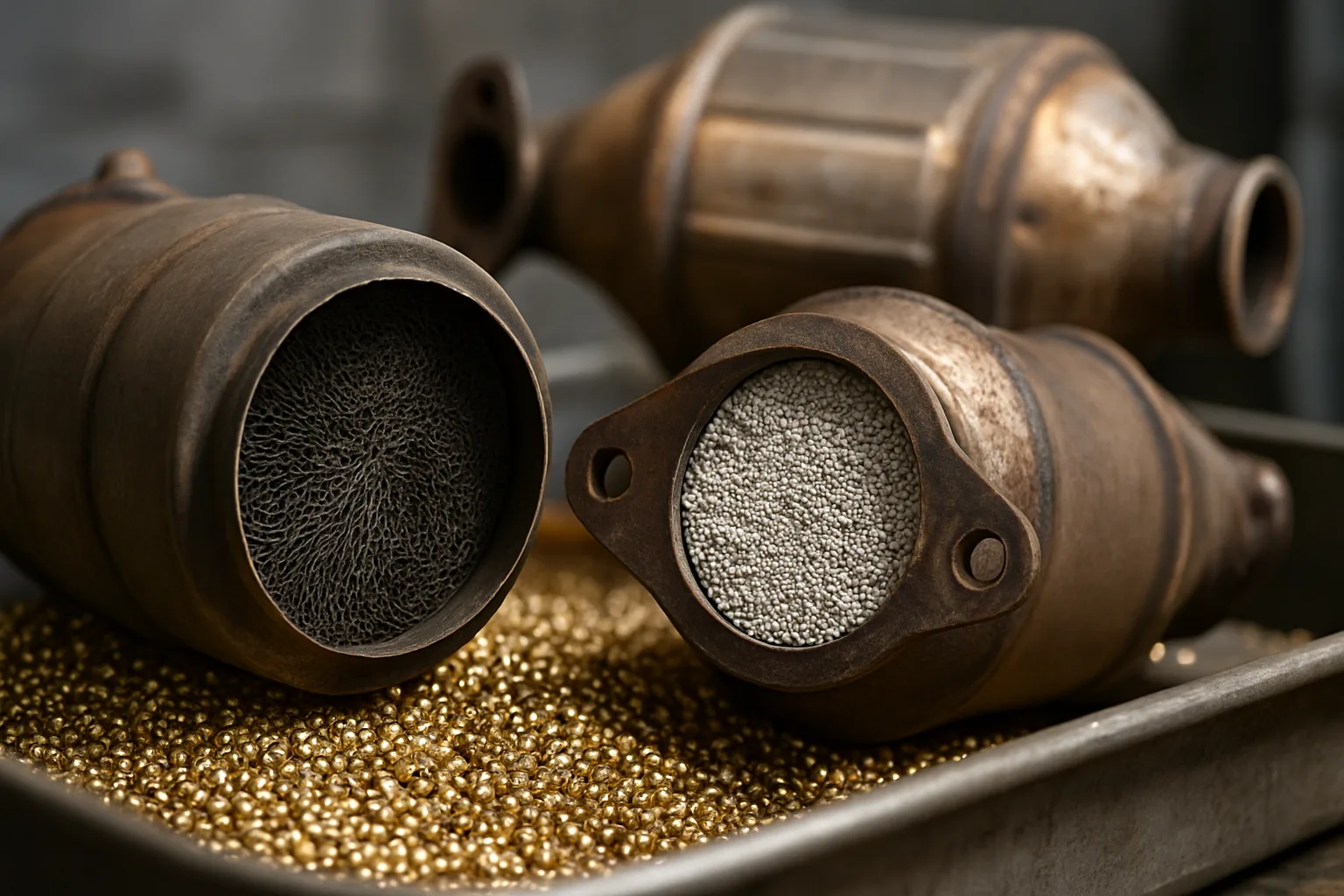
Foil vs. Bead Catalytic Converters: What's the Difference and What Are They Worth as Scrap?
Most scrap yards treat all catalytic converters the same. Toss them in a pile, call one buyer, take what you're offered. But here's the thing — not all cats are built the same, and not all of them carry the same precious metal value. Foil and bead style catalytic converters sit in a different category than your standard ceramic honeycomb unit, and if you're selling them without knowing the difference, you're probably leaving money on the table.
Whether you're a yard in Chilliwack sorting through a mixed load, or a private seller in British Columbia with a handful of converters pulled from older diesel equipment, understanding what you actually have is the first step to getting a fair price. Let's break down what foil and bead cats are, where they come from, and what drives their catalytic converter scrap value in today's market.
What Is a Foil Style Catalytic Converter?
A foil-style catalytic converter uses a metallic substrate instead of the ceramic honeycomb most people are familiar with. The internal structure is made from thin corrugated metal foil — typically a high-temperature alloy — wound or stacked in a tight configuration. This creates the same high surface area needed for catalytic reaction, but in a metallic rather than ceramic form.
You'll find foil-style cats in a few specific applications:
- High-performance and motorsport vehicles
- Some European diesel passenger cars
- Certain diesel trucks and heavy equipment
- Motorcycles and powersport vehicles
- Some older OEM applications from the 1980s and 1990s
The metallic substrate in foil cats is typically a FeCrAl (iron-chromium-aluminum) alloy. It still carries a platinum group metal (PGM) washcoat — platinum, palladium, and rhodium — but the base material and the way those PGMs are deposited differs from ceramic units. This affects how they're processed at the refinery level, which in turn affects what buyers will pay for them.
One important detail: foil cats are generally harder to identify visually from the outside. The shell looks similar to a standard converter. You need to cut or shake it — a metallic rattle is a giveaway — or know the vehicle application to identify one confidently. If you're selling a mixed load and don't flag the foil units, a buyer may grade the whole load at the lower end.
What Is a Bead Style Catalytic Converter?
Bead-style catalytic converters use small ceramic or alumina beads as the substrate — essentially loose pellets coated with PGMs and packed inside the converter housing. When you shake a bead cat, it rattles distinctly. That sound is your first clue.
Bead cats were more common in North American vehicles from the late 1970s through the mid-1980s, particularly in GM, Ford, and Chrysler products. They were also used in some industrial and off-road equipment. Today, they show up most often when yards are processing older vehicles or estate lots with aged inventory.
Common sources for bead-style cats include:
- Late-1970s and 1980s domestic North American vehicles
- Older light trucks and fleet vehicles
- Some industrial emission control equipment
- Vintage performance builds with original emissions equipment
The bead substrate gives a high surface area for catalytic activity and holds PGMs differently than a ceramic honeycomb. Refiners process bead material through a different circuit than ceramic — the beads are crushed, sampled, and smelted. Because of this, most buyers have a separate pricing category for bead material. The catalytic converter scrap price for beads can vary significantly depending on PGM content per unit and the overall weight of the lot.
How Catalytic Converter Scrap Value Is Calculated for Foil and Bead Units
Here's where most sellers get confused — or get burned. The scrap value of any catalytic converter comes down to three things: the type and concentration of PGMs it contains, the weight of recoverable substrate material, and what the current spot prices for platinum, palladium, and rhodium are doing.
For foil and bead cats specifically, the calculation has some additional nuance:
- Foil cats often have lower PGM loading per unit compared to ceramic honeycomb cats from the same era. The metallic substrate is efficient, but refineries may apply a processing premium because the recovery process differs.
- Bead cats vary widely. A 1970s-era domestic bead cat might carry reasonable platinum content, but yield will depend heavily on how intact the beads are and whether the unit has been tampered with or voided.
- Mixed lots that combine foil, bead, and ceramic units without separation will typically be graded conservatively by buyers — because they can't accurately assay what they're getting without sorting first.
The practical takeaway: separating your foil and bead units from your ceramic cats before you sell makes a measurable difference. Buyers price what they can verify. When you give them clean, sorted inventory with accurate descriptions, they can price more aggressively because their risk drops. That's exactly the kind of price discovery that platforms like get competitive bids for your scrap in Canada are built to create — putting your documented inventory in front of multiple vetted buyers at once.
Disclaimer: Catalytic converter scrap prices fluctuate with PGM spot markets and can change daily. Always check current rates before finalizing any sale.
Selling Foil and Bead Cats in Chilliwack and British Columbia — What You Need to Know
If you're operating a yard or selling cats in Chilliwack or anywhere across British Columbia, you're working in a market that's becoming more regulated and more competitive at the same time. Provincial documentation requirements for catalytic converter sales have tightened in recent years, and legitimate buyers increasingly expect photo documentation, vehicle provenance, and proper packing lists before they'll commit to a price.
This isn't a bad thing — it actually protects legitimate sellers. When your inventory is documented properly, you can defend your price. When a buyer knows exactly what they're looking at — a sorted lot of bead cats from identified vehicles, or a clean stack of foil units from diesel equipment — they can bid with confidence. That confidence shows up in the offer.
For Chilliwack sellers specifically, the local market has limited buyer competition for specialty converter types like foil and bead units. Most regional buyers focus on high-volume ceramic cats from passenger vehicles. If you take foil or bead material to a single local buyer without shopping it, you may be getting a price built for convenience — theirs, not yours.
That's the exact gap that finding the best scrap cat prices in Canada through a competitive platform is designed to close. More buyers seeing your documented inventory means better price discovery. It's not complicated — it's just math.
How to Prepare Your Foil and Bead Cats for Sale
Getting the best catalytic converter scrap value from foil and bead units comes down to preparation. Don't show up with a mixed bin and hope for the best. Here's how to set yourself up properly:
- Sort by type. Separate foil, bead, and ceramic cats into distinct lots before you approach any buyer. Label them clearly.
- Document the source. Where possible, note the vehicle make, model, and year each converter came from. VIN-level documentation gives buyers significantly more confidence in foil and bead units, which are harder to grade visually.
- Photograph the units. Both ends of each converter, plus the overall lot. Buyers pricing remotely need to see condition — cracks, void damage, missing substrate material.
- Weigh the lot accurately. Know your total weight broken down by type. Don't estimate — buyers discount when they're not sure what they're buying.
- Check for substrate integrity. A bead cat that's been voided (beads dumped out) or a foil cat with burned-out substrate is worth far less. Flag damage upfront rather than letting a buyer discover it on arrival.
If you're newer to scrap metal recycling in Canada and haven't gone through this process before, it feels like extra work upfront. It pays back fast. A well-documented lot of specialty cats sells faster and at better prices than a mystery bin. You can read Canadian scrap catalytic converter guides for more practical advice on sorting, documentation, and what buyers actually want to see.
Why Competitive Bidding Changes the Game for Specialty Converter Types
Foil and bead cats are exactly the kind of material where the difference between one buyer and three buyers can be significant. These aren't commodity units that every buyer prices identically. Specialty substrate types attract different buyers with different refining relationships — and those relationships affect what they're able to pay.
SMASH was built for exactly this situation. Instead of calling one buyer and accepting whatever number they give you, you put your documented inventory in front of a pool of vetted buyers and let competition do the work. No subscription fees. No guessing. If your lot sells, SMASH earns with you — not before.
If you're in Chilliwack or anywhere in British Columbia and you have foil or bead cats sitting in your yard, the question isn't whether to sell them — it's whether you're selling them to the right buyer at the right price. A competitive auction format with proper documentation gives you a real answer to that question, not just the number from whoever picked up the phone today.
When you're ready to move your specialty converter inventory, get a fair price for your scrap catalytic converters in Canada by getting your material in front of buyers who actually compete for it. That's how you find out what your foil and bead cats are really worth.
Frequently Asked Questions
Q: How do I know if I have a foil or bead catalytic converter?
The easiest check is to shake the unit. A bead cat produces a distinct rattling sound from the loose pellets inside. A foil cat will have a metallic sound if rattled, different from the dull thud of a ceramic honeycomb. If you're unsure, note the vehicle application — foil cats are common in motorcycles, some European diesels, and performance vehicles, while bead cats typically come from late-1970s to mid-1980s North American cars and trucks.
Q: Are foil and bead cats worth more or less than ceramic honeycomb converters?
It depends on the specific unit and current PGM spot prices — there's no blanket answer. Some foil cats carry strong PGM loading and price well; some bead cats from older vehicles hold meaningful platinum content. The key is that they price differently than ceramic units and need to be sold to buyers who can properly assess and refine specialty substrate material. Mixing them into a general ceramic lot usually results in a lower blended price.
Q: What are cat converter prices like in Chilliwack right now?
Catalytic converter prices in Chilliwack — and across British Columbia — follow PGM spot markets, which shift daily based on platinum, palladium, and rhodium pricing. Local buyer competition also affects what you're offered. For foil and bead units specifically, pricing varies more than it does for standard ceramic cats. Getting quotes from multiple buyers through a platform like SMASH gives you a clearer picture of where the market actually sits. Always verify current rates before committing to a sale.
Q: Do I need documentation to sell catalytic converters in British Columbia?
Yes. British Columbia has regulations governing the sale of catalytic converters to recyclers, including requirements for seller identification and documentation of where the converters came from. Legitimate buyers will ask for this information. Having proper documentation — vehicle source, photos, packing lists — also helps you get better prices, because buyers can price accurately when they know what they're buying.
Q: What is the best way to find a catalytic converter recycling company that buys foil and bead cats in Canada?
Look for a buyer or platform that specifically lists foil and bead cats as materials they handle — not just general catalytic converter buyers. Platforms like SMASH connect sellers with vetted buyers across Canada who have the refining relationships to process specialty substrate types accurately. Bring documented, sorted inventory to get the most competitive pricing on these specialty units.
---Stay current on PGM markets, scrap regulations, and converter pricing trends by following SMASH on LinkedIn — practical industry updates, no noise.