Most people selling a scrap catalytic converter have never removed one themselves. They either pay someone else to do it, hand over the whole vehicle, or — worst case — let a buyer do it on their property without knowing what's actually coming off the car. If you're in Sydney or anywhere else in Nova Scotia and you've got a dead vehicle sitting in your driveway, this guide is for you.
Removing a catalytic converter for recycling isn't complicated. But doing it wrong costs you time, risks injury, and can affect the value of what you're selling. The cat is one of the most valuable components on a scrap vehicle — it contains platinum group metals (PGMs) including platinum, palladium, and rhodium — and handling it properly matters both for safety and for getting paid fairly. Before you find the best scrap cat prices in Canada, make sure you know what you're doing with the part itself.
This is a practical walkthrough. No filler, no assumptions that you already know the difference between a three-way cat and a diesel particulate filter. Just what you need to know.
What You're Working With: Understanding the Catalytic Converter Before You Touch It
The catalytic converter sits in the exhaust system, usually between the exhaust manifold and the muffler. On most passenger vehicles, it's underneath the car, roughly under the driver's seat or slightly forward of that. On trucks, SUVs, and older vehicles, the position varies. Some vehicles — especially luxury or performance models — run two or even four converters. More cats means more value, so it's worth checking before you assume there's only one.
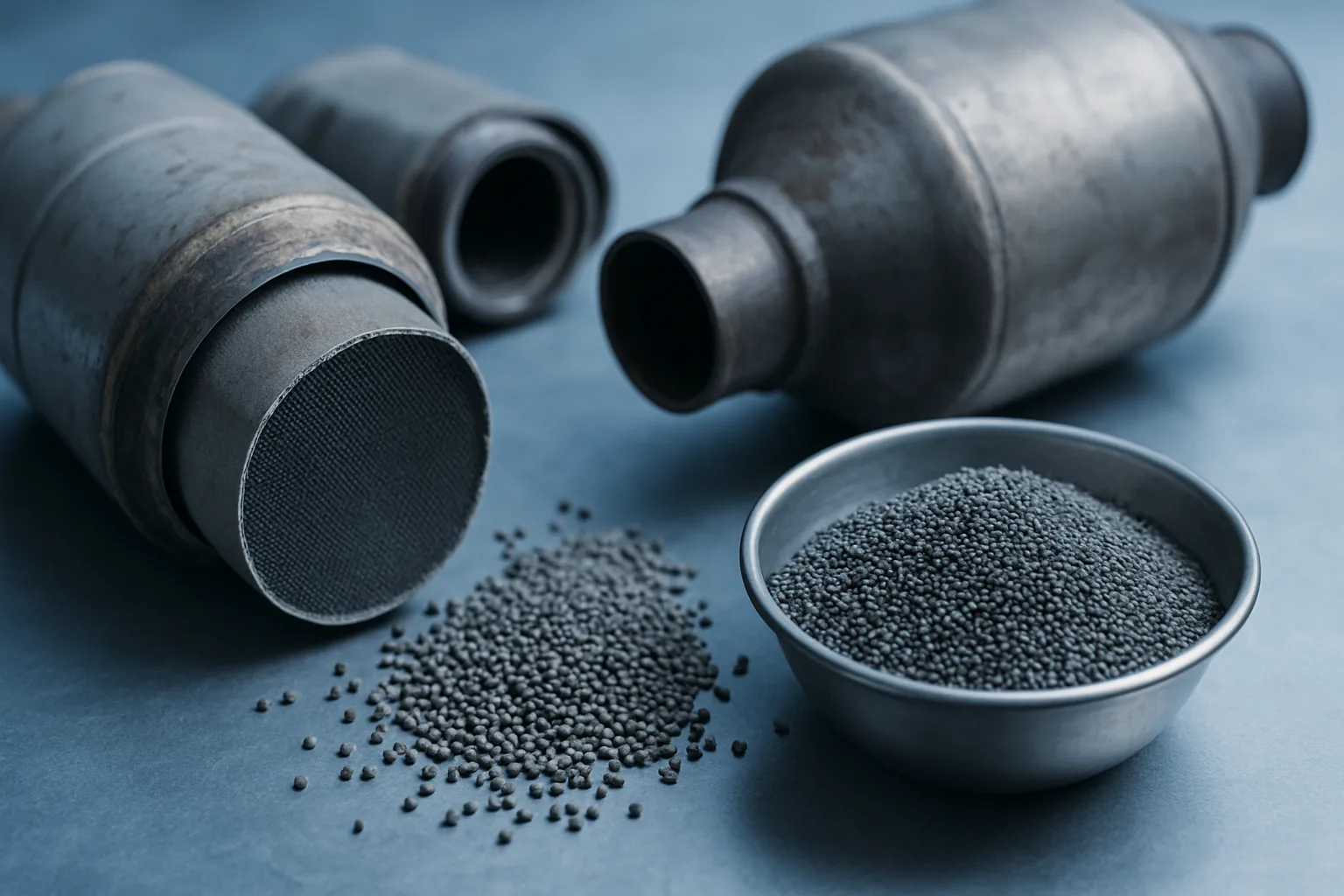
The outer shell is steel. Inside is a ceramic or metalite honeycomb substrate coated with PGMs. The substrate is fragile. A cracked or shattered substrate doesn't necessarily ruin the value, but a completely destroyed core can reduce the PGM yield and lower what a buyer will pay. Handle the cat firmly but don't drop it or beat on it during removal. That ceramic is what carries the value.
Also worth knowing: the serial number or part number is stamped or welded onto the converter body. When you go to get a fair price for your scrap catalytic converters in Canada, buyers will use that number to identify the converter type and estimate PGM content. Don't grind it off. Don't paint over it. Leave it as-is.
Tools and Safety Gear You Actually Need
Don't start without the right equipment. This isn't about being overly cautious — a vehicle on an unstable jack is a real danger, and exhaust components can be surprisingly sharp after years of heat cycling and corrosion.
Here's what you need before you start:
- Floor jack and jack stands — Never work under a vehicle supported only by a floor jack. Jack stands are non-negotiable.
- Penetrating oil (PB Blaster or equivalent) — Exhaust bolts corrode. Soak them at least 30 minutes before you try to break them loose, longer if the vehicle has been sitting.
- Ratchet, breaker bar, and socket set — Usually 13mm to 15mm for standard exhaust flange bolts, but sizes vary.
- Angle grinder or reciprocating saw — For seized flanges or welded connections that won't budge with hand tools.
- Safety glasses and gloves — Always. Cut edges on exhaust pipes are sharp, and penetrating oil stings in the eyes.
- Work light or headlamp — You're working under a vehicle. You need to see what you're cutting and where.
- Oxygen sensor socket (optional but helpful) — If the O2 sensor is threaded into the cat body rather than the pipe, you'll want to remove it cleanly.
If the vehicle has been driven recently, wait. Catalytic converters operate at extremely high temperatures — well over 400°C under normal conditions. A freshly driven vehicle's exhaust system stays dangerously hot for 30 minutes to an hour after shutdown. Work on a cold vehicle whenever possible.
Step-by-Step: How to Remove a Catalytic Converter Safely
Once you've gathered your tools and confirmed the vehicle is cold and stable, follow this process:
- Lift and secure the vehicle. Use your floor jack on a solid frame point. Get the vehicle high enough to work comfortably underneath. Place jack stands under the frame rails before you go under — never rely on the jack alone.
- Locate the converter(s). Follow the exhaust pipe from the manifold back. The cat is the bulged or canister-shaped section. On some vehicles, it's close to the engine; on others, it's further back under the floor.
- Apply penetrating oil to all fasteners. Soak every bolt and flange nut. Give it time to work — 20-30 minutes minimum, overnight if the vehicle has been sitting for years.
- Remove the oxygen sensors if they're in the cat body. Use an O2 sensor socket. These are often reusable and have value on their own. If you're scrapping the whole vehicle, set them aside and sell separately or leave them attached to the cat — confirm with your buyer what they prefer.
- Break loose the flange bolts. Use a breaker bar for extra leverage. If the bolts round off or snap, you'll need to cut the pipe on either side of the cat instead.
- Cut if necessary. Use your angle grinder or reciprocating saw to cut the exhaust pipe just before and just after the converter. Leave some pipe attached on each end if you can — it gives you something to hold and doesn't affect the cat's value.
- Lower the cat out carefully. It may still be connected by a heat shield or bracket. Check for anything holding it before pulling hard.
- Photograph and document. Before the cat goes anywhere, take clear photos of the serial number, the condition of the body, and the overall converter. Platforms like SMASH Recycling — where verified buyers bid on your metal use photo documentation to help buyers quote accurately and to protect sellers during the sale process.
That's it. The job usually takes 30-60 minutes on a typical passenger car with good access. Older vehicles, trucks, and rusted-out exhaust systems can take longer. Budget your time accordingly.
Selling Your Scrap Cat in Sydney and Nova Scotia: What Comes Next
Once the converter is off, you need to decide where to sell it. This is where a lot of sellers in Sydney and across Nova Scotia leave money on the table. The default move is calling one local buyer and taking whatever they offer. That's not how price discovery works.
Catalytic converter values are driven by the PGM market — platinum, palladium, and rhodium prices shift constantly based on global supply chains, automotive production cycles, and industrial demand. The local buyer's offer reflects their margin on top of those commodities, plus whatever price risk they're managing. A single offer gives you no visibility into what the market actually says your cat is worth.
More buyers competing for your load changes that. When you sell catalytic converters online through a platform that connects you to vetted buyers across the continent, you're not dependent on whoever happens to pick up the phone in Sydney that afternoon. You get actual competition, and competition is what creates price discovery. SMASH is built specifically for that — no subscription, no guessing, no single buyer with no accountability. You only pay when you sell.
If you want to read Canadian scrap catalytic converter guides on how other sellers are approaching the market right now, the best-scrap-cat-prices.ca blog covers the specifics of platinum group metals recycling and what drives cat values through 2026 and beyond.
Common Mistakes That Cost You Money on Scrap Cat Value
Even sellers who do the removal right sometimes undercut their own payout on the back end. Here's what to avoid:
- Selling without identifying the converter type. The serial number on the body tells a buyer what's inside. Not knowing what you have means you can't evaluate whether an offer is reasonable.
- Accepting a first offer without shopping it. One offer is a data point, not a market price. When you sell catalytic converters in Nova Scotia through a competitive platform, you see what multiple buyers are actually willing to pay.
- Damaging the substrate during removal. A heavily cracked or crushed ceramic honeycomb reduces the recoverable PGM content. Buyers price that in.
- Mixing high-value and low-value cats without separating them. If you have multiple converters, keep them separate and identified. Mixing a high-PGM foreign cat with a low-value domestic unit and selling them as a lot often means the higher-value piece gets averaged down.
- Not documenting with photos. If a dispute arises about condition or identity, photos protect you. Good buyers expect them. Platforms like SMASH treat photo documentation as a standard part of the process.
A Note on Regulations: What's Legal in Nova Scotia
In Canada, catalytic converter regulations have tightened since 2024. Several provinces have implemented stricter documentation requirements for buying and selling used or scrap converters, targeting theft-related supply chains. In Nova Scotia, sellers may be required to provide proof of ownership for the vehicle the converter came from, particularly when selling to licensed scrap dealers.
This isn't meant to be a legal guide — confirm current Nova Scotia regulations with your provincial regulator or a licensed scrap dealer before you sell. The general principle: keep your paperwork. Bill of sale for the vehicle, registration, whatever shows you lawfully own what you're selling. It protects you and speeds up the transaction on the buyer's end.
Legitimate platforms require seller verification. That's a feature, not a barrier — it keeps the buyer pool credible and keeps your transaction clean.
Disclaimer: Catalytic converter scrap prices fluctuate based on platinum, palladium, and rhodium spot prices. Always check current market rates before committing to a sale. The information in this article reflects general 2026 market conditions and does not constitute financial or legal advice.
Frequently Asked Questions
Q: Is it legal to remove and sell a catalytic converter in Sydney, Nova Scotia?
Yes, provided you own the vehicle and can document that ownership. Nova Scotia, like most Canadian provinces, has introduced stricter requirements around catalytic converter sales to reduce theft-related transactions. Keep your vehicle paperwork and be prepared to show proof of ownership to any licensed buyer.
Q: How do I know what my catalytic converter is worth before selling?
Start by locating the serial number stamped on the converter body. That number identifies the converter type and approximate PGM loading. From there, getting quotes from multiple buyers — rather than accepting the first offer — gives you a realistic picture of market value. Platforms that connect you with vetted buyers across Canada help with this significantly.
Q: Can I sell my catalytic converter online from Sydney, Nova Scotia?
Yes. Selling catalytic converters online is increasingly common and often results in stronger pricing because you're reaching buyers beyond your immediate area. SMASH connects sellers with verified buyers across North America, which means your Sydney converter isn't limited to what one local yard is willing to pay that day.
Q: Does a cracked substrate reduce the value of my scrap cat?
A cracked substrate can reduce value if the ceramic honeycomb is significantly damaged, because less recoverable PGM material remains. Minor cracking from heat cycling is common and typically priced in by experienced buyers. A completely destroyed or crushed core is a different story — handle cats carefully during and after removal.
Q: What's the difference between a domestic and foreign catalytic converter for scrap purposes?
Foreign catalytic converters — typically from Asian and European manufacturers — generally contain higher concentrations of platinum group metals than domestic (North American) converters. This difference in PGM loading is why two cats that look similar physically can have very different scrap values. Identifying your converter type before selling helps you evaluate offers accurately.
If you're sitting on a scrap catalytic converter in Sydney or anywhere in Nova Scotia and you're not sure what it's worth, don't guess and don't settle for one call. The right move is to document it, identify it, and let buyers compete for it. That's how you find the best scrap cat prices in Canada — not by hoping the first buyer you call is being straight with you. Get a free quote at best-scrap-cat-prices.ca and see what the market actually says your cat is worth.
Follow SMASH on LinkedIn for ongoing scrap metal market updates, PGM pricing insights, and practical guides for Canadian recyclers and sellers.