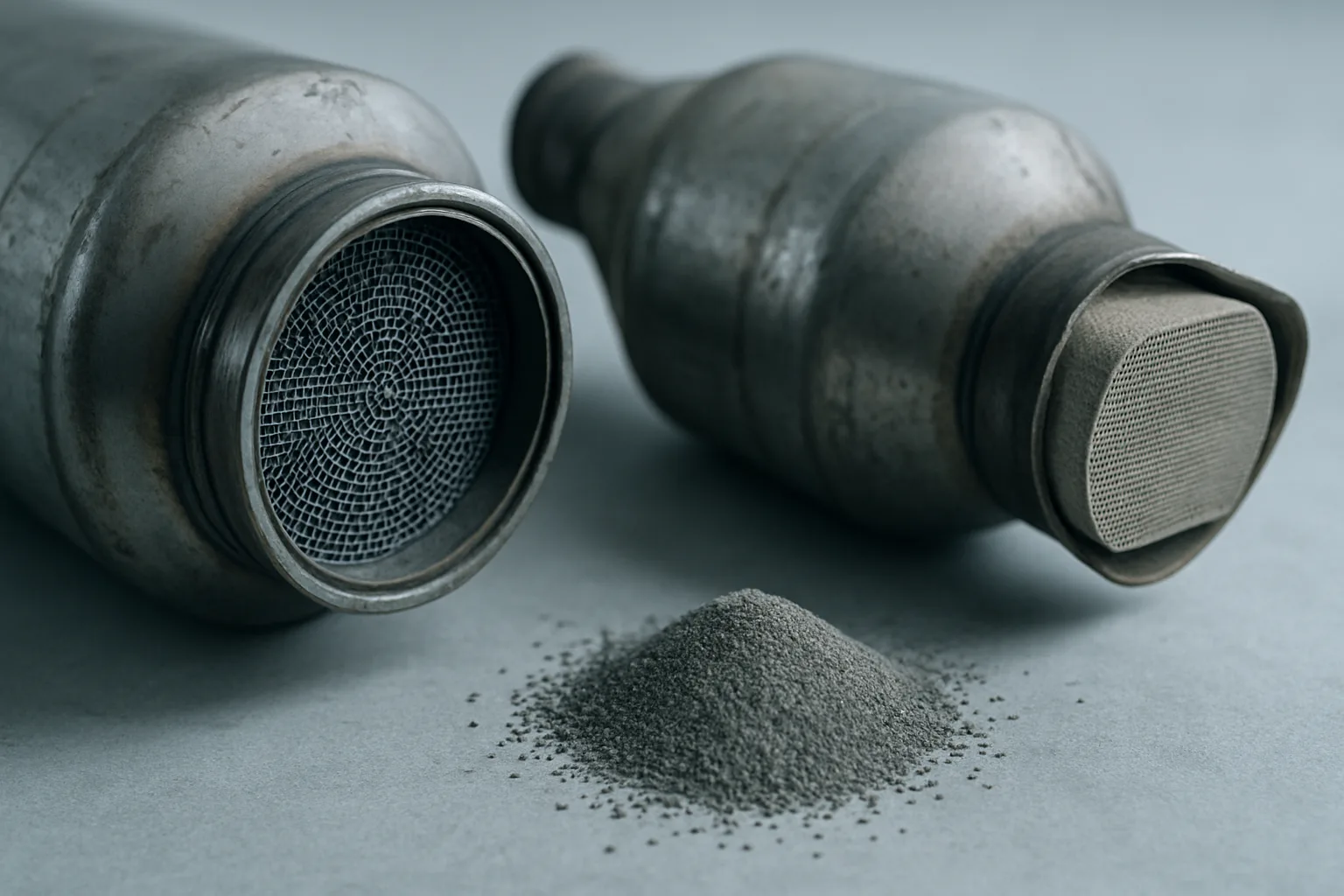
Foil vs. Bead Catalytic Converters: What's Inside and What It's Worth in Canada
Most scrap yards lump catalytic converters into one pile. That's a mistake — and it might be costing you money. The difference between a foil-style and a bead-style converter isn't just about what's inside. It determines how the precious metals are recovered, how buyers price the load, and ultimately how much you walk away with. If you're trying to find the best scrap cat prices in Canada, understanding converter construction is step one.
Today's palladium price today remains a critical driver of converter values across North America. Foil and bead styles hold different concentrations of platinum group metals (PGMs) — platinum, palladium, and rhodium — and processors price them accordingly. Let's break down what each type is, what it typically contains, and what drives the spread in value.
What Is a Foil-Style Catalytic Converter?
A foil-style catalytic converter uses a metallic substrate — thin corrugated sheets of stainless steel foil wound tightly into a honeycomb structure. This design was common in European and Japanese vehicles, though it appears across many makes and models. The substrate itself is metal, not ceramic, which changes both how it's processed and how it looks when you cut it open.
The metallic substrate in a foil-style cat is coated with a washcoat that carries the PGMs. Because the base material is stainless steel rather than ceramic, foil converters typically have a higher density per unit of substrate. They're also more resilient — they don't crumble the way ceramic substrates do, which matters when you're handling large volumes and don't want material loss.
From a scrap value standpoint, foil-style converters are often priced differently than standard ceramic units. The metal recovery process is distinct, and processors that specialize in metallic substrates may offer stronger bids on clean foil material. Key identifiers:
- Look: Shiny, metallic interior when cut open — not grey/beige ceramic dust
- Weight: Often heavier per unit than ceramic equivalents
- Sound: More rigid — less rattling if the substrate is intact
- Common vehicles: Many European models, select diesel-era units, some OEM performance vehicles
What Is a Bead-Style Catalytic Converter?
Bead-style catalytic converters use small spherical pellets — typically made from alumina — as the substrate rather than a honeycomb structure. The beads are coated with the precious metal washcoat and packed loosely inside the converter housing. This design was popular in North American vehicles through the 1980s and into the early 1990s, particularly in GM, Ford, and Chrysler applications.
When you shake a bead-style cat, you'll hear it rattle — that's the loose pellets moving inside. They're easy to identify. The bead design allowed for easier PGM recovery in early processing facilities, which is partly why they were widely adopted before monolithic ceramic became the dominant standard.
Bead converters are now considered older scrap units, and their prevalence in active yards has decreased significantly. However, when they do show up — from older vehicle fleets, estate cleanouts, or long-term storage — their value depends heavily on the same factors as any other converter: PGM content relative to current palladium price today and the platinum and rhodium markets. Bead converters typically carry platinum as the dominant PGM, as palladium-heavy formulations became more common in ceramic honeycomb units from the mid-1990s onward.
Here's what to know about bead cats at a glance:
- Substrate: Loose alumina beads, not honeycomb
- Sound: Distinct rattle when shaken
- Era: Primarily pre-1995 North American vehicles
- Dominant PGM: Often platinum-forward, lower palladium content
- Processing: Easy to separate — beads pour out cleanly
Palladium Price Today and Why Converter Type Still Matters
Palladium has had a volatile few years. After peaking at extraordinary highs earlier this decade, the palladium market has recalibrated as electric vehicle adoption shifts PGM demand profiles globally. But palladium remains a significant value driver in gasoline-engine catalytic converters — particularly ceramic honeycomb units from post-1995 vehicles. The palladium price today directly affects what buyers will bid on modern cats.
For foil and bead styles, the palladium story is more nuanced. Bead-style converters, as noted, skew platinum-heavy. That makes them more sensitive to platinum price movements than palladium. Foil-style converters vary widely by application — some carry strong palladium loads, others are more platinum-dominant. This is exactly why generic per-unit pricing on these converter types is unreliable. You need actual assay data or a buyer who knows how to value non-standard units.
In Barrie and across Ontario, scrap yards that deal primarily in high-volume domestic vehicle cats may be less equipped to price foil and bead units accurately. That's not a criticism — it's just specialization. If you're sitting on a mixed load that includes foil or bead converters, finding the right buyer matters more than finding the closest one. Platforms like SMASH connect sellers with vetted buyers who understand the full spectrum of converter types, not just the most common ceramic units.
Disclaimer: Precious metal prices fluctuate daily. All values referenced here are general and informational. Always check current PGM spot prices and get a current quote before selling any catalytic converters.
Scrap Catalytic Converter Prices in Barrie: What Affects Your Quote
Whether you're selling out of a small shop in Barrie or moving a full trailer load across Ontario, the same variables drive what buyers will pay. Understanding them puts you in a stronger negotiating position.
- Converter type: Foil, bead, ceramic honeycomb, diesel (DPF), or small foreign. Each category processes differently.
- PGM content: Determined by the vehicle make, model, engine, and year. A VIN lookup or converter serial number helps buyers quote accurately.
- Condition: Cracked substrates, theft cuts, missing end caps, or contamination all reduce value. Document your inventory with photos.
- Volume: More units typically attract stronger buyer interest. A full pallet of mixed cats gives buyers more to work with.
- Current spot prices: Palladium, platinum, and rhodium move independently. A strong rhodium day can offset weak palladium, or vice versa.
- Documentation: BOLs, packing lists, and photo records reduce buyer friction and support faster transactions.
If you're managing scrap cat inventory in Barrie and want to get a fair price for your scrap catalytic converters in Canada, the documentation piece is often underestimated. Buyers bid higher when they can see what they're buying. Platforms that support photo uploads, serial tracking, and condition notes — features built into SMASH's inventory tool — make that easy to do at scale.
Scrap Metal Inventory Management for Mixed Cat Loads
If you're regularly processing vehicles, you're probably accumulating a mix of converter types without realizing it. One load might include standard ceramic honeycomb units from late-model domestic trucks, a few foil-style cats from import models, and an occasional bead converter from an older estate vehicle. Selling them all the same way leaves money on the table.
Good scrap metal inventory management starts with separation. Sort your cats by type before you list or quote. Foil cats should be separated from ceramic. Beads should come out of your general inventory and be identified clearly. Even rough categories — "metallic substrate," "bead/pellet style," "ceramic honeycomb small foreign," "aftermarket" — give buyers enough information to price accurately.
Document everything with photos. Mark each unit or batch with a reference number. Use serial numbers where visible. This isn't bureaucracy — it's how you protect yourself and prove what you have. SMASH's platform supports this workflow directly: photo documentation, serial tracking, and structured inventory listings that buyers can evaluate with confidence before they bid. For yards in Barrie and across Ontario, that documentation layer is what turns a vague quote into a competitive auction.
Want to read Canadian scrap catalytic converter guides on how to sort and document mixed cat loads? There's a real difference between getting one number over the phone and letting documented inventory compete for the best bid.
How to Sell Catalytic Converters in Canada Without Leaving Money Behind
The old way: call one buyer, take their number, ship the load. No context on how they arrived at that price. No competing offers. No way to know if you got market value or just what they wanted to pay that day.
The better way: list your inventory with proper documentation, get it in front of multiple vetted buyers, and let competition do what it does. That's not complicated — it's just not how the scrap cat market has traditionally worked. SMASH changes that. Whether you're looking for competitive bids for your scrap in Canada or just want a benchmark before you call your regular buyer, having the data is always better than guessing.
For sellers in Barrie specifically, connecting with Barrie scrap metal services that understand foil and bead converter distinctions can make a real difference on mixed or specialty loads. Not every buyer prices these units accurately. The ones who do are worth finding.
If you're sitting on foil cats, bead converters, or a mixed load you haven't moved yet — don't just call the first number you find. Get the documentation right, understand what converter types you're holding, and put the load in front of buyers who know what it's worth. When you're ready, find the best Canadian scrap cat prices and get a free quote at best-scrap-cat-prices.ca.
Frequently Asked Questions
Q: What is the palladium price today and how does it affect my scrap cat value?
Palladium is one of three key platinum group metals (alongside platinum and rhodium) found in catalytic converters. Its daily spot price directly influences what buyers will pay for modern gasoline-engine cats. Foil and bead-style converters may be more platinum-sensitive than palladium-sensitive, depending on their era and application. Always check current spot prices before accepting a quote — values can shift meaningfully week to week.
Q: How do I know if I have a foil-style or bead-style catalytic converter?
Cut or look inside the converter housing. A foil-style unit will show a shiny, metallic honeycomb structure — not ceramic dust. A bead-style converter will contain small, loose spherical pellets that rattle when you shake the housing. If it looks and sounds like gravel inside a metal can, it's a bead cat. If it's a rigid metallic mesh, it's foil.
Q: Are bead-style catalytic converters worth anything in 2026?
Yes, but they're niche. Bead cats are primarily found on pre-1995 North American vehicles and carry PGM content that varies by application. Because they skew platinum-heavy rather than palladium-heavy, their value tracks platinum markets more closely. Not all buyers price them accurately — find one who specializes in non-standard converter types for the best result.
Q: Where can I sell catalytic converters in Barrie, Ontario?
Several scrap yards in Barrie and across Ontario purchase catalytic converters, but pricing and expertise vary. For specialty units like foil or bead-style cats, you're better served by connecting with buyers who understand PGM content by converter type. Platforms like SMASH put your inventory in front of vetted buyers across Canada so you're not limited to whoever is within a short drive.
Q: Does SMASH handle catalytic converter sales for Canadian sellers?
Yes. SMASH supports Canadian scrap sellers with an auction-format platform, inventory tools that include photo documentation and serial tracking, and a network of vetted buyers. There are no subscription fees — SMASH only earns when you sell. It's built for yards and sellers who want price discovery through competition, not guesswork.
---Follow SMASH on LinkedIn for scrap metal market updates, PGM price insights, and industry news: linkedin.com/company/scrap-metal-auction-sales-hub