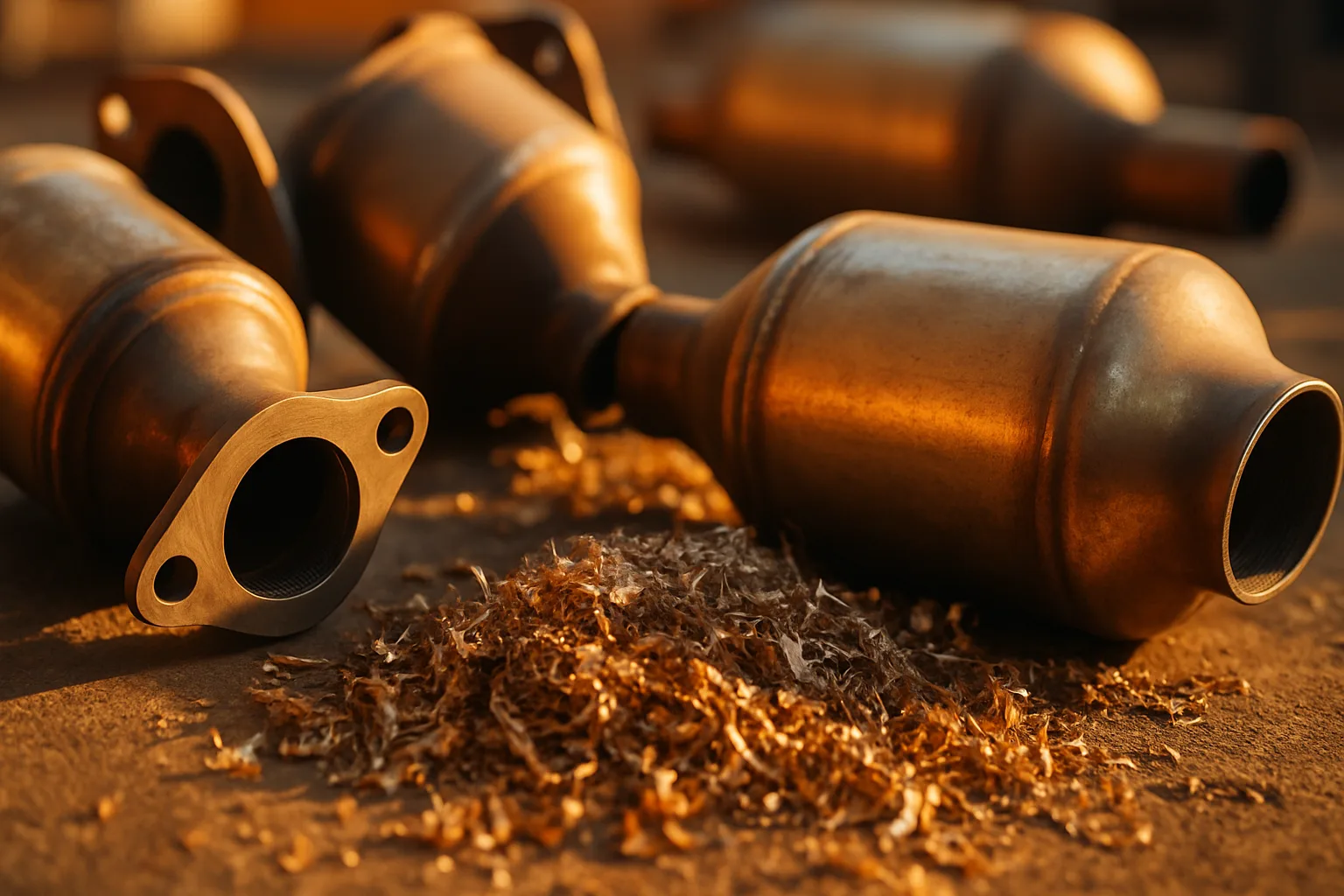
Most sellers leave money on the table — not because their cats are worth less, but because buyers can't see what they're actually buying. A blurry photo taken in a dark garage tells a buyer almost nothing. And when buyers can't confirm what they're getting, they low-ball to protect themselves. If you want the platinum price today reflected in your actual offer, your photos need to do the selling for you.
This is especially true if you're selling remotely. Yards in Fort McMurray, buyers across Alberta, and national platforms all rely on photos to assess value before a truck rolls or a bid goes in. Good documentation isn't optional — it's the difference between a fair offer and a floor price.
---Why Your Photos Directly Affect the Price You're Offered
Catalytic converters aren't priced like copper wire or aluminum extrusion. Their value comes from the platinum group metals (PGMs) inside — platinum, palladium, and rhodium. Those metals aren't visible to the eye. What buyers can see from a photo is the converter's condition, its serial number or OEM code, and whether it matches the vehicle it came from. That information helps a buyer run a lookup and determine expected PGM yield.
When a buyer can't read your serial number or verify the unit, they default to a conservative estimate. That's not them being unfair — it's them managing risk. Your job is to remove that uncertainty with clear, consistent documentation. Platforms like the SMASH Recycling auction platform are built around this principle: documented inventory attracts more confident buyers, and more confident buyers bid higher.
Think of your photos as your first pitch. Make them count.
---The Five Shots You Need for Every Catalytic Converter
You don't need professional photography equipment. A modern smartphone in decent lighting is enough. What you need is a consistent system. Take the same five shots every time, and buyers will know exactly what they're looking at.
- Full unit, front-facing. Stand the converter upright or lay it flat and shoot straight on. No extreme angles. The goal is to show the full body of the unit — both end pipes visible, no cropping.
- The serial number or OEM stamp. This is the most important shot. Get close. Fill the frame with the stamp. Make sure the characters are sharp enough to read without zooming. If there's rust or grime over the stamp, clean it with a wire brush before shooting.
- The substrate end (honeycomb opening). Buyers want to confirm the substrate is intact and not rattling loose. Shoot straight into the opening, in good light. A flashlight aimed into the opening helps reveal condition.
- Any damage or anomalies. Crushed bodies, cut substrates, overheating damage — document it. Hiding damage doesn't protect you. It just creates disputes later and kills trust with the buyer.
- A size or scale reference. Put a tape measure or a common object next to the unit for at least one shot. This helps buyers assess unit size and confirm it matches the listed vehicle application.
If you're selling multiple units — which most Fort McMurray yards and fleet operators deal with regularly — batch your photos by unit. Label each set clearly. Don't mix shots from different converters into a single upload. Disorganized documentation slows the quote process and signals to buyers that your inventory management is loose.
---Lighting, Background, and the Details That Actually Matter
Bad lighting kills otherwise good photos. Shadows across the serial number make it unreadable. Shooting in direct sunlight causes glare that washes out surface detail. Neither extreme works.
The best setup is diffused natural light — shoot outside on an overcast day, or inside near a large window with no direct sun hitting the unit. If you're shooting indoors under shop lights, position the converter so the light falls across the surface at an angle, not directly overhead. This side-lighting reveals surface texture and makes stamped characters pop.
Background matters too. Lay the unit on a flat, contrasting surface — a clean piece of cardboard, a concrete floor, or a rubber mat. Avoid gravel, cluttered shop floors, or truck beds full of other scrap. The converter should be the only thing the buyer is looking at.
A few more things buyers notice:
- Focus. Tap the serial number on your phone screen to force focus on that area before shooting.
- Orientation. Shoot landscape (horizontal) for full-unit shots. Portrait (vertical) works for close-ups of stamps.
- Multiple angles on the serial. If the stamp is worn or at an odd angle, take three or four shots from slightly different positions. Send the clearest one, keep the rest.
- Clean the unit first. A quick wipe with a rag before shooting removes surface grime that obscures detail. Takes thirty seconds and makes a real difference.
Alberta's industrial yards — from Edmonton south to Calgary and north to Fort McMurray — process high volumes of converters from heavy equipment, fleet vehicles, and oil-sector trucks. Units from that sector often carry unique codings and higher PGM loading. A clear photo of the serial number is the fastest way to unlock the right valuation.
---How Documentation Connects to the Platinum Price Today
Here's the part most sellers miss: the platinum price today is a spot price. It reflects what PGMs are worth on the open market right now. But what you actually get for your converter is a yield-adjusted price — the spot price multiplied by the estimated PGM content in your specific unit, minus processing costs.
That yield estimate comes from the serial number lookup. If a buyer can read your serial and match it to a known unit, they get a reliable yield estimate. If they can't read it, they guess low. It's that direct.
Palladium and rhodium move fast, and their price swings can be significant week to week. When you're ready to find the best scrap cat prices in Canada, you want buyers working from real data — not protective assumptions. Clear photos unlock that. Blurry photos don't.
If you want to understand how the market moves, read Canadian scrap catalytic converter guides that break down PGM pricing, converter categories, and what drives value in the current market.
---Using a Scrap Metal Auction Platform to Get Competitive Bids
Calling one buyer and taking their number isn't a strategy. It's a guess. The only way to know if you're getting a fair price is to let multiple buyers compete for your load.
That's the core of what the SMASH Recycling auction platform does. You document your inventory — photos, serial numbers, vehicle application, condition — and vetted buyers bid against each other. Competition reveals the market. Your photos are what makes those bids competitive, because buyers can actually see what they're bidding on.
For sellers in Fort McMurray or anywhere across Alberta, this matters. You may not have five catalytic converter buyers within driving distance. But you don't need them to be nearby — you need them to be able to assess your inventory remotely with confidence. Solid documentation is what enables that. It turns a local load into a national opportunity.
The old approach — one call, one number, take it or leave it — doesn't reflect the real market. A scrap metal auction platform built around documented inventory does. If you want to get a fair price for your scrap catalytic converters in Canada, the process starts with what you put in the photo frame.
---Common Mistakes That Hurt Your Quote Before You Even Submit
Sellers make the same mistakes repeatedly. Here's what to avoid:
- Submitting one photo of a pile. Buyers can't assess individual units from a group shot. Every converter needs its own documentation.
- Shooting the outside of the pipe without the substrate end. Buyers need to see what's inside. The honeycomb condition matters.
- Not cleaning the serial number first. Grease and road grime are the enemy. A wire brush and a rag take thirty seconds.
- Using maximum digital zoom. It degrades image quality. Move physically closer instead.
- Shooting in a dark shop with the flash on. Flash creates harsh reflections on metal surfaces. Use natural or diffused light instead.
- Omitting damage disclosure. Buyers find out eventually. Getting ahead of it preserves trust and avoids price revisions after the fact.
If you're pulling cats from oil-sector vehicles in Fort McMurray, you already know that condition varies — high heat cycles, extended idling, rough terrain. Document what you see. A converter with a partially deteriorated substrate is still worth something. A mystery unit with no photo is worth less than it should be.
---The platinum price today matters. But it only matters if your buyer can see what they're actually buying. Take five minutes, take five shots, and give your inventory the documentation it deserves. Whether you're selling ten units or ten loads, the process is the same — and the payout difference is real.
Ready to put your documentation to work? Find the best Canadian scrap cat prices and get a free quote at best-scrap-cat-prices.ca. Let vetted buyers compete for your inventory with the information they need to bid confidently.
---Frequently Asked Questions
Q: Does the platinum price today affect what I get for my scrap catalytic converter?
Yes — directly. Platinum, palladium, and rhodium spot prices are factored into every converter quote. The cleaner your documentation, the more accurately a buyer can calculate your yield-adjusted offer based on current PGM prices. Without a readable serial number, buyers estimate conservatively.
Q: How do I find a catalytic converter buyer in Fort McMurray?
Local options in Fort McMurray are limited compared to larger Alberta centres. Your best approach is to document your converters with quality photos and serial numbers, then use a national platform like SMASH to reach vetted buyers across Canada. You don't need a buyer next door — you need one who can assess your load remotely with confidence.
Q: What's the most important photo to include when selling a catalytic converter online?
The serial number or OEM stamp shot is the most critical. Buyers use that code to run a lookup and determine expected PGM content. If the stamp is unreadable, the buyer has to guess — and they'll guess low. Get close, get focused, and shoot it in good light.
Q: Are there catalytic converter buyers across Alberta who accept remote submissions?
Yes. Most serious catalytic converter buyers in Alberta accept photo submissions and serial numbers for remote quoting. National platforms that aggregate buyers — like SMASH — make this even more efficient by putting your documented inventory in front of multiple buyers at once, rather than calling them one by one.
Q: How do platforms like SMASH differ from selling to a local scrap yard?
A local yard gives you one price — take it or leave it. A scrap metal auction platform like SMASH puts your documented inventory in front of multiple vetted buyers who compete on price. Competition can help reveal the true market value of your load. No subscription fees — SMASH only earns when you do.
---Follow SMASH on LinkedIn for weekly scrap metal market insights, pricing trends, and industry updates: linkedin.com/company/scrap-metal-auction-sales-hub.
Disclaimer: Catalytic converter prices fluctuate based on platinum, palladium, and rhodium spot prices, which change daily. Always check current rates before finalizing a sale.