Why Auto Shops Leave Money on the Table When Selling Scrap Cats in Bulk
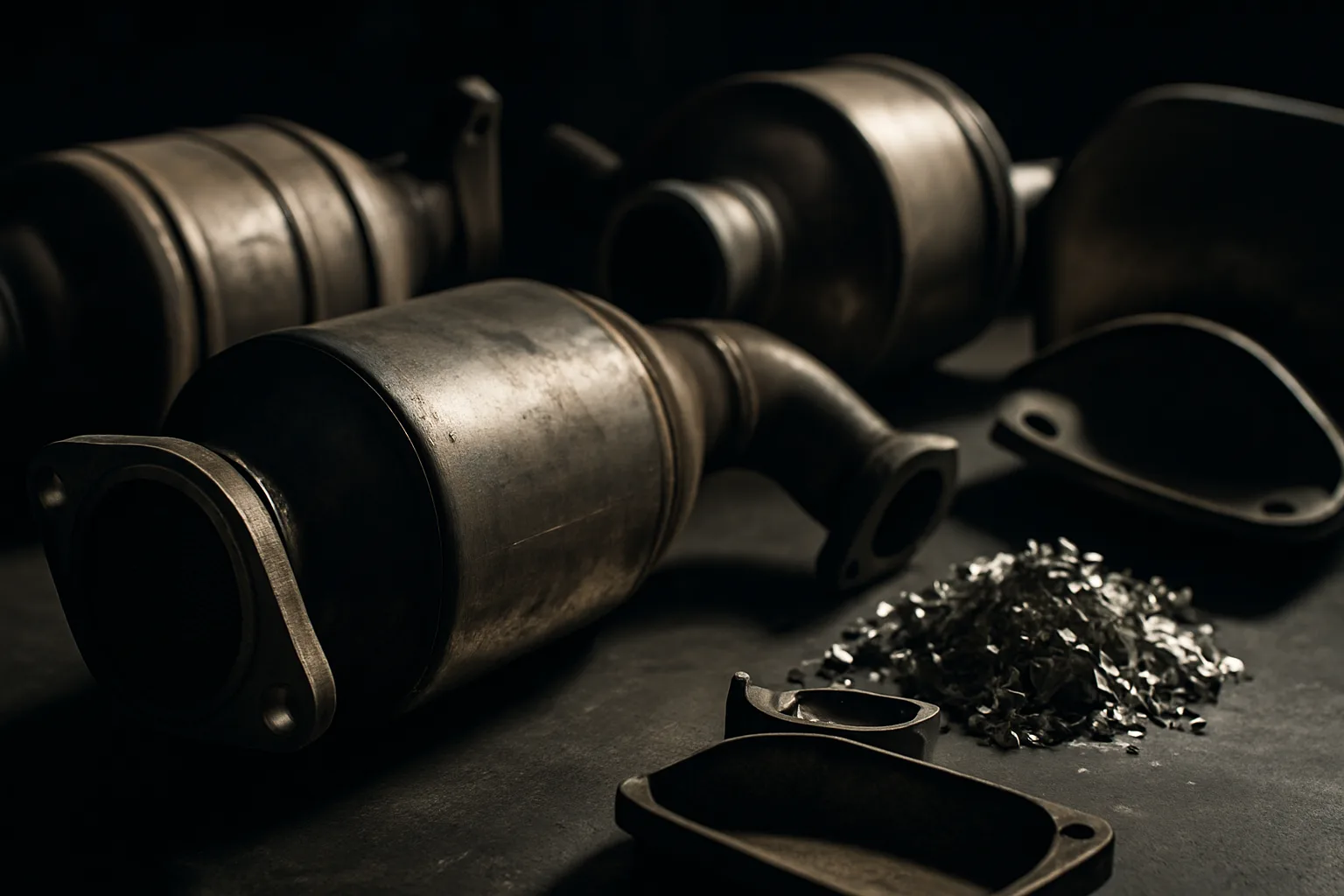
Most auto shops have a pile of spent catalytic converters sitting in a corner somewhere. They know the pile has value. What they don't always know is how much value they're losing by selling it the wrong way. If your shop runs volume — oil changes, exhaust work, fleet maintenance — you're pulling converters regularly. That makes how you sell them a real business decision, not an afterthought.
The platinum price today plays a direct role in what your scrap cats are worth. Platinum, palladium, and rhodium are the precious metals inside every converter. Their spot prices move daily, sometimes sharply. Selling a bulk load when you haven't checked current precious metal values is like selling a car without checking the book value. You might walk away satisfied, but you probably left money behind.
This post is for shop owners, service managers, and fleet operators who want to get more out of their scrap converter program — not by working harder, but by being smarter about when, how, and to whom they sell.
Understand What Drives Scrap Cat Prices in Canada
Before you sell a single converter, you need to understand what you're actually selling. A catalytic converter isn't just scrap steel — it's a substrate coated in precious metal catalyst: platinum, palladium, and rhodium. The mix and concentration vary by make, model, and year. That's why two converters that look nearly identical can have very different values.
In Canada, scrap cat pricing reflects a combination of global precious metal spot prices, the specific unit you're selling, and the buyer's margin. When platinum climbs, your cats are worth more. When rhodium dips, certain high-rhodium units take a hit. Staying connected to the platinum price today — and palladium and rhodium alongside it — gives you leverage in conversations with buyers. You stop taking their word for it and start coming to the table with context.
- Platinum — primary precious metal in diesel converter substrates
- Palladium — dominant in gasoline vehicle converters; highly volatile pricing
- Rhodium — the most expensive of the three; small amounts, huge value impact
- Substrate type — ceramic vs. metallic foil substrates refine differently and are priced accordingly
- Unit condition — intact, uncut, and properly documented units typically command better offers
Auto shops in Etobicoke pulling converters from a steady flow of import and domestic vehicles are sitting on a diverse mix of units. That diversity, properly documented and presented, is an asset — not a headache. Knowing the rough breakdown of your load before you approach a buyer changes the conversation entirely.
Build a System Before You Build a Pile
The shops that get the best results on bulk converter sales aren't the ones with the biggest piles. They're the ones with the best documentation. Every converter that comes off a vehicle in your shop should be tagged, photographed, and logged before it goes into the bin. This takes seconds per unit and pays dividends when it's time to sell.
Here's what a practical intake process looks like for a high-volume shop:
- Pull the VIN — Log the vehicle identification number for every converter removed. VIN lookup tools let buyers match your unit to the year, make, model, and engine, which directly affects pricing.
- Photograph the unit — Top, bottom, and stamp or serial number if visible. This takes 30 seconds and eliminates disputes later.
- Record the condition — Note any damage, cuts near the substrate, or contamination. Honesty upfront builds buyer trust and prevents deductions at settlement.
- Store by type where possible — Keeping diesel units separate from gasoline converters, and domestic from import, helps buyers assess and price faster.
- Track your accumulation rate — Know roughly how many units you pull per week. This tells you when you'll have a load worth selling and lets you time it around favorable precious metal prices.
Platforms like SMASH are built around exactly this kind of inventory documentation. VIN lookup, serial tracking, and photo documentation are built into the process — which means your well-organized load walks into an auction already presenting itself well to vetted buyers. To get a fair price for your scrap catalytic converters in Canada, documentation is the single highest-leverage thing you can do before you ever contact a buyer.
Stop Calling One Buyer — Use a Catalytic Converter Auction
Here's the old way: your pile gets big enough, you call the one buyer you've always dealt with, they come by, make an offer, and you take it or negotiate slightly. The problem isn't that this buyer is dishonest. The problem is that you have no idea whether their offer reflects what the market would actually pay. One buyer, one number, zero competition.
A catalytic converter auction format solves this directly. When multiple vetted buyers compete for your load simultaneously, the price discovery process works in your favor. You're not guessing whether the offer is fair — you're watching buyers respond to each other in real time. Competition can help reveal the market. More buyers means better price discovery. That's not hype; that's basic economics applied to scrap.
For shops in Etobicoke and across Ontario, accessing a broader network of catalytic converter buyers Ontario-wide — rather than whoever happens to be nearby — opens up the pool of potential offers. A buyer in one part of the province might value your specific load differently than the one who's been picking it up for years. You won't know unless you ask all of them at once.
SMASH operates on exactly this principle. The platform connects sellers with vetted buyers through a competitive auction format, and it runs on a no-subscription-fee model — you don't pay to list, you pay only when the sale closes. That structure aligns SMASH's outcome with yours. If you're ready to get competitive bids for your scrap in Canada, the auction format is the smartest starting point for any bulk seller.
Timing Your Bulk Sale Around the Platinum Price Today
Volume sellers have an advantage that one-off sellers don't: you can choose when to sell. A single converter has to move when it's ready. A managed inventory of 40 or 80 units gives you a window. Use it.
Watching the platinum price today — alongside palladium and rhodium — doesn't require a commodities trading background. Free spot price trackers update daily and take 60 seconds to check. The point isn't to day-trade your scrap cats. The point is to avoid selling a significant load during a notable price dip if you have the flexibility to wait two weeks.
A few practical guidelines for timing:
- Don't hold inventory indefinitely waiting for peak prices. Storage risk, security risk, and cash flow all argue against hoarding.
- Do check prices before listing or accepting offers on large loads. Being informed costs nothing.
- If you pull converters consistently, consider selling on a regular cycle — monthly or bi-monthly — rather than waiting for an arbitrary pile size.
- Build a relationship with a buyer or platform that provides transparent pricing so you understand how spot prices translate to your specific unit mix.
Shops in Etobicoke running fleet accounts or high-mileage service programs often have enough volume for monthly cycles. That regularity, combined with good documentation and competitive buyer access, makes the whole program significantly more profitable than the call-one-buyer approach.
Want to stay sharp on how market conditions affect what you're holding? Read Canadian scrap catalytic converter guides for ongoing market context and seller strategies.
What Bulk Sellers Get Wrong — And How to Fix It
Even experienced shops make avoidable mistakes when selling converter loads. Here are the most common ones and the straightforward fixes:
Mistake #1: Selling damaged or cut units without disclosing them. Buyers discover this at assessment and deduct heavily — or pull out of the deal. Flag damaged units separately, price them accordingly, and keep the rest of your load credibility intact.
Mistake #2: Letting the pile grow too long between sales. Precious metal markets move. A load that would have sold well three months ago might not perform as well today if palladium has dropped. Regular sales cycles reduce your exposure to market timing risk.
Mistake #3: Not separating high-value units from commodity units. A late-model luxury import converter is worth significantly more than an older domestic unit. Mixing them without distinction can drag the average price of your whole load down. Document and sort by type where you can.
Mistake #4: Accepting the first offer without comparison. This is the biggest one. It's comfortable, it's familiar, and it costs real money over time. A catalytic converter auction approach — whether through a platform or by soliciting multiple simultaneous quotes — is the structural fix for this habit.
Mistake #5: Ignoring the settlement documentation. After the sale, review the settlement sheet carefully. Understand what each unit graded out at and why. This feedback loop makes you a smarter seller on the next load. To find the best scrap cat prices in Canada, knowledge compounds — every sale teaches you something about your inventory profile.
Frequently Asked Questions
Q: How does the platinum price today affect what I get for scrap catalytic converters?
Platinum is one of three precious metals — alongside palladium and rhodium — recovered from catalytic converter substrates during recycling. When the platinum spot price rises, converters with higher platinum content pay out more. Buyers price your load based on current spot values, so checking the platinum price today before a sale helps you assess whether the timing is favorable and whether the offer you're receiving makes sense.
Q: Where can I find a catalytic converter buyer in Etobicoke?
Auto shops in Etobicoke have access to local scrap buyers, but limiting yourself to local-only options means limiting your buyer pool. Platforms that connect sellers across Ontario with vetted buyers — like SMASH — give Etobicoke shops access to competitive offers from a broader market, which typically produces better price discovery than a single local contact.
Q: What's the advantage of a catalytic converter auction over a direct sale?
A direct sale gives you one offer from one buyer. An auction puts your load in front of multiple vetted buyers simultaneously, creating competition for your inventory. That competition can help reveal the true market value of your load rather than the margin a single buyer needs to build in for themselves.
Q: How should I prepare a bulk load of scrap catalytic converters for sale in Ontario?
Document each unit with a photo and VIN where possible, separate damaged or cut units, sort by substrate type if practical, and record the make/model/year for high-value units. Well-documented loads give buyers more confidence, which typically translates to stronger offers. In Ontario, working with a platform that handles invoicing and buyer vetting removes friction from the process.
Q: Do I need a subscription to sell through SMASH?
No. SMASH operates on a no-subscription-fee model. You don't pay to list your inventory or access the platform — the fee structure is tied to completed transactions. That means your costs only arise when a sale actually closes, which keeps the platform's incentives aligned with yours as a seller.
If your shop is pulling converters regularly, you already have the raw material for a better program. Better documentation, better timing, and access to competitive buyers through a catalytic converter auction format are the levers. None of them require extra effort — just a smarter process. When you're ready to put that process to work, find the best scrap cat prices in Canada and get a free quote at best-scrap-cat-prices.ca.
Disclaimer: Precious metal prices fluctuate daily. All pricing referenced in this article is general in nature. Always check current spot prices and confirm rates directly with buyers before finalizing any sale.
Follow SMASH on LinkedIn for ongoing scrap metal market insights, precious metal price updates, and industry news across North America.