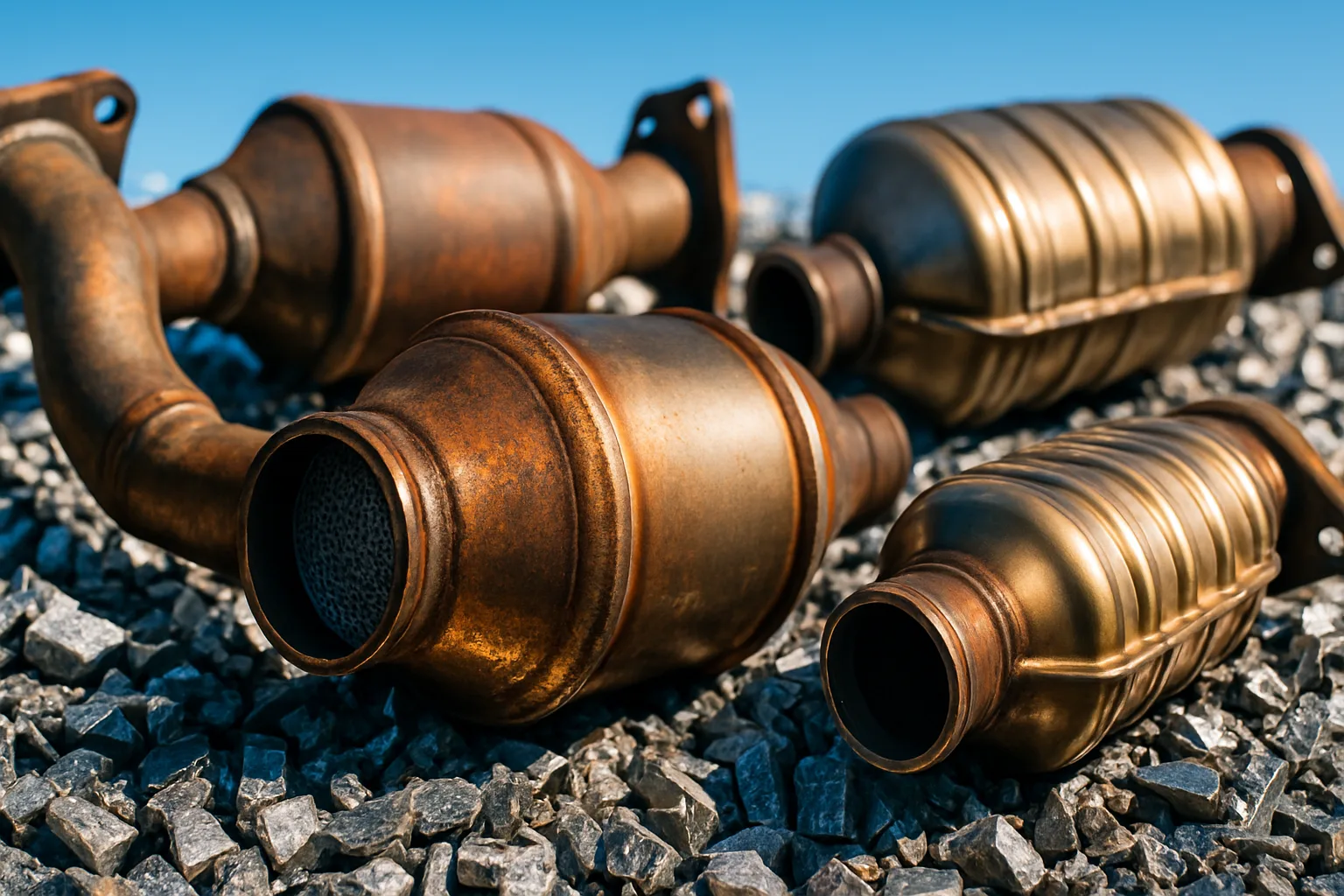
OEM vs. Aftermarket Catalytic Converters: Why the Scrap Value Gap Is Bigger Than You Think
Hand a seasoned scrap buyer two catalytic converters that look nearly identical, and they'll quote you two very different prices. One might fetch $180. The other, $12. That gap isn't random — it comes down to what's actually inside. Understanding the difference between OEM and aftermarket cats is the single most important thing you can do before you find the best scrap cat prices in Canada.
If you're sitting on a pile of converters in Moncton or anywhere across New Brunswick, this comparison will tell you exactly why some loads are worth serious money and others barely cover your time.
What Makes an OEM Catalytic Converter Different?
OEM stands for Original Equipment Manufacturer. These are the converters installed at the factory — built to meet strict emissions standards for the specific vehicle they're designed for. To do that job, they're loaded with precious metals: platinum, palladium, and rhodium, often in significant quantities depending on the vehicle make, engine size, and model year.
That precious metal loading is the whole game in scrap. The substrate inside an OEM cat — typically a ceramic or metalite honeycomb — carries a dense wash coat saturated with these platinum group metals (PGMs). Larger engines, performance vehicles, and late-model trucks tend to carry the heaviest loadings. A full-size pickup OEM cat from a major domestic brand can contain enough PGMs to make it genuinely valuable at the right smelter.
Key characteristics of OEM converters that affect scrap value:
- Higher PGM loading — engineered to handle factory exhaust volumes and emissions compliance
- Denser substrate — more surface area means more precious metal per unit
- Traceable by serial number — most OEM cats carry a stamped or welded serial number tied to a specific vehicle and manufacturer
- Consistent assay results — buyers and smelters have reliable data on what's inside
- Heavier overall weight — not always, but frequently
That serial number is critical. When you use a platform built around a catalytic converter price list by serial number approach, you're essentially unlocking the documented PGM profile of that specific unit. That's how buyers bid with confidence — and how sellers avoid leaving money on the table.
Why Aftermarket Cats Are Worth Dramatically Less
Aftermarket catalytic converters are replacement units made by third-party manufacturers. They're designed to be affordable and emissions-compliant — not to maximize PGM content. That's not a flaw; it's the point. A shop installing a replacement cat on a 2019 Civic wants a part that passes inspection and costs a reasonable amount. They're not thinking about what happens at the end of that converter's life.
You should be.
Aftermarket cats use significantly lower PGM loadings — sometimes a fraction of what an OEM unit carries. Some use alternative catalyst formulations that don't contain platinum, palladium, or rhodium at all in meaningful quantities. The substrate may be lower density, the wash coat thinner, and the overall material recovery potential dramatically reduced.
In practical terms, what a scrap buyer might pay $150–$300+ for in an OEM unit, they may offer $5–$20 for in an aftermarket replacement. That's not price gouging — it's math. The smelter's return is proportional to what's actually recoverable from the material.
Watch for these aftermarket indicators:
- No stamped serial number — or a generic brand stamp rather than a vehicle-specific code
- Light weight relative to size — thin substrates weigh less
- Rectangular or non-standard shape — OEM cats are often shaped to fit specific vehicle underbodies
- Universal fit labeling — "fits most V6 applications" is a red flag for scrap value
- Visible weld seams inconsistent with factory production
How Buyers Identify and Price Cats by Serial Number — and Why It Matters for Sellers
The most reliable way to price a catalytic converter accurately is serial number lookup. Every legitimate OEM cat has a stamped identifier — sometimes on the body of the unit, sometimes on a welded tag — that links it to assay data from that specific manufacturer and vehicle line. Buyers use these databases to quote with precision rather than guessing from visual inspection alone.
This is why documentation matters so much when you get a fair price for your scrap catalytic converters in Canada. Clear photos, serial number visibility, and accurate quantity counts all give buyers the information they need to bid competitively. When that data is missing or unclear, buyers protect themselves by pricing conservatively — which means you get less.
Platforms like the SMASH Recycling auction platform are built around this logic. When sellers document their inventory with photos and serial numbers, multiple vetted buyers can bid based on actual data rather than assumptions. That competition — driven by real information — is how price discovery actually works in this market.
For sellers in Moncton doing catalytic converter recycling, this approach changes the economics. Instead of calling one local buyer and taking whatever they offer, you're putting documented inventory in front of buyers who specialize in cat pricing across Canada and know exactly what each unit is worth.
The Real-World Price Spread: What New Brunswick Sellers Should Expect
Scrap cat prices fluctuate based on PGM spot prices — platinum, palladium, and rhodium trade on global commodity markets and can move significantly week to week. That volatility affects OEM cat values much more than aftermarket, simply because the PGM content is higher and the leverage to market prices is greater.
As a general framework (not guaranteed prices — always check current rates):
- High-value OEM cats (large trucks, performance vehicles, late-model imports): Premium pricing — often among the highest in any load
- Mid-range OEM cats (standard passenger vehicles, known serial numbers): Moderate to good pricing depending on vehicle and PGM markets
- Low-loading OEM cats (older vehicles, smaller engines): Lower but still meaningful value compared to aftermarket
- Aftermarket cats: Minimal value — often priced near scrap steel rates regardless of size
- Foreign/domestic foil cats (metalite substrate): Valued differently than ceramic — buyers assess these separately
The spread between a premium OEM unit and an aftermarket replacement on the same vehicle model can be enormous. That's the number New Brunswick sellers need to understand before they negotiate, because a buyer who doesn't disclose which is which is benefiting from your uncertainty.
Transparency is the fix. When you read Canadian scrap catalytic converter guides, you're building the knowledge base that keeps you from getting short-changed on a load you worked hard to collect.
How to Sell Catalytic Converters Online and Get the Best Price
Selling catalytic converters online — whether you're a Moncton-based yard, a mechanic clearing out a shop, or a dismantler managing a regular volume — follows a straightforward process when you have the right platform. The difference between a mediocre return and a competitive one usually comes down to preparation and access to buyers.
Here's what the process looks like when you do it right:
- Sort your inventory — separate OEM from aftermarket, identify foil vs. ceramic substrates, pull out any high-value units you recognize
- Document everything — clear photos of each unit, serial numbers visible, quantity accurate
- Look up serial numbers — even a basic understanding of what you have changes how confidently you can negotiate
- List on a platform with vetted buyers — single-buyer quotes leave money behind; competition reveals the actual market
- Confirm pickup logistics and payment terms before you commit — legitimate buyers have clear processes
SMASH is built for exactly this workflow. The platform connects sellers with vetted buyers who compete for inventory — no subscription fees, no guessing. When you sell scrap metal online through an auction format, the price discovery happens through competition rather than one buyer's unverified quote. For anyone doing catalytic converter recycling in Moncton or across New Brunswick, that structure makes a measurable difference.
If you're looking for local connections alongside the online platform, Moncton scrap metal services can be a useful starting point for understanding your regional market options.
Frequently Asked Questions
Q: How do I know if my catalytic converter is OEM or aftermarket?
Check for a stamped serial number directly on the converter body or welded tag — OEM units almost always have one tied to a specific vehicle. Aftermarket units often have a generic brand stamp or no identification at all. If the shape looks universal rather than vehicle-specific, that's another indicator it's likely an aftermarket unit with lower scrap value.
Q: Where can I sell catalytic converters online in Canada?
Platforms like SMASH connect Canadian sellers with vetted buyers through a competitive auction format — no subscription required. You document your inventory, list it, and buyers compete for it. This approach works whether you're clearing out a single vehicle or moving regular volume as a yard or dismantler.
Q: Does catalytic converter recycling in Moncton require any special permits?
New Brunswick has scrap metal dealer regulations that apply to the purchase and sale of used auto parts including catalytic converters. Requirements can include record-keeping, seller identification, and waiting periods — check current provincial and municipal rules before buying or selling in volume. Regulations can change, so verify with your local authority.
Q: What makes catalytic converter prices fluctuate so much?
The value of a catalytic converter is directly tied to the spot prices of platinum, palladium, and rhodium — three precious metals traded on global commodity markets. When those markets move, scrap cat prices follow. OEM units are most affected because their higher PGM content gives them more leverage to market prices in both directions.
Q: Is a catalytic converter price list by serial number accurate?
Serial number databases are a reliable starting point because they reflect assay data from actual smelting of that converter type. They're not a guarantee — prices shift with PGM markets and actual condition matters — but they give buyers and sellers a grounded reference point rather than a guess. Using documented serial numbers is always better than pricing by appearance alone.
If you're holding OEM cats and getting aftermarket quotes, you're losing money you've already earned. The difference in value is real, it's significant, and it's recoverable when you sell with the right information and the right buyers. Take a few minutes to find the best scrap cat prices in Canada — a free quote costs you nothing and tells you exactly where your inventory stands in today's market.
Disclaimer: Catalytic converter scrap prices fluctuate daily based on platinum, palladium, and rhodium spot prices. Always verify current rates before making selling decisions.
Stay current on scrap metal markets and industry trends — follow SMASH on LinkedIn for regular updates on PGM prices, platform news, and what's moving in the North American scrap market.