Most scrap yards won't tell you this: the difference between a good payout and a great one often comes down to eight digits stamped on the side of a converter. If you're trying to sell catalytic converters online and you don't know how to read a serial number, you're negotiating blind. That's a problem — especially when platinum, palladium, and rhodium prices make even a single cat worth serious money.
This guide walks you through how to find, read, and use converter serial numbers to your advantage. Whether you're a yard operator in Barrie pulling numbers off a growing inventory or a first-timer with a handful of cats from a shop cleanout, understanding serial numbers is the fastest way to stop leaving money on the table.
---What Is a Catalytic Converter Serial Number?
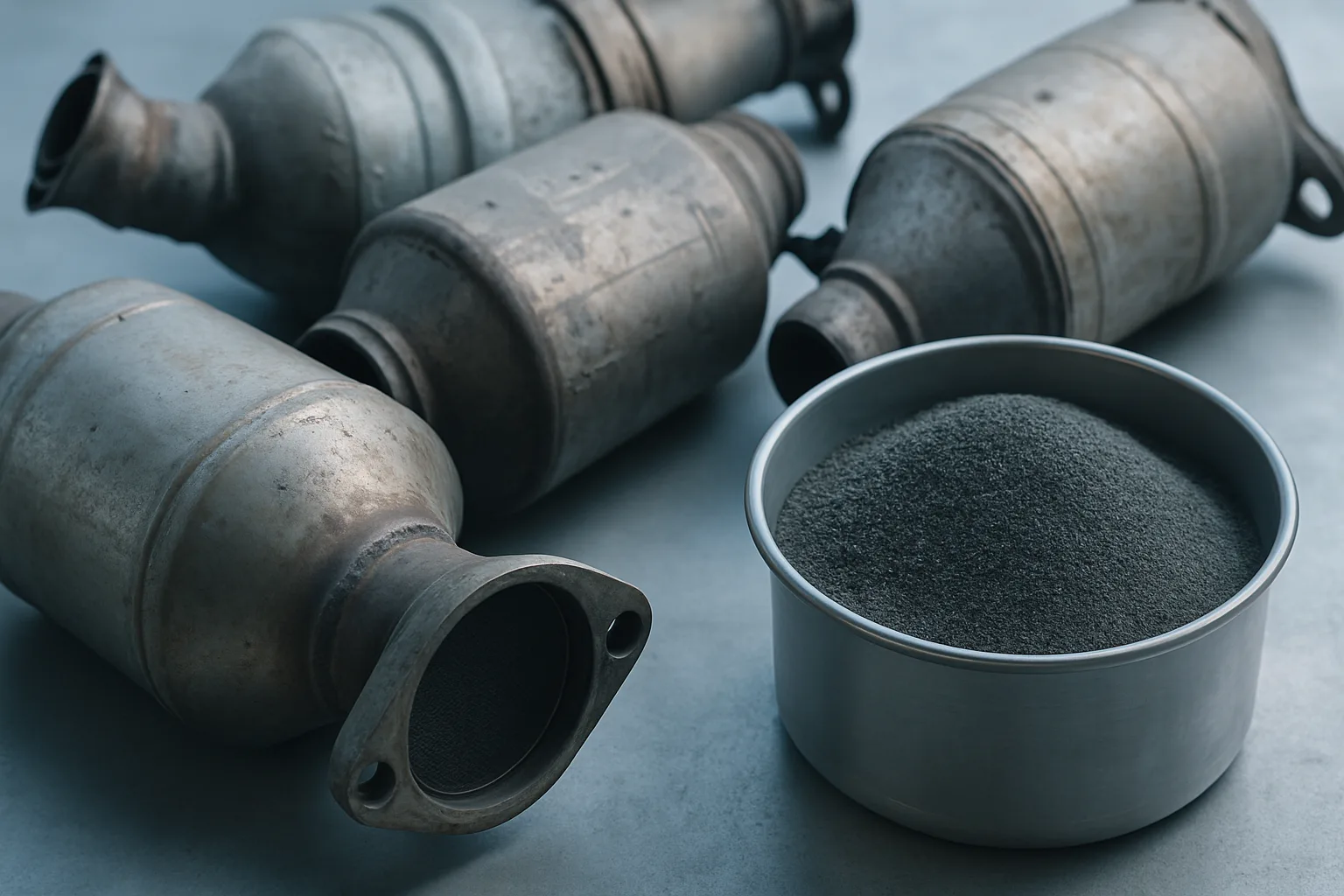
A catalytic converter serial number — sometimes called a part number or OEM code — is a manufacturer-stamped identifier that tells buyers exactly what's inside the unit. It encodes the vehicle make, engine size, model year range, and most importantly, the precious metal loading of the substrate. That loading — the ratio of platinum, palladium, and rhodium — is what determines your payout.
Think of it like a barcode for the substrate inside. Without it, a buyer is guessing. With it, they're pricing against a known assay profile. Documented converters fetch better offers because buyers can price them accurately rather than defaulting to a conservative floor price to cover uncertainty.
- Platinum (Pt): Used heavily in diesel converters
- Palladium (Pd): Dominant in gasoline engine converters
- Rhodium (Rh): Often the highest-value metal per gram
When you bring a documented load to market — serial tracked, photographed, organized — buyers compete differently. That's the whole point. Platforms like SMASH are built around this idea: get a fair price for your scrap catalytic converters in Canada by giving buyers the information they need to bid with confidence.
---Where to Find the Serial Number on a Catalytic Converter
Location varies by manufacturer, but there are consistent patterns. Once you know where to look, you can pull a number off a cat in under 30 seconds.
Common Locations:
- Heat shield stamp: Look on the outer heat shield, usually on a flat panel near the inlet pipe
- Shell stamp: Pressed directly into the metal body of the converter, often on the top or side
- Welded tag: Some OEM converters have a separate stamped tag welded to the housing
- Pipe stamp: On aftermarket units, the number may appear on the inlet or outlet pipe near the flange
Dirt, rust, and road grime are your enemies here. A wire brush and a few seconds of effort can uncover a number that doubles your payout versus a "grade unknown" default. If you're running a yard in Barrie or anywhere in Ontario with seasonal road salt exposure, this is even more critical — converters from winter-driven vehicles often come in heavy with surface rust over the stamp area.
What If the Number Is Unreadable?
Don't guess. Document the unit with photos — multiple angles, close-up of the stamp area even if partially obscured. Note the vehicle it came off (year, make, model, engine size). A VIN lookup can help narrow the OEM part number when the physical stamp is gone. SMASH's inventory tool supports VIN-based identification precisely for this reason — missing serial numbers don't have to mean mystery pricing.
---How to Decode What the Serial Number Actually Means
No universal standard exists across all manufacturers, but once you understand the logic, patterns become readable. Here's how to break a number down.
OEM vs. Aftermarket Numbers
Original Equipment Manufacturer (OEM) numbers follow the vehicle maker's parts numbering system. Ford converters, for example, follow a format like F7AZ-5E213-AA. GM uses alpha-numeric codes tied to engine families. These OEM numbers are goldmines — they cross-reference directly into precious metal databases maintained by refiners and buyers globally.
Aftermarket converters (Walker, Magnaflow, Eastern, etc.) use their own numbering systems and typically carry lower precious metal loads than OEM units. That means lower payouts. Knowing the difference before you sell matters — don't let an aftermarket unit get lumped in with a high-grade OEM lot.
Reading the Code Structure
- Prefix: Often indicates manufacturer or vehicle brand
- Core number: The main identifier tied to engine application
- Suffix: Can indicate revision, emission standard compliance, or regional variant
For practical purposes, you don't need to decode every digit manually. Cross-reference databases — either through a buyer's system or a reputable online lookup — will translate the number into a grade and estimated precious metal content. What matters is that you have the number. That's your leverage when you find the best scrap cat prices in Canada.
---Why Serial Number Documentation Drives Better Prices When You Sell Catalytic Converters Online
Here's the real-world impact. A buyer looking at an undocumented load of 50 mixed cats has no choice but to price conservatively. They're averaging down to protect themselves. A buyer looking at 50 cats with serial numbers, photos, and a proper packing list is pricing each unit individually against known data — and they'll bid higher because the risk is lower.
This is the core mechanic behind competitive scrap metal inventory management. Documented inventory creates competition. Competition reveals the market. That's not a theory — it's how pricing actually works when buyers have information to act on.
Yards in Barrie that have moved to systematic serial documentation consistently report that their buyers engage differently. More questions, more competitive bids, fewer lowball offers on "unknowns." The paperwork isn't bureaucracy — it's money.
SMASH was built for exactly this workflow. Serial tracking, photo documentation, and auction-format selling put your documented inventory in front of catalytic converter buyers near me prices aren't determined by whoever answers the phone first. Multiple vetted buyers see the same data, and the price reflects that.
---Building a Serial Number Tracking System That Works at Scale
If you're pulling cats one at a time as they come in, tracking is simple. If you're running volume — a busy shop, a fleet account, a buyback program — you need a system or the documentation falls apart fast.
A Simple Workflow That Actually Holds Up
- Tag at intake: Every cat gets a physical tag with intake date and source vehicle info (VIN if available)
- Photograph immediately: Top, bottom, inlet, outlet, and stamp area — minimum five photos per unit
- Log the serial number: Enter it into your inventory system the same day, not at the end of the week
- Grade and sort: Separate OEM from aftermarket, high-grade from low-grade, domestic from foreign
- Batch for sale: Group similar units together for auction — mixed lots of documented cats outperform random assortments
Platforms that support scrap metal inventory management — like SMASH — let you build this documentation directly into the selling process. No spreadsheet archaeology when it's time to move a load. The data is already there, attached to the lot, visible to every buyer in the auction.
For yards looking for catalytic converter scrap yards near me or aggregators to work with, showing up with documented, serial-tracked inventory changes the conversation entirely. You're not a price taker anymore. You're a preferred supplier.
---Precious Metal Prices and Why Your Serial Number Lookup Should Be Current
The platinum price today — and palladium and rhodium alongside it — moves constantly. A serial number lookup from six months ago may quote a metal loading accurately but reflect a completely different dollar value. PGM (platinum group metal) markets are volatile. Rhodium in particular has seen dramatic swings over the past several years.
What this means practically: run your serial lookups close to when you're planning to sell. A lot you priced out two months ago may be worth significantly more or less depending on where PGMs are trading. Holding inventory in anticipation of price movement is a valid strategy, but only if your serial documentation is already complete so you can move fast when the moment is right.
If you're based in Barrie or elsewhere in Ontario and want to track Canadian market pricing alongside your inventory, read Canadian scrap catalytic converter guides for updated context on how PGM pricing flows through to converter payouts at the yard level.
The broader scrap metal market connects directly here. When PGMs rise, so does buyer competition for documented, high-grade cats. That's when having your serial numbers logged and your lots ready to go makes the biggest difference. smashrecycling.ca operates on this principle — vetted buyers, competitive auction format, and full transparency on what you're selling and what the market will bear.
---If you've been selling cats without tracking serial numbers, you've been pricing in the dark. The fix is simple and the payoff is real: document every unit, know what's inside it, and bring that information to a market where buyers have to compete for it. Barrie scrap metal services are part of a broader Ontario network where documented, well-graded inventory consistently outperforms mystery loads. Start with the serial number. Everything else follows from there. When you're ready to move your next load, find the best Canadian scrap cat prices — get a free quote at best-scrap-cat-prices.ca.
Disclaimer: Catalytic converter prices fluctuate with precious metal markets. Always check current rates before finalizing a sale.
---Frequently Asked Questions
Q: Can I sell catalytic converters online without knowing the serial number?
Yes, but you'll almost certainly get less for them. Buyers price undocumented units conservatively to account for the uncertainty. Taking the time to locate and record the serial number — even if it requires cleaning off rust or road grime — typically results in a more accurate and competitive offer.
Q: How do I look up a catalytic converter serial number to find out what it's worth?
Several online lookup tools cross-reference serial numbers against precious metal databases. Reputable buyers and platforms like SMASH also have access to these databases and will price your units based on documented metal content. Always confirm the lookup is current — PGM prices move frequently.
Q: Are there catalytic converter buyers near me in Barrie, Ontario?
There are buyers and aggregators operating across Ontario, including the Barrie area. Selling through an auction-based platform like SMASH connects you with multiple vetted buyers across North America rather than limiting you to whoever is closest geographically — which generally means better price discovery on your documented lots.
Q: What's the difference between an OEM and aftermarket catalytic converter for scrap value?
OEM converters typically carry higher precious metal loads than aftermarket units, which means higher scrap value. The serial number will usually indicate whether you have an OEM part. Don't mix them into the same lot without noting the distinction — buyers will downgrade the whole batch to the lowest-grade unit if they can't tell them apart.
Q: How does platinum price today affect what I get for my scrap cats?
Directly and immediately. The payout on any catalytic converter is calculated against the current spot price of the PGMs inside it — platinum, palladium, and rhodium. When spot prices rise, documented cats are worth more. When they fall, the opposite is true. Check current pricing close to your sale date, not weeks in advance.
---Follow SMASH on LinkedIn for scrap metal market insights and industry updates: linkedin.com/company/scrap-metal-auction-sales-hub.