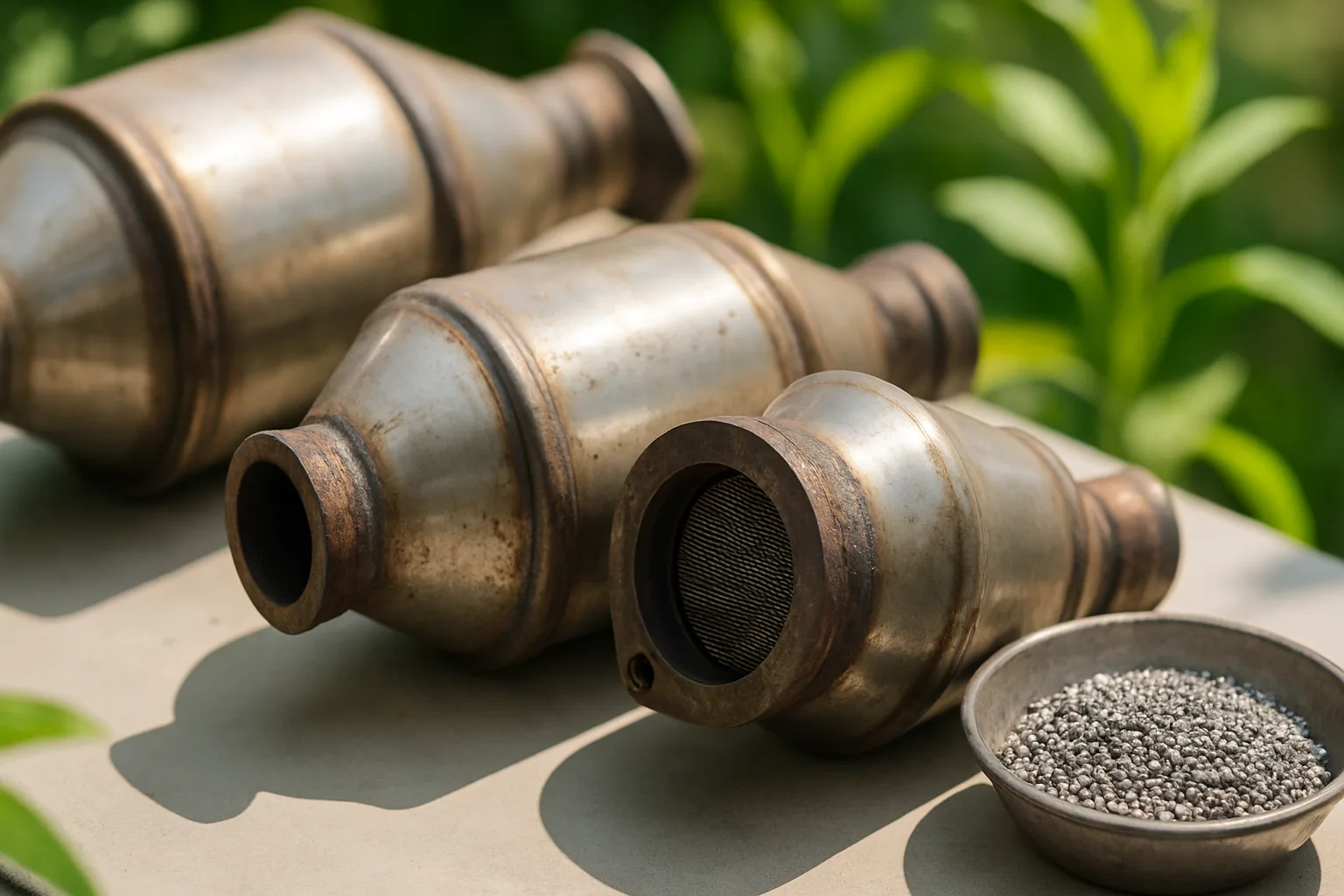
Rhodium hit historic highs above $29,000 USD per troy ounce in 2021. Today in July 2026, it trades at a fraction of that — and every dollar of movement changes what your catalytic converter is actually worth.
If you've been holding onto a stack of scrap cats waiting for the right moment to sell, you already know the frustration. Prices shift daily. What a buyer quoted you last Tuesday might not be what they'll offer this Sunday. Understanding why that happens — and how to work with it instead of against it — is the difference between leaving money on the table and getting a fair return.
This week's market recap breaks down what's moving rhodium price today, how it connects to your scrap converter value, and what sellers in Brampton and across Ontario should be thinking about right now.
---Why Catalytic Converter Scrap Prices Change Every Single Day
Scrap catalytic converter prices are not set by the buyer. They're set by the London Platinum and Palladium Market (LPPM) and the broader precious metals exchanges, which post spot prices for platinum, palladium, and rhodium every trading day. Your buyer runs those numbers through an assay formula — the estimated precious metal content of your specific converter — and produces a quote. That's it. That's the whole model.
What this means in practice: if rhodium drops $200 per troy ounce overnight, the payout on a high-rhodium converter drops with it. No negotiation needed. The math just changed. This isn't a buyer being difficult. It's how the commodity market works, and if you're selling scrap cats without tracking it, you're operating blind.
The three metals that drive your converter's value are:
- Platinum (Pt) — Common in diesel converter substrates. Relatively stable but reactive to industrial demand and auto sector output.
- Palladium (Pd) — Dominant in gasoline engine converters. Still the highest-volume metal in most North American scrap cat loads.
- Rhodium (Rh) — The wildcard. Found in smaller quantities but often responsible for a disproportionate share of a converter's total value. When rhodium moves, your payout moves.
For sellers in Brampton and the broader Ontario market, this daily volatility is something you feel whether you track it or not. You just won't know why your quote changed unless you understand the mechanics behind it.
Rhodium Price Today — What This Week's Movement Means for Your Scrap Cats
Rhodium has been the most volatile precious metal in the catalytic converter market for the better part of a decade. Its extreme price swings — driven by tight supply from South Africa and surging emissions compliance demand — have made it both the most valuable and the most unpredictable component in your scrap cat's assay value.
As of this week, rhodium continues to trade significantly below its 2021 peak. That context matters. Sellers who compare today's quotes to what they heard about in 2021 are going to be disappointed regardless of which buyer they approach. The market correction was real and broad. But rhodium still commands a meaningful price per troy ounce, and even small movements — $50 to $100 in either direction — translate to real dollars on a full pallet of mixed cats.
Here's how rhodium movement typically flows down to your payout:
- Spot price updates on global exchanges (typically London AM/PM fix).
- Buyers apply a percentage-of-spot calculation based on their smelter's assay data for specific converter types.
- That percentage varies by buyer — which is exactly why competitive pricing exists and why getting a single quote from a single buyer is a bad strategy.
- Your quote is calculated and presented, usually valid for a short window (hours, not days).
Disclaimer: Precious metal prices fluctuate daily. All figures referenced are general in nature. Always check current market rates before accepting or declining a quote.
OEM Catalytic Converter Value vs. Aftermarket — Why It's Not the Same Number
Not all converters are created equal. This is one of the most important things to understand when you're trying to figure out what your load is actually worth. An OEM catalytic converter — one that came off a vehicle as the original factory-installed unit — typically contains meaningfully higher concentrations of platinum, palladium, and rhodium than an aftermarket replacement.
Aftermarket converters are built to meet emissions standards at lower cost. That means less precious metal per unit. If your load is a mix of OEM and aftermarket converters, buyers will value them differently, and a reputable buyer will want to know the breakdown. Misrepresenting or not knowing what you're selling leads to either a lowball offer or a disputed transaction after assay. Neither is good.
When assessing OEM catalytic converter value, experienced buyers and platforms look at:
- Vehicle make, model, and year (OEM specs are well-documented)
- Converter serial number or part number (critical for accurate identification)
- Physical condition of the substrate (cracked, rattled, or missing substrate means missing metal)
- Whether the converter is full-bodied or foiled (foiled cats have had the substrate removed)
This is where documentation becomes your leverage. If you can't identify what you're selling, the buyer has to assume the lowest reasonable value. SMASH addresses this directly — the platform supports serial tracking and photo documentation, so buyers are bidding on verified, identified inventory, not a mystery pallet.
How to Sell Catalytic Converters Online Without Getting Burned
Selling scrap cats online has opened up the market in a real way. You're no longer locked into whatever a single local yard is willing to pay. But the online market also has its share of bad actors — buyers who lowball documented loads, buyers who adjust after the fact based on their own "assay," and platforms with zero accountability for either side.
If you're trying to sell catalytic converters online and get a fair return, here's what you need to have in place before you post anything:
- Accurate identification: Know what you have. Part numbers, serial numbers, make and model if available. Guessing kills your quote.
- Photos: Both faces of the converter, any visible serial numbers, and the overall condition. Good photos mean fewer questions and faster bids.
- Accurate count and weight: A packing list isn't optional. It's what turns a loose pile into a documented load that buyers can confidently bid on.
- Multiple quotes: Never accept the first offer. Competition is the only reliable mechanism for price discovery in a commodity market.
This is exactly the problem platforms like SMASH are built to solve. Instead of calling one buyer and hoping, you post your documented load and let multiple vetted buyers compete. More competition, more transparency, better price discovery. It's not complicated — it just requires the right infrastructure.
For sellers in Brampton and across Ontario, the ability to find the best scrap cat prices in Canada without being geographically limited to one or two local yards is a genuine advantage. Your converter's metal content doesn't care where you're located. Your buyer pool shouldn't be limited by your postal code either.
What Scrap Cat Sellers in Brampton and Ontario Should Watch This Week
If you're sitting on cats in Brampton or anywhere in Ontario right now, here's the practical read on this week's market conditions:
Rhodium is the variable you can't ignore. Track it daily if you're holding volume. Even a modest uptick over a week can materially change your return on a full load. Palladium has been relatively stable in the mid-range compared to its earlier peaks, but "stable" in precious metals still means day-to-day movement. Platinum continues to find support from growing industrial and hydrogen fuel cell demand, which adds some floor to diesel converter values.
For Ontario sellers specifically, there's no province-specific premium or discount on your cat's metal content — the precious metals market is global. But your logistics costs, your buyer access, and your documentation practices all affect your net return. Working with a platform that handles invoicing, buyer vetting, and load documentation in one place cuts down on the friction that eats into your margin.
Whether you're clearing out a full yard inventory or selling a handful of high-value OEM units, the process is the same: document well, get competitive quotes, and understand that today's rhodium price today is the number that ultimately sets your ceiling. You can read Canadian scrap catalytic converter guides to stay current on how these metals move and what they mean for your bottom line.
Using SMASH to Get Competitive Scrap Cat Pricing Across Canada
SMASH is a B2B scrap auction platform built for exactly this kind of load. Catalytic converters, non-ferrous loads, cores — the platform connects sellers with vetted buyers through a competitive auction format. No subscription fees. No locked-in pricing from a single buyer. The model is straightforward: SMASH only wins when the seller wins.
The features that matter most for cat sellers include serial tracking and photo documentation (so your load is fully transparent to buyers), auto-invoicing, and a vetted buyer network that means you're not dealing with unverified accounts trying to game your quotes. When you get a fair price for your scrap catalytic converters in Canada, it's because multiple qualified buyers were competing — not because one buyer decided to be generous.
If you've been asking yourself where are the catalytic converter buyers near me with real prices, the honest answer is that geography matters less than access to the right network. A vetted buyer two provinces away who competes for your load is worth more than a local yard that knows they're your only option. SMASH is built around that reality.
If the daily market movement has you second-guessing when to sell, the best move is to stop guessing and start getting documented competitive quotes. Find the best Canadian scrap cat prices — get a free quote at best-scrap-cat-prices.ca and see what competitive pricing actually looks like for your load.
---Frequently Asked Questions
Q: What is the rhodium price today and how does it affect my scrap catalytic converter value?
Rhodium spot price updates every trading day through global precious metal exchanges. Because rhodium is present in most catalytic converters and commands a high price per troy ounce even at current levels, daily price movements directly affect your converter's payout. A $100 shift in rhodium can meaningfully change what a full load is worth — which is why checking current rates before locking in a sale matters.
Q: How do I know if I have OEM catalytic converters or aftermarket units?
OEM converters are typically stamped with a part number or serial number and came installed on the vehicle from the factory. Aftermarket units often have different markings and are generally smaller or lighter. If you're unsure, a reputable buyer or platform like SMASH can help identify units using serial tracking tools — accurate ID leads to better quotes.
Q: Where can I sell catalytic converters online in Ontario and get competitive prices?
Platforms like SMASH allow you to post documented converter loads and receive bids from multiple vetted buyers across Canada. This is typically more effective than calling a single local yard, because competition between buyers produces better price discovery. Sellers in Brampton and across Ontario have used this approach to access buyers they wouldn't have found through local-only channels.
Q: Is there a catalytic converter worth calculator I can use before selling?
Some buyers and platforms offer pricing tools based on converter make, model, and serial number. These tools estimate value based on known precious metal content and current spot prices. While useful as a baseline, the most accurate number comes from a competitive quote on a documented load — a calculator gives you a reference point, not a final offer.
Q: How often do scrap catalytic converter prices change in Canada?
Prices update daily, tied directly to the precious metals spot market. In practice, most buyers refresh their pricing every 24 hours or more frequently during high-volatility periods. If you received a quote more than a day ago, it may no longer be valid — always confirm current pricing before committing to a sale.
---Stay current on scrap metal market trends and industry updates — follow SMASH on LinkedIn for weekly insights and pricing context straight from the yard floor.
```