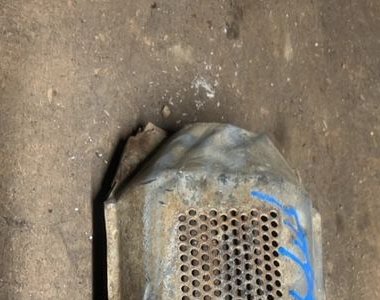
If the exhaust shop gave you back your old catalytic converter in Nanaimo and you can barely see a number on the shell, leave the metal as it is. Photograph the whole unit and ask SMASH for a direct converter quote. Tell us which markings you can read and where the part came from. We can review what you have and let you know if another view or a repair record would help identify it.
What can you tell from a converter with a faded stamp?
A readable serial can point toward a particular converter model. When some characters have rusted away, the shape of the housing, the arrangement of the pipes and the vehicle it came from give us other clues. Two converters can look much alike from one side. That is why a full-length photo and a view of each end are more helpful than several close-ups of the same patch of rust.
The material that gives a scrap converter much of its value sits inside the shell. A photo shows us its visible condition and may help us identify the unit. It cannot measure the metal content. If you find a similar-looking converter online, leave its serial and advertised price out of your enquiry. Even on the same vehicle model, a replacement fitted during an earlier repair may differ from the factory part.
Photograph the unit without disturbing the marking
A phone camera and a steady surface are enough to start. Work on a cool converter that has already been removed. Lay it on something stable in daylight, clear away loose items around it and keep the entire assembly in the picture. If it can roll, steady it before taking the photo. Only move it if you can do so safely.
- Show the whole converter. Stand far enough back to include the shell, pipes and both ends in one photo. A tape measure laid alongside the housing can give a sense of scale. Keep it clear of any marks on the metal.
- Photograph both fitting ends. Take one view of each connection. A buyer can see a bolted flange, bend or cut pipe in the picture even if you do not know the name of the fitting. Include the sections that are still attached.
- Show each side of the shell. Include dents, cracks, visible repairs and any heat shield still in place. If the shield covers part of the stamp, photograph what is visible and mention the obstruction. Keep the shield attached.
- Change the angle of the light. Start with the camera square to the marking. For the next picture, aim a light across the metal from one side. A shallow impression may cast a small shadow. If the phone focuses on the background, tap the shell on the screen and take another shot.
Open the pictures at full size before putting the unit away. Can you see the pitting around the stamp when you enlarge the photo? A second frame can fix a focus problem. If the metal is pitted, save the clearest picture and say which characters are legible. Leave a doubtful letter or digit unidentified. Grinding or wire-brushing the area can remove what remains of a shallow stamp.
Connect the converter to its repair history
If the converter came off your own vehicle during a shop repair and you have the paperwork, say that clearly. Give the vehicle make if you know it. The model, year and a line on the work order describing the exhaust job can help tie the photos to the vehicle. If you collected several pieces after the job, photograph the converter separately from the old muffler or lengths of exhaust pipe. If you cannot identify which piece is the converter, send a view of the pieces as returned and ask us which one to photograph in detail. Keep any connected sections together.
The number beside a new converter on the invoice may identify the replacement that went onto the car. Describe it as the replacement part number if that is what the invoice says.
If the vehicle make is genuinely unknown to you, select the unknown option and explain how you obtained the unit. Being unsure of the make is a different issue from being unsure who owns the part. For example, if you find it while clearing a relative’s garage, establish who owns it and whether you have authority to sell before submitting it. A readable number by itself would say nothing about that history.
British Columbia explains what its regulated dealers record about the origin and ownership of metal purchases. Keep the repair paperwork with your own records. Tell SMASH what you have and ask which details are needed for your sale before sending a copy of anything containing personal information.
Use the postal code where the converter is kept
Suppose your repair took place in Nanaimo and the converter is now in your garage in Parksville. Give the Parksville postal code if that is where you would send it from. You can still name Nanaimo when you describe the repair. Those details answer two different questions about the unit’s history and the mailing arrangement you need.
For a unit like that, a useful note could read, “My Nanaimo exhaust shop returned this converter after replacing it on my car. I have the repair invoice. I can read the last two digits on the shell. The rest is pitted. The unit is now in Parksville.” Add the vehicle make if known, the actual postal code and your contact information on the form. Keep the remaining photos in case the reviewer asks for a closer look.
Review the offer before sending the part
SMASH Recycling buys converters directly. A quote request starts the review. If we need another detail, use the same unit and photos when you reply. If we can make an offer, check the amount, the unit it covers and the shipping terms. Point out any difference between your part and the description before you agree. If you have since noticed damage on the underside, send the picture while the converter is still in your hands.
Once you accept an offer, follow the confirmed shipping instructions and use the supplied prepaid label. Check your local Canada Post outlet hours before making a trip with the box. Keep your mailing receipt and a copy of the accepted terms. SMASH checks the unit against your submission after it arrives at headquarters. Payment follows by Interac e-Transfer under the agreed terms.
If your old converter is sitting in a Nanaimo garage, start with the image that shows both ends, even if the stamp itself has disappeared. Have your repair details handy and send SMASH your converter photos for a direct quote.