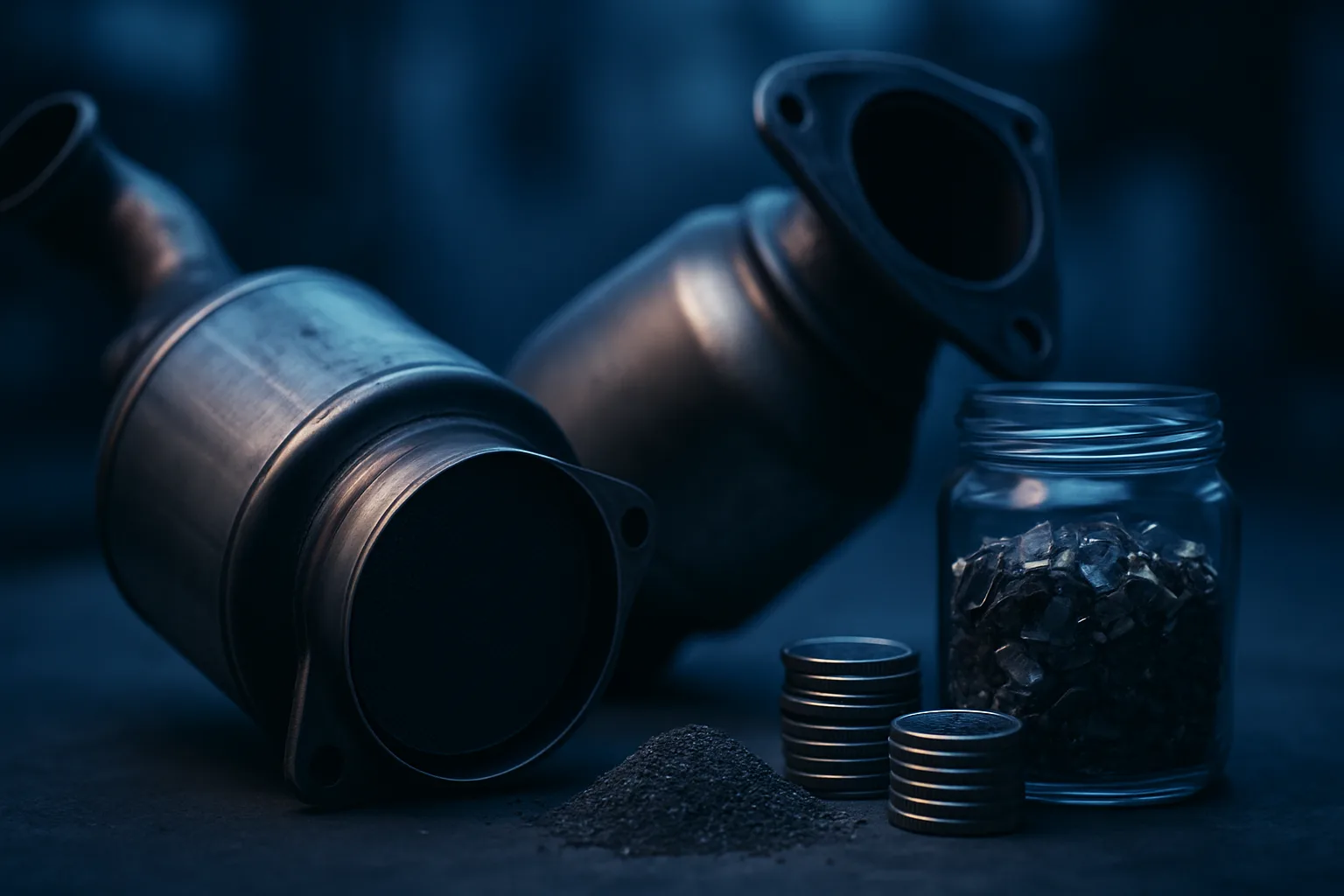
Most scrap yards treat all catalytic converters the same. They shouldn't — and if yours does, you're probably leaving money on the table.
Diesel converters and gasoline converters look similar sitting in a pile. But under the surface, they're built differently, priced differently, and processed differently. If you're doing catalytic converter recycling in Kelowna and you don't understand the distinction, you're going into a negotiation blind.
This guide breaks down exactly how diesel DPF and DOC converters differ from standard gasoline cats — and what that means for your scrap value in 2026.
What Are DPF and DOC Converters, and Why Do They Matter?
Gasoline catalytic converters have been standard since the mid-1970s. They use a honeycomb substrate coated with platinum, palladium, and rhodium (the three precious metals that drive scrap value) to convert harmful exhaust gases into less harmful ones. Most passenger vehicles, SUVs, and light trucks run them.
Diesel engines are a different story. They produce different emissions — particularly soot and nitrogen oxides — so they require different hardware. That's where the Diesel Particulate Filter (DPF) and the Diesel Oxidation Catalyst (DOC) come in.
- DOC (Diesel Oxidation Catalyst): Looks most like a traditional gas cat. It uses platinum and palladium to oxidize hydrocarbons and carbon monoxide. Rhodium content is typically lower or absent compared to gasoline converters.
- DPF (Diesel Particulate Filter): Designed to trap and burn off soot particles. It still contains precious metals, but the loading (the concentration of PGMs per unit) is different — and often lower — than a high-grade gasoline cat.
- SCR (Selective Catalytic Reduction): Found on newer diesel trucks and equipment, often paired with DEF (diesel exhaust fluid). These contain platinum group metals but are processed differently again.
The key takeaway: diesel converters aren't worthless — far from it. But they're not valued the same way as gasoline converters, and the buyer you sell to needs to understand diesel-specific grading to give you an accurate number.
How Precious Metal Content Differs Between Diesel and Gas Converters
Precious metal content is everything in the scrap cat world. It's what determines your price per unit, your price per kilogram, and whether a buyer makes you a strong offer or a lowball one. The three metals that matter are platinum (Pt), palladium (Pd), and rhodium (Rh) — often called PGMs (platinum group metals).
Gasoline converters, especially from late-model passenger vehicles, tend to carry higher rhodium loadings. Rhodium has historically been the most volatile and sometimes the most valuable of the three, so high-rhodium gas cats from certain manufacturers can command strong premiums. Diesel DOCs lean heavier on platinum and palladium. DPFs carry lower overall PGM concentrations per unit, but their weight can be significant — a DPF from a heavy commercial truck can weigh several kilograms on its own.
Here's why this matters practically:
- A gasoline cat from a late-model European vehicle might have high rhodium content that a knowledgeable buyer prices aggressively.
- A DPF from a diesel pickup might be priced per kilogram rather than per unit, because its value is spread across a larger, heavier substrate.
- DOCs from heavy equipment — think mining trucks and highway tractors — can carry significant platinum loadings that make them worth more than many people expect.
The problem is that not every buyer knows how to grade diesel units accurately. If you're selling to someone who primarily handles gasoline cats, you may not be getting the right price for your diesel inventory. Platforms that connect you to SMASH Recycling — where verified buyers bid on your metal understand this distinction and attract buyers who specialize in different converter types.
The Grading Process: Why Diesel Cats Require Different Expertise
Grading a gasoline converter is relatively standardized. Buyers use serial numbers, OEM codes, and database lookups to identify converter type and assign a grade. It's not perfect, but the data infrastructure exists. Diesel converters — especially DPFs — are less standardized. Different manufacturers use different substrate designs, different PGM loadings, and different regeneration cycles that affect how much soot has built up inside the filter.
A DPF that's been properly regenerated (the diesel engine burns off accumulated soot) has a different internal condition than one that failed early and is clogged. This affects how the smelter recovers metal during processing, which ultimately affects what a serious buyer is willing to pay. Photo documentation becomes critical here. If you're looking to sell catalytic converters online, clear photos of the unit — including any visible serial numbers, the housing condition, and the end caps — help buyers make accurate offers without having to discount for uncertainty.
This is where SMASH's documentation tools matter. Serial tracking and photo documentation create a record that gives buyers confidence in what they're bidding on. More confidence typically means more competitive offers. That's not a guarantee of a higher price — but undocumented inventory almost always prices lower because the buyer is hedging against the unknown.
Selling Diesel Catalytic Converters in Kelowna: What the Local Market Looks Like
Kelowna sits in a part of British Columbia where diesel equipment is genuinely common. Agriculture, construction, forestry, and the wine industry all run diesel fleets. That means DPFs and DOCs cycle through the region regularly — from diesel pickup trucks to commercial transport rigs to agricultural equipment. The scrap volume is there.
The challenge is that Kelowna isn't a major metropolitan hub. Local buyer competition for specialized diesel converter inventory can be limited, which is exactly the scenario where selling through a competitive auction platform outperforms a single local quote. When you sell catalytic converters in British Columbia through an open marketplace, buyers from across North America can bid on your load — not just whoever happens to be in the Okanagan that week.
If you're accumulating diesel cats from local fleet work, body shops, or equipment yards, connecting with Kelowna scrap metal services that understand the diesel converter market is the right first step. From there, platforms that aggregate vetted buyers help you understand the real market price — not just the first number someone quotes you.
For anyone ready to find the best scrap cat prices in Canada, the process starts with knowing what you have and documenting it properly before the first conversation with a buyer.
How to Maximize Your Return When Selling Diesel Converter Inventory
Whether you're a recycling yard, a fleet maintenance shop, or a diesel mechanic accumulating units over time, the approach to selling diesel cats should be systematic. Here's what separates sellers who get fair market value from those who don't.
- Separate your diesel units from your gasoline cats. Don't mix them in a single load unless a buyer specifically grades and prices them separately. Mixing leads to the lower grade pricing the whole pile.
- Photograph every unit. Top, bottom, end caps, any visible codes. This documentation is what allows remote buyers to bid confidently on your inventory.
- Identify what you have — DOC, DPF, or SCR. These aren't interchangeable terms. If you're unsure, photograph the unit alongside the vehicle it came from and the make/model/year. A good buyer can help you identify it from there.
- Weigh your DPFs. Because DPFs are often priced by weight, knowing the exact weight of your units before the first conversation puts you in a stronger position.
- Get multiple quotes. One buyer, one price is the old way. Competition reveals the market. That's the logic behind getting a fair price for your scrap catalytic converters in Canada through a platform that brings multiple buyers to the table.
The scrap cat market in 2026 continues to move with PGM spot prices. Platinum and palladium prices shift with automotive production trends, EV adoption rates, and industrial demand. A diesel-heavy inventory needs a buyer who tracks platinum specifically — not just a general metal recycler quoting flat rates. You can read Canadian scrap catalytic converter guides to stay current on how metal prices affect your converter values.
Why the Right Buyer Makes All the Difference for Diesel Cat Sellers
Selling diesel cats to a buyer who primarily handles gasoline converters is like selling a load of non-ferrous to a ferrous-only yard. They might take it, but you're not going to get the right price because their reference points are wrong. The diesel converter market has its own grading language, its own buyer network, and its own pricing logic.
This is exactly why auction-based platforms that aggregate vetted, specialized buyers outperform cold calls to local scrap yards for diesel inventory. When you post a documented load of DPFs or DOCs on a competitive platform, you're reaching buyers who actually specialize in those units — not buyers who will take them reluctantly and discount aggressively to cover their uncertainty.
SMASH connects sellers with verified buyers across North America who bid competitively on converter loads. No subscription fees. The platform wins when you win. For diesel cat inventory in Kelowna and across British Columbia, that kind of market access matters — especially when local competition for specialized inventory is thin.
If you're sitting on a pile of diesel cats and you're not sure what they're worth, now is the time to find out. Document what you have, separate your diesel units, and find the best scrap cat prices in Canada through a process that gives you real market data — not just the first number someone hands you.
Disclaimer: Catalytic converter scrap prices fluctuate based on PGM spot prices, converter type, condition, and buyer demand. Always verify current rates before selling.
Frequently Asked Questions
Q: Are diesel catalytic converters worth less than gasoline converters?
Not necessarily — it depends on the unit. DOCs from heavy diesel equipment can carry significant platinum content and price well. DPFs are typically priced by weight and precious metal loading, which varies by manufacturer and application. A knowledgeable buyer grades them differently than gasoline cats, which is why specialized buyers matter.
Q: Can I sell diesel catalytic converters online in British Columbia?
Yes. Platforms designed for selling catalytic converters online allow you to document your units with photos and serial information and reach buyers across North America. This is particularly useful in regions like Kelowna where local buyer competition for diesel inventory may be limited.
Q: How do I find catalytic converter dealers near me in Kelowna?
Start by contacting local recycling yards and scrap metal buyers in the Okanagan region. For specialized diesel converter inventory, pairing local contacts with a national auction platform gives you both convenience and competitive pricing. Don't rely on a single local quote for high-value or large-volume diesel loads.
Q: How does SMASH help with catalytic converter recycling in Kelowna?
SMASH connects sellers with vetted buyers who bid competitively on converter inventory — including diesel DPFs and DOCs. The platform's photo documentation and serial tracking tools help buyers make confident offers, which generally leads to better price discovery. There are no subscription fees; the platform is free to use for sellers.
Q: Does the condition of a DPF affect its scrap value?
Yes. A DPF that has been properly regenerated and is in reasonable external condition is easier for a buyer to grade accurately. A clogged or physically damaged DPF introduces uncertainty that buyers price into their offers. Clean, documented, properly separated diesel units consistently attract more competitive bids than mixed or undocumented loads.
Ready to find out what your diesel cats are actually worth? Get a free quote and find the best Canadian scrap cat prices at best-scrap-cat-prices.ca — no guessing, no single-buyer pricing, just real market competition on your inventory.
Stay current on scrap metal market trends and converter pricing — follow SMASH on LinkedIn for industry updates and insights from across the North American recycling market.
```