Foil vs. Bead Catalytic Converters: What's Inside and What It's Worth in Canada
Most scrap sellers never look past the shell. They hand over a catalytic converter, take whatever number the buyer offers, and move on. But what's inside that shell — foil or bead substrate — changes the scrap value more than most people realize. If you're trying to nail down cat converter prices in Regina or anywhere across Saskatchewan, understanding this distinction is one of the most practical things you can do before you sell.
This week's roundup breaks down foil and bead style converters: what they are, how recyclers grade them, and what that means for the price you should be getting in 2026.
What Is a Foil Catalytic Converter?
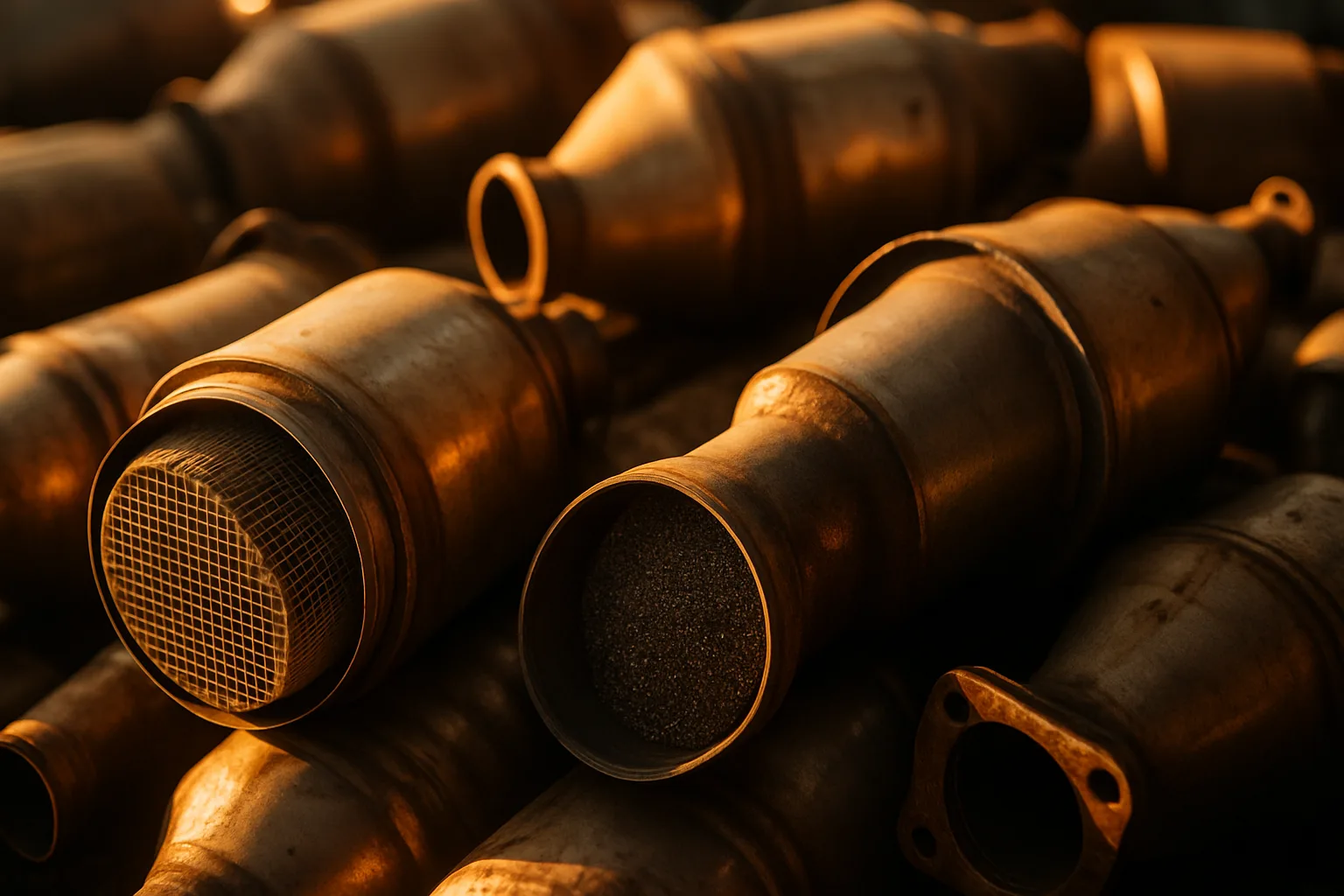
Foil cats — sometimes called metallic substrate converters — use a tightly wound metal foil core instead of the ceramic honeycomb most people picture. The foil is typically a thin corrugated stainless steel or high-temperature alloy material coated with platinum group metals (PGMs): platinum, palladium, and rhodium. These are the metals that make a cat converter worth recycling in the first place.
Foil substrates are common in high-performance, European, and diesel applications. They handle extreme heat better than ceramic and are often found in turbocharged engines where exhaust temperatures spike fast. If you're pulling cats off BMWs, Audis, Mercedes diesels, or performance-spec trucks, there's a decent chance you're working with foil units.
From a recycling standpoint, foil cats behave differently during processing. The metal substrate itself has some scrap value beyond the PGMs, but the precious metal loading per unit can vary widely. That's why documentation matters — a photo of the substrate and a clear serial number or part number can change the offer you receive. Platforms like sell your scrap metal on SMASH Recycling give buyers the documentation they need to bid with confidence, which tends to translate into better numbers for the seller.
How to Identify a Foil Cat
- Cut end shows a metallic, shiny honeycomb — not the cream or grey ceramic typical of OEM cats
- Lighter weight than a comparable ceramic unit of the same shell size
- Often found in European, diesel, or performance vehicle applications
- Shell may run hotter to the touch after engine operation due to alloy construction
- Part numbers stamped on the shell often indicate manufacturer and loading spec
Don't assume a foil cat is worth less. In some cases, they carry significant PGM loading. Don't assume it's worth more either. The only way to know is to get it in front of buyers who actually process them — not a single-buyer yard running off a flat-rate sheet.
What Is a Bead Catalytic Converter?
Bead cats use small ceramic or alumina beads as the substrate instead of a continuous honeycomb block. The beads are coated in PGMs and packed inside the converter shell, allowing exhaust gas to filter through the porous mass. You'll find bead-style converters predominantly on older North American vehicles — think 1970s through early 1990s GM, Ford, and Chrysler applications — as well as on some heavy equipment and industrial engines.
When you shake a bead cat, you'll hear it rattle. That distinctive sound is how most experienced yard operators identify them on the spot. The beads can also spill out if the shell is compromised, which is a signal to handle them carefully and document condition before selling.
Bead cats often carry strong PGM content — sometimes higher than an average OEM ceramic cat — but the processing is more involved on the smelter side, which affects how buyers price them. In Regina and across Saskatchewan, yards that process older domestic vehicles, farm equipment, and heavy trucks are more likely to encounter bead units than shops focused on late-model import vehicles.
How to Identify a Bead Cat
- Shake the unit — a rattling sound indicates loose beads inside
- Heavier than foil cats of similar shell size
- Typically found on pre-1995 North American vehicles and heavy equipment
- Shell often has a round, oval, or rectangular profile with a pronounced bulge at the catalyst chamber
- Beads may be visible if the end caps are damaged or removed
Bead cats are frequently undervalued at yards that don't specialize in older stock. If you're pulling units off vintage iron or farm fleet equipment in Saskatchewan, don't let a buyer lump them in with generic ceramic units at a flat rate. The PGM content can justify a meaningfully different price — but only if the buyer is actually competing for your load.
Catalytic Converter Scrap Value: Foil vs. Bead in 2026
Precious metal markets drive cat converter scrap value more than any other single factor. Platinum, palladium, and rhodium prices shift based on global mining output, automotive demand, and broader commodity markets. In 2026, rhodium remains a volatile commodity — prices can swing significantly over a short period — which is why any price list you saw last month may already be outdated.
That said, here's how foil and bead units generally stack up against each other in terms of scrap value:
- Foil cats: Value depends heavily on PGM loading, which varies by manufacturer and application. European diesel foil units often carry strong platinum content. Performance foil cats may lean heavier on palladium. Because the substrate itself is a stainless alloy, there's also a small base metal recovery component, though PGMs still dominate the price.
- Bead cats: Generally command strong PGM recovery due to the high surface area of the bead mass. Older domestic bead units often have higher platinum loading than people expect. However, moisture, contamination, or significant bead loss from a damaged shell can reduce assay yield — and buyers price that risk accordingly.
The honest answer is: neither type is universally worth more. The specific unit, its condition, its PGM loading profile, and who is buying it — those are the variables that set the real price. That's exactly why getting multiple buyers to compete for your load produces better price discovery than calling one yard and accepting their first number.
If you want to find the best scrap cat prices in Canada, the process starts with knowing what you have and getting it in front of buyers who actually want it.
Why Regina Sellers Should Stop Relying on One Buyer
The Regina scrap market, like most mid-sized Prairie markets, has a limited number of active cat converter buyers operating locally. That's not a knock on the city — it's just geography. When your buyer pool is small, competition is low, and low competition means the first number you hear tends to become the final number. That's not price discovery. That's just accepting whoever answers the phone.
If you're selling foil or bead cats from Regina scrap metal services, the most practical move is to access a broader buyer network — not just whoever operates the nearest yard. A vetted buyer network means your load gets seen by processors who actually specialize in the converter type you're selling. Foil cats from European vehicles aren't the same as ceramic units from domestic trucks, and not every buyer prices them the same way.
SMASH connects sellers across Canada with vetted buyers who know the difference between a foil diesel unit and a bead cat off a 1980s half-ton. That specificity matters when you're trying to get a fair price for your scrap catalytic converters in Canada. More buyers means better price discovery — that's not a marketing claim, it's just how auctions work.
Saskatchewan sellers also have the advantage of pulling from a diverse vehicle mix: older farm fleet, domestic trucks, and newer import vehicles all move through the province. That variety means you're likely sitting on a mix of converter types. Understanding what you have before you sell — and documenting it properly — is the fastest way to close the gap between what you're getting and what you should be getting.
How to Document Foil and Bead Cats Before You Sell
Documentation is not a hassle — it's money. Buyers bidding on undocumented loads price in uncertainty. Buyers looking at clear photos, part numbers, and substrate identification can bid tighter to actual value because they're not guessing. That tighter bid is almost always better for the seller.
Here's what to document before you list any cat load, foil or bead:
- Serial or part number: Stamp on the shell, pipe, or end cap. This is the single most useful data point for most buyers.
- Photos of both ends: Show the substrate type clearly. Foil and bead are usually visible from the open end. Good lighting matters.
- Photos of the shell condition: Cracks, welds, damage, or missing end caps all affect the offer. Document them up front rather than let a buyer use them to renegotiate after the fact.
- Vehicle application if known: Year, make, model, and engine size help buyers cross-reference PGM loading data. This is especially useful for foil cats from European or diesel applications.
- Count and weight of the load: Buyers need to know what they're bidding on. An accurate count prevents disputes at pickup.
Platforms like SMASH build this documentation process into the listing workflow. Photo uploads, serial tracking, and load descriptions are part of the listing — not an afterthought. If you want to read Canadian scrap catalytic converter guides on getting your documentation right before you sell, there's more detail in the site's resource library.
Disclaimer: Catalytic converter scrap prices fluctuate based on precious metal markets, converter type, and buyer demand. Always check current rates before selling. The information in this article reflects general market knowledge as of July 2026 and should not be treated as a guaranteed price guide.
Frequently Asked Questions
Q: How do I know if my catalytic converter is foil or bead style?
Shake the unit first. A rattling sound usually means bead-style construction. If there's no rattle, look at the open ends — foil cats show a shiny metallic honeycomb, while bead cats show loose spherical pellets. If the ends are sealed, the vehicle application and part number can help a buyer identify the type.
Q: Are bead catalytic converters worth more than foil cats?
Not as a rule. Value depends on the specific PGM loading of each unit, its condition, and current precious metal prices. Some bead cats carry strong platinum content; some foil cats from European diesel applications are exceptionally well-loaded. The converter type is one variable — not the only one that determines price.
Q: What are current cat converter prices in Regina?
Cat converter prices fluctuate based on platinum, palladium, and rhodium spot prices, which can shift significantly week to week. Rather than rely on a static price list, use a platform that connects you with active buyers competing for your load in real time. That competition is how you surface the real market price for your specific units.
Q: Do Regina scrap yards buy foil and bead catalytic converters?
Some do, though not every local yard has the buyer network or assay relationships to price specialty converter types accurately. If you're selling foil cats from European vehicles or bead cats off older domestic trucks, it's worth checking whether your buyer actually specializes in those units — or is just applying a generic flat rate.
Q: How does SMASH help me get a better price for my scrap catalytic converters in Canada?
SMASH connects sellers with a vetted network of buyers who compete for loads through an auction format. More competition means better price discovery — buyers have to outbid each other rather than offer you their floor price. The platform also supports photo documentation and serial tracking, which gives buyers the data they need to bid confidently on foil and bead units specifically.
If you're sitting on a mixed load of foil cats, bead units, or standard ceramics — and you're not sure what they're worth or who's paying the most for them right now — the right move is to get them in front of more than one buyer. That's what competition does. Head to best-scrap-cat-prices.ca and get a free quote. It costs nothing to find out what your load is actually worth on the open market.
Follow SMASH on LinkedIn for weekly scrap metal market updates, precious metal news, and practical recycling insights across Canada.