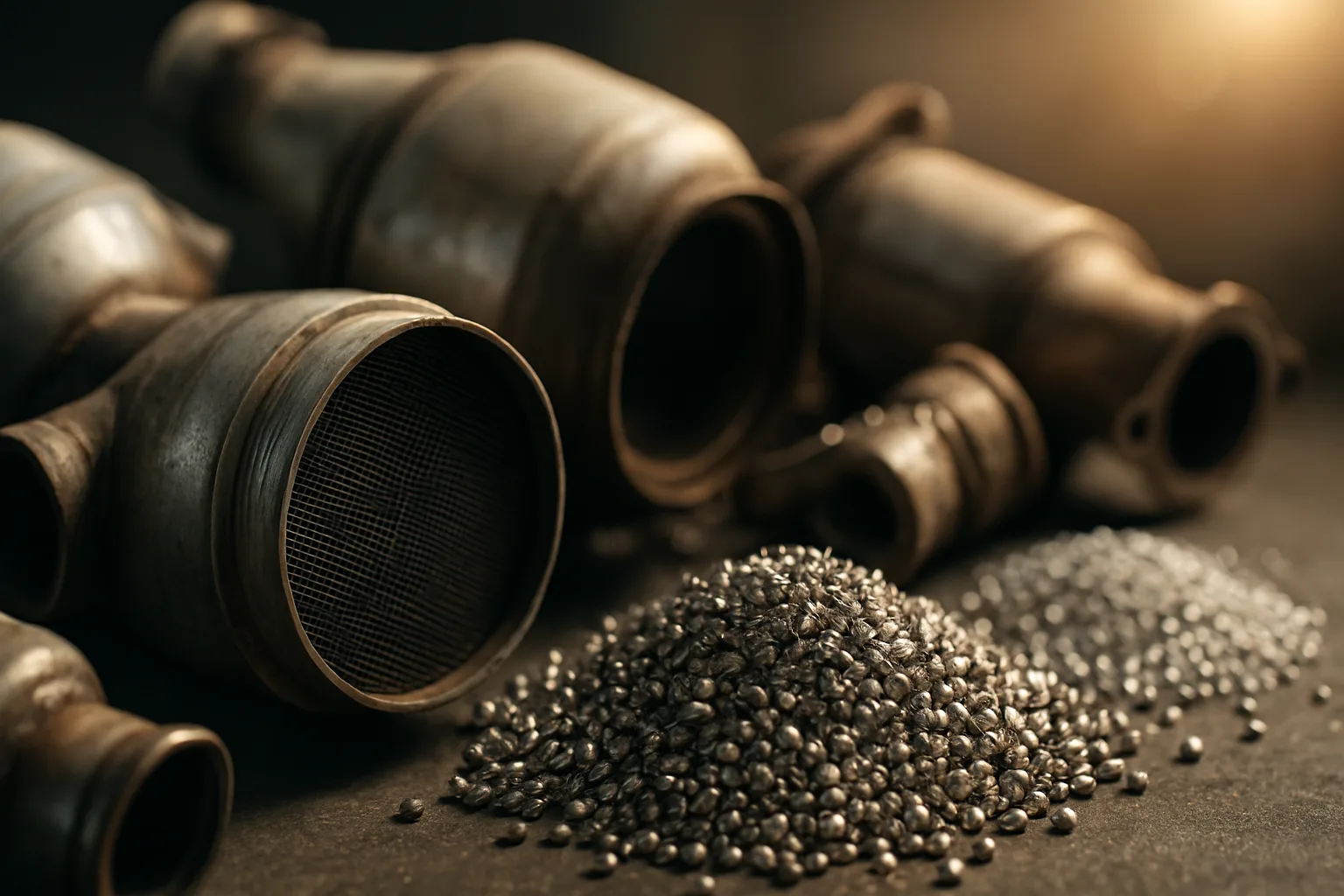
Platinum, Palladium, Rhodium: What's Actually Inside Your Catalytic Converter
Most people toss a catalytic converter in the scrap pile and take whatever the first buyer offers. That's a mistake. The metals inside a cat converter — platinum, palladium, and rhodium — are worth more per ounce than gold. If you're in Montreal trying to get the best catalytic converter price Montreal buyers will pay, you need to understand what you're actually selling before you pick up the phone.
This isn't a chemistry lesson. It's a practical breakdown of what drives scrap cat value, why prices swing so hard, and how to make sure you're not leaving money on the table when you sell.
The Three Precious Metals That Make Catalytic Converters Valuable
Every catalytic converter contains a ceramic or metallic honeycomb substrate coated with a wash of precious metals. Those metals do the actual emissions work — converting toxic exhaust gases into less harmful compounds. When the cat wears out or gets removed, those metals are still there. That's the value.
Here's what you're working with:
- Platinum (Pt): Used heavily in diesel catalytic converters. Platinum is stable, handles high temperatures well, and has been a standard catalyst metal for decades. Prices fluctuate with industrial demand and mining output, primarily from South Africa and Russia.
- Palladium (Pd): The dominant metal in most gasoline-engine cats. Palladium surged in value through the early 2020s as automakers shifted away from diesel, driving massive demand. It remains one of the most volatile precious metals in the scrap market.
- Rhodium (Rh): The rarest of the three — and often the most valuable by weight. Rhodium price today can swing dramatically based on extremely thin global supply. A small concentration of rhodium in a converter can represent a significant portion of its total scrap value.
The exact mix of these three metals varies by vehicle make, model, year, and engine type. A Toyota Prius cat contains a very different precious metal profile than a Ford F-150 diesel. That's why serial number lookup and proper identification matter so much when you're trying to get a fair return.
Why Rhodium Price Today Moves the Market More Than You Think
Platinum and palladium get more attention, but rhodium is the wildcard in scrap cat pricing. Global rhodium supply is almost entirely a byproduct of platinum and palladium mining — you can't mine for rhodium directly. That makes supply nearly impossible to scale up when demand spikes.
Rhodium is used as a three-way catalyst component, meaning it handles nitrogen oxide (NOx) reduction in the converter. Tightening emissions regulations — including standards applied across Canada and the U.S. — have kept automakers using rhodium-containing cats across their fleets. Even small amounts of rhodium in a substrate contribute meaningfully to overall cat value.
What this means for sellers: a converter that looks identical to another on the outside can be worth significantly more if it contains higher rhodium loading. That's exactly why finding the best scrap cat prices in Canada requires more than a quick eyeball estimate. You need a buyer who actually assays the material or works from verified data — not one who low-balls everything and pockets the spread.
How Serial Numbers and Identification Drive the Price You Actually Get
Here's where most sellers lose money. A scrap buyer offering a flat rate per unit for "mid-grade" cats is averaging down on purpose. The variance in precious metal content between converter types is enormous. A high-grade cat from a luxury or performance vehicle can contain several times the PGM (platinum group metal) loading of a standard economy car unit.
Serial numbers and physical identification are your leverage. Most converters have a serial number stamped on the body or end cone. Cross-referencing that number against a catalytic converter price list with pictures gives you a starting benchmark. More importantly, platforms and buyers that use how much is my catalytic converter worth by serial number lookups are working from actual assay data — not guesses.
If you're selling in Montreal or anywhere in Quebec, this matters even more in a regional context. Not all scrap buyers in the area have the same data infrastructure. Some work from outdated price sheets. Others don't differentiate by serial at all. You want a buyer — or a platform — that does the work to identify what you actually have.
That's where selling your scrap metal on SMASH Recycling changes the dynamic. Instead of relying on one buyer's price sheet, you get competitive bids from vetted buyers who know the material. More eyes on your inventory means better price discovery — especially for high-value cats where the spread between a lazy offer and a competitive one is significant.
What Affects Scrap Cat Prices in Montreal and Across Quebec
Local market conditions layer on top of global PGM prices. In Montreal and across Quebec, a few factors shape what you'll actually get paid on a given day:
- Global PGM spot prices: Platinum, palladium, and rhodium trade on international commodity markets. Daily price movement flows directly into what processors pay for raw cats.
- Exchange rate (CAD/USD): PGMs are priced in USD globally. When the Canadian dollar weakens against the U.S. dollar, scrap cat values in CAD terms can shift — even if spot prices stay flat.
- Converter condition: Cracked, burned-through, or drilled-out substrates mean fewer recoverable PGMs. Intact converters with undamaged substrate command better prices.
- Volume and mix: Selling a mixed load of 10 units gets you a different conversation than selling 200 sorted, identified converters. Volume and quality documentation matter to serious buyers.
- Buyer competition: In a market with one dominant buyer, you take their number or walk. In a competitive environment — auction format, multiple vetted bidders — price discovery works in your favor.
For sellers moving volume in the Montreal area, connecting with Montreal scrap metal services that understand local logistics and buyer networks is a practical first step. But beyond geography, the real advantage comes from having your inventory properly documented and presented to the right buyers.
How to Get the Best Catalytic Converter Price Montreal Buyers Will Actually Pay
Stop treating cat converters like bulk scrap. They're not. Every unit has a specific value tied to specific metals in specific concentrations. Treat them accordingly.
Here's a practical approach:
- Sort and identify your units. Separate by make, model, and type where possible. Look for serial numbers. Don't throw a Ferrari cat in the same pile as a Honda Civic unit.
- Document with photos. Clear photos of the serial number, end cones, and overall condition give buyers confidence — and less reason to discount for uncertainty.
- Check current rhodium, palladium, and platinum prices. Know the market before you negotiate. If rhodium spiked this week, your high-rhodium converters are worth more today than they were last Friday.
- Get multiple offers. A single buyer with a single offer is not a market. It's one data point. Competitive bidding reveals what your load is actually worth.
- Use platforms built for this. SMASH connects sellers with vetted buyers across North America. The auction format means buyers compete for your material — not the other way around.
SMASH doesn't charge subscription fees. The platform only works when sellers get paid. That alignment matters. Read Canadian scrap catalytic converter guides to go deeper on specific converter types, pricing benchmarks, and what to look for in a serious buyer.
Scrap Metal Recycling Canada: The Bigger Picture Behind Cat Converter Value
Scrap metal recycling Canada is a serious industry — not a side hustle. The catalytic converter segment sits at the intersection of automotive recycling, precious metals recovery, and environmental compliance. Recyclers who treat it professionally get paid professionally.
The metals recovered from spent catalytic converters re-enter the supply chain for new converter production, electronics manufacturing, and industrial applications. Global automakers and refiners depend on secondary PGM supply. That means legitimate, documented material from Canadian recyclers has real buyers with real demand.
Quebec and the broader Canadian market have seen increased scrutiny on cat converter transactions — documentation, proof of ownership, and traceability are now standard expectations from serious processors. That's not a burden; it's an advantage for sellers who do things right. Documented inventory moves faster and commands better prices from reputable buyers.
If you want to get a fair price for your scrap catalytic converters in Canada, the path forward is straightforward: know what you have, document it properly, and put it in front of more than one buyer. That's the whole playbook.
Ready to stop guessing and start getting competitive offers on your cats? Get a free quote at best-scrap-cat-prices.ca and see what your material is actually worth in today's market.
Disclaimer: Precious metal prices — including platinum, palladium, and rhodium — fluctuate daily based on global commodity markets. All pricing references in this article are general in nature. Always check current rates before selling.
Frequently Asked Questions
Q: How do I find out the best catalytic converter price Montreal buyers are offering right now?
The best approach is to identify your converters by serial number, document them with photos, and get quotes from multiple buyers. Single-buyer offers don't reflect the real market. Platforms like SMASH connect you with vetted buyers who compete for your material, giving you a clearer picture of actual value.
Q: Does rhodium price today really affect what I get paid for my scrap cats?
Yes — significantly. Rhodium is the rarest of the three precious metals in catalytic converters, and its price is highly volatile. Even small amounts of rhodium in a converter substrate can represent a meaningful portion of total value. Sellers who track PGM spot prices before negotiating are in a much stronger position.
Q: Can I look up my catalytic converter value by serial number?
Yes. Most converters have a serial or part number stamped on the body or end cone. Cross-referencing that number with a catalytic converter price list gives you a benchmark based on actual assay data for that specific unit type. Buyers who use serial number lookups are working from real data — not flat-rate guesses that average down your payout.
Q: Is scrap metal recycling in Canada regulated for catalytic converters specifically?
Regulations vary by province, but across Canada — including Quebec — there's increasing emphasis on documentation, traceability, and proof of ownership for catalytic converter transactions. This is partly a response to converter theft trends. Sellers with clean documentation and legitimate sourcing face fewer friction points and attract more serious buyers.
Q: What's the difference between a high-grade and low-grade scrap cat?
Grade is determined by precious metal content — specifically the concentration of platinum, palladium, and rhodium in the substrate. High-grade converters (often from larger engines, luxury vehicles, or certain truck applications) contain significantly more PGMs per unit. Low-grade units from small economy cars may contain a fraction of the value. Proper identification — not visual guessing — is the only reliable way to know which category your cats fall into.
Stay sharp on scrap metal markets and pricing trends — follow SMASH on LinkedIn for industry updates, PGM market insights, and practical tips for scrap metal sellers across North America.