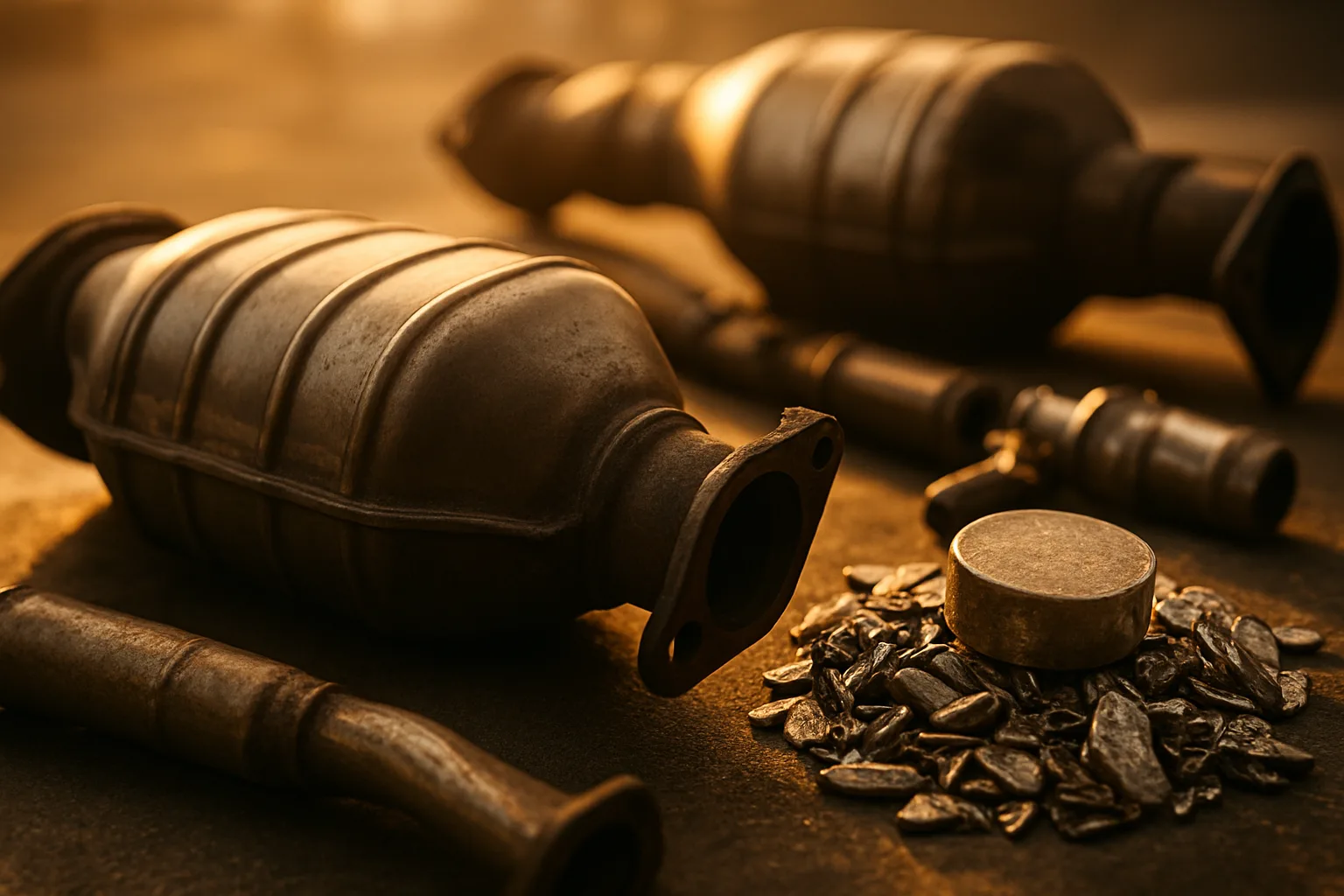
Most sellers in Brampton think a catalytic converter is just a chunk of metal bolted under a car. It's not. Inside that steel shell sits a ceramic honeycomb coated with some of the rarest and most valuable metals on earth — and those metals are exactly what determines your scrap catalytic converter prices in Brampton and across Canada. If you don't understand what drives the number, you're negotiating blind.
This isn't a complicated topic, but most scrap yards won't explain it to you. They'd rather keep you guessing. Here's the full picture — what's in your cat, how buyers price it, and how to make sure you're not leaving money on the table.
---The Three Metals That Drive Cat Converter Prices in Canada
Every catalytic converter contains a wash-coat — a chemical layer bonded to the ceramic substrate inside the converter. That wash-coat is where the precious metals live. There are three of them, and each one trades independently on global commodity markets:
- Platinum (Pt) — Used primarily in diesel engine converters. Platinum is the most recognized of the three, though it often trades at lower per-ounce values than rhodium.
- Palladium (Pd) — Dominant in gasoline-powered vehicle converters. Palladium loadings tend to be higher in late-model North American and Japanese cars, which makes those cats more valuable at the scrap yard.
- Rhodium (Rh) — The wildcard. Rhodium is produced in tiny global quantities, primarily as a byproduct of platinum mining in South Africa. Its price swings are dramatic. A single-day rhodium move can shift your cat's value more than a week of palladium trading.
Each of these metals is measured in troy ounces per converter, and even fractions of a gram matter at scale. A typical gasoline cat might contain less than two grams of platinum group metals (PGMs) total — but at current market rates, that's enough to make the difference between a $40 payout and a $400 payout depending on the vehicle and the buyer's assessment.
This is why where you sell matters as much as when you sell. A buyer who understands PGM assay data will price your cat accurately. One who's guessing — or lowballing — will not. If you want to find the best scrap cat prices in Canada, you need buyers who are pricing on real data, not gut feel.
---How Buyers Actually Calculate Cat Converter Prices Brampton Sellers Should Know
There are two ways buyers price a catalytic converter: by visual identification or by assay data. The difference between those two methods is often the difference between a fair price and a bad one.
Visual ID pricing means the buyer looks at your cat, matches it to a reference database by serial number or physical characteristics, and offers you a percentage of the theoretical PGM content. It's fast, but it relies on how honest and how accurate the buyer's database is — and how much margin they're building in to protect themselves from uncertainty.
Assay-based pricing means the material gets smelted and chemically analyzed. You get paid based on actual recovered PGM content, not a theoretical estimate. This is how large volume dealers and processors work. The catch: assay takes time, and smaller loads may not qualify for it at every buyer.
In Brampton and across Ontario, most individual sellers are working with visual ID buyers. That's fine — but you need competition among those buyers to ensure the ID estimate is being used honestly, not as a tool to compress your payout. A single buyer with a single quote has every incentive to shade low. Multiple buyers competing for your load? That's a different dynamic entirely.
Platforms like SMASH exist specifically to create that competition. Instead of one phone call to one buyer, your inventory goes in front of vetted buyers across Canada and North America — and they bid. That's how price discovery is supposed to work.
---Why Rhodium Makes Scrap Cat Prices Volatile — And What That Means for You
If you've sold cats more than once, you've noticed the price isn't the same every time. That's not just the buyer changing their margin. It's the underlying commodity market moving.
Rhodium is the primary driver of volatility. Here's why: global rhodium supply is extremely thin. Annual mine production is measured in the low tens of thousands of kilograms — a fraction of what platinum or palladium produces. South African mines supply the overwhelming majority. Any disruption there — labor action, power grid issues, logistics problems — can spike rhodium prices within days.
Palladium has its own supply dynamics. Russia accounts for a significant share of global palladium output. Geopolitical tension, sanctions, or export policy shifts create price pressure that filters down directly to what a scrap cat buyer in Ontario will pay you this week versus last month.
Platinum is generally the most stable of the three, but it's also often the lowest loaded in the types of cats most common in Canadian and U.S. gasoline vehicle fleets. Diesel trucks and European imports tend to be platinum-heavier — worth knowing if you're sorting a mixed load.
The practical takeaway: timing matters, but don't wait indefinitely. Markets can reverse fast. The best move is to get competitive quotes from multiple buyers at whatever the current market price is — not to hold inventory hoping rhodium spikes. Documented, sorted inventory moves faster and gets better prices. That's a consistent truth regardless of where the market sits today.
To stay ahead of market shifts, read Canadian scrap catalytic converter guides that break down pricing factors in plain language.
---What Makes One Catalytic Converter Worth More Than Another
Not all cats are equal. Two converters pulled from the same model year can carry meaningfully different PGM loadings based on engine type, emission standard compliance, and manufacturing origin. Here's what actually moves the needle:
- Vehicle type and engine displacement — Larger engines running richer fuel mixtures historically needed higher PGM loadings to meet emissions standards. That often translates to more palladium and rhodium per unit.
- Emissions standard generation — Stricter emissions standards (Euro 5, Euro 6, U.S. Tier 3) pushed automakers to increase PGM loadings to meet tighter thresholds. Newer-gen cats from emissions-compliant markets can carry more valuable material.
- OEM versus aftermarket — Original equipment manufacturer converters almost always carry higher PGM content than aftermarket replacements. An aftermarket cat designed to meet minimum emissions thresholds may use significantly less platinum group metal.
- Physical condition — A cracked substrate, water damage, or a cat that's been "rattled out" (ceramic broken down inside) loses surface area for PGM contact and may grade lower on assay.
- Serial number identification — Cats with legible, identifiable serial numbers get priced with more confidence. Buyers apply less risk discount when they can confirm exactly what they're buying.
This is why photo documentation and serial tracking matter when you're selling. A Brampton seller who shows up with a sorted, documented load — photos, serial numbers, condition notes — is presenting a lower-risk transaction to a buyer. Lower risk to the buyer means a higher offer to you. Platforms like SMASH build this into the process from the start, with inventory tools designed for exactly this kind of documentation.
---How to Get Competitive Scrap Cat Prices as a Catalytic Converter Seller in Ontario
The mechanics are simple even if they're rarely explained. You need three things working in your favor: accurate identification of your material, current market pricing, and competition between buyers.
Most sellers in Ontario — including those in Brampton — are only getting one of those three. They know roughly what they have. They don't know if the buyer's price reflects today's PGM market or last week's. And they're talking to one buyer, which means there's no competition at all.
Here's a practical approach that changes that dynamic:
- Document before you sell. Photograph every converter. Record serial numbers where visible. Note any obvious damage or condition issues. This takes twenty minutes and directly affects what buyers will offer.
- Understand your load composition. Are you selling diesel cats (platinum-heavy) or gasoline (palladium-heavy)? Mixed loads or sorted? Buyers price sorted loads better because they carry less uncertainty.
- Get multiple quotes — at the same time. Sequential quotes over several days mean you're comparing prices from different market moments. Simultaneous competitive bids mean buyers are pricing against each other on the same material at the same time. That's the difference between calling around and running an auction.
- Use a platform built for this. SMASH connects sellers with vetted catalytic converter buyers across Canada and North America. No subscription, no guesswork. You get a fair price for your scrap catalytic converters in Canada when buyers are competing for your load — not when you're hoping one buyer quotes you honestly.
If you're regularly moving cats in Ontario and still relying on a single buyer relationship, you're essentially opting out of price discovery. The market is there. You just need to access it.
Want to see what competitive bidding looks like for scrap metal? Compare scrap metal bids from Canadian buyers and understand what your load is actually worth on the open market.
---Frequently Asked Questions
Q: How are scrap catalytic converter prices in Brampton determined?
Prices are based on the platinum, palladium, and rhodium content inside the converter — metals that trade daily on global commodity markets. Buyers in Brampton use either visual identification databases or assay data to estimate PGM content and make an offer. The more buyers competing for your material, the more accurately that offer will reflect actual market value.
Q: Why do cat converter prices in Brampton change so frequently?
Because the three precious metals inside converters — platinum, palladium, and rhodium — trade live on global markets. A single day's move in rhodium pricing can shift what a buyer will pay by a meaningful amount. Prices also vary by converter type, vehicle make, and physical condition.
Q: Is there a difference between selling a cat to a scrap yard versus a specialized catalytic converter buyer?
Often yes. A general scrap yard may price cats as a secondary item without deep PGM expertise. Specialized catalytic converter buyers — particularly those who participate in competitive auctions — tend to have better reference databases and more accurate pricing. Platforms like SMASH bring multiple specialized buyers to your material at once.
Q: Do I need to remove the catalytic converter myself before selling?
Typically yes, if you're selling the converter separately from the vehicle. In Ontario, ensure you're complying with local regulations around vehicle dismantling. If you're selling a full end-of-life vehicle, the buyer will usually handle removal — but you'll capture more value selling the cat separately as a standalone PGM-bearing component.
Q: What documentation should I bring when selling catalytic converters in Ontario?
Identification is required when selling scrap catalytic converters in Ontario under provincial regulations governing precious metal scrap. You'll also benefit from having photos, serial numbers, and the vehicle source documented — not just for compliance, but because documented inventory consistently attracts better offers from serious buyers.
---The price a buyer quotes you isn't arbitrary — it's built on platinum, palladium, and rhodium values that shift daily, combined with their assessment of your specific material. Know what you have. Document it properly. Get competing offers. That's the entire game.
If you're selling cats in Brampton or anywhere across Ontario, the best move you can make is putting your material in front of multiple buyers at once. Head to best-scrap-cat-prices.ca for a free quote and find out what competitive pricing actually looks like for your load.
Disclaimer: Catalytic converter scrap prices fluctuate daily based on platinum, palladium, and rhodium commodity markets. All pricing is market-dependent — check current rates before selling.
Follow SMASH on LinkedIn for ongoing scrap metal market updates, industry news, and catalytic converter pricing insights delivered directly to your feed.