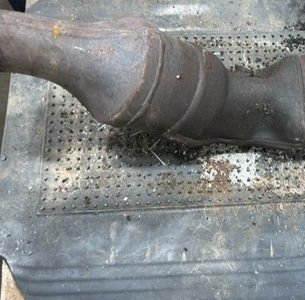
If a Vancouver exhaust shop has handed you the old catalytic converter from your vehicle, you can ask SMASH to buy it directly. Take a photo of the complete part, keep the repair invoice handy and use the Canadian converter quote form. If your vehicle is still at the shop, start with one question for the service adviser. What will happen to the removed converter when the repair is finished?
Ask about the old part before you authorize the work
When you book a catalytic converter replacement, tell the shop you would like the old unit back. Ask whether the estimate assumes the shop will keep it, whether the supplier requires it for an exchange and whether keeping it changes your bill. The service adviser can explain the arrangement for the particular part being installed. Having that conversation when you approve the estimate gives the shop a chance to set the old converter aside if it can be returned to you.
Look for a line that mentions a “core” or a “core charge.” A core is the old component that goes back as part of an exchange. If a refundable charge appears on the paperwork, ask how much you would get back for returning the old unit, who would issue the refund and whether it has already been credited on the estimate. Compare that figure with a direct offer for the converter before deciding which option works for you. Count a refund only once when you work out what you would receive.
If the job is already finished, read the work order before making a quote request. An invoice for a catalytic converter replacement tells you that work was billed. It may leave out what happened to the removed part. If the shop still has it, ask whether it was retained for the supplier or is waiting to be collected. If it has already been returned, there is no loose converter from that repair for you to offer SMASH.
Match the converter to the repair invoice
At collection, ask the adviser to point out which piece came off your vehicle. If the repair involved a length of exhaust pipe with a converter still attached, photograph the assembly as the shop returned it. Leave its shields, pipes and flanges together. Those features help our buyer see how the part is configured. If a second piece in the box is a heat shield or another exhaust component, describe it separately so we can tell what you intend to sell.
Read the invoice with the old part beside you. The vehicle make, model, year and repair date can help you describe its source. Take care with the part number beside the amount you paid. That line often identifies the replacement the shop just installed. A number you can actually see on the removed unit is much more useful for identifying it. If you have both numbers, label each one clearly in your notes.
The amount on your repair bill and the offer for the old converter answer different questions. Your bill can include labour, gaskets, hardware and the cost of the replacement. Our offer concerns the converter the shop returned. Two owners with similar repair bills may have different units to sell. If you are unsure whether yours was the vehicle's original converter or an earlier replacement, tell us what you know about its history and leave that detail open.
Show us the actual unit and where it is now
Set the removed assembly on a steady surface in daylight and take one photo from far enough back to show both ends. Make that your main picture. Take a closer shot of any lettering you can reach without changing the part. If a marking disappears beneath a shield, show the visible section and say which characters you can read. Keep the close-up in case our buyer asks for it. There is no need to take the converter apart to make a quote enquiry.
The repair location and the location of the loose part can both matter in a single enquiry. Perhaps a shop in Vancouver, British Columbia replaced your converter and you took the old assembly home to Burnaby. The shop name and date explain where the part came from. The Burnaby postal code tells us where the converter is now and where you expect to send it from. Copying the shop's postal code off the invoice would give the wrong starting point for the parcel.
Give us the vehicle make if you know it, the part's current postal code, your contact details and a short account of how you obtained it. If the invoice is in another person's name or a shop still has a claim on the core, resolve who can sell it before making an offer to sell. Keep the invoice available. You can describe the repair in the first enquiry and ask which supporting details SMASH needs before sharing a copy.
Write a quote request the buyer can use
A useful note can fit into a few sentences. For example, “My exhaust shop in Vancouver returned this converter after replacing it on my Honda. I took it home to Burnaby. My photo shows the full assembly as it came off the car. Some of the stamp is covered by the heat shield. I have the work order and can send a closer photo of the visible letters if that helps.” Add the unit's actual postal code in the form and a way for us to reach you.
In British Columbia, the province's guidance for dealers purchasing regulated metal includes recording information about its origin and ownership. That helps explain why a buyer may ask about the repair or what connects you to the part. Keep your copy of the work order where you can find it if a question comes back. The province describes dealer recordkeeping in its guide to recording and reporting metal recycling purchases.
Check the offer before the converter leaves your hands
Your enquiry goes directly to SMASH Recycling. When you receive an offer, check that it describes the same assembly that appears in your photo. Review the amount and the shipping terms. If the shop gave you a choice about a core refund, this is the point to weigh that against the offer while both options are still available. If the part has changed since you photographed it or you discovered the stamp belongs to a different unit, tell us before accepting.
Keep the converter until you have accepted the offer and received confirmed prepaid-label instructions for sending it to SMASH by Canada Post. Follow those instructions for the assembly you showed us. Keep the tracking details alongside your offer. When the converter arrives, it is inspected against the photos and description you submitted, and payment for the agreed sale is made by Interac e-Transfer. The Canadian converter FAQ has further details about quoting and shipping.
If the repair is complete and the old unit is yours to sell, have the whole-part photo and your postal code ready. Ask SMASH for a direct offer on your catalytic converter.