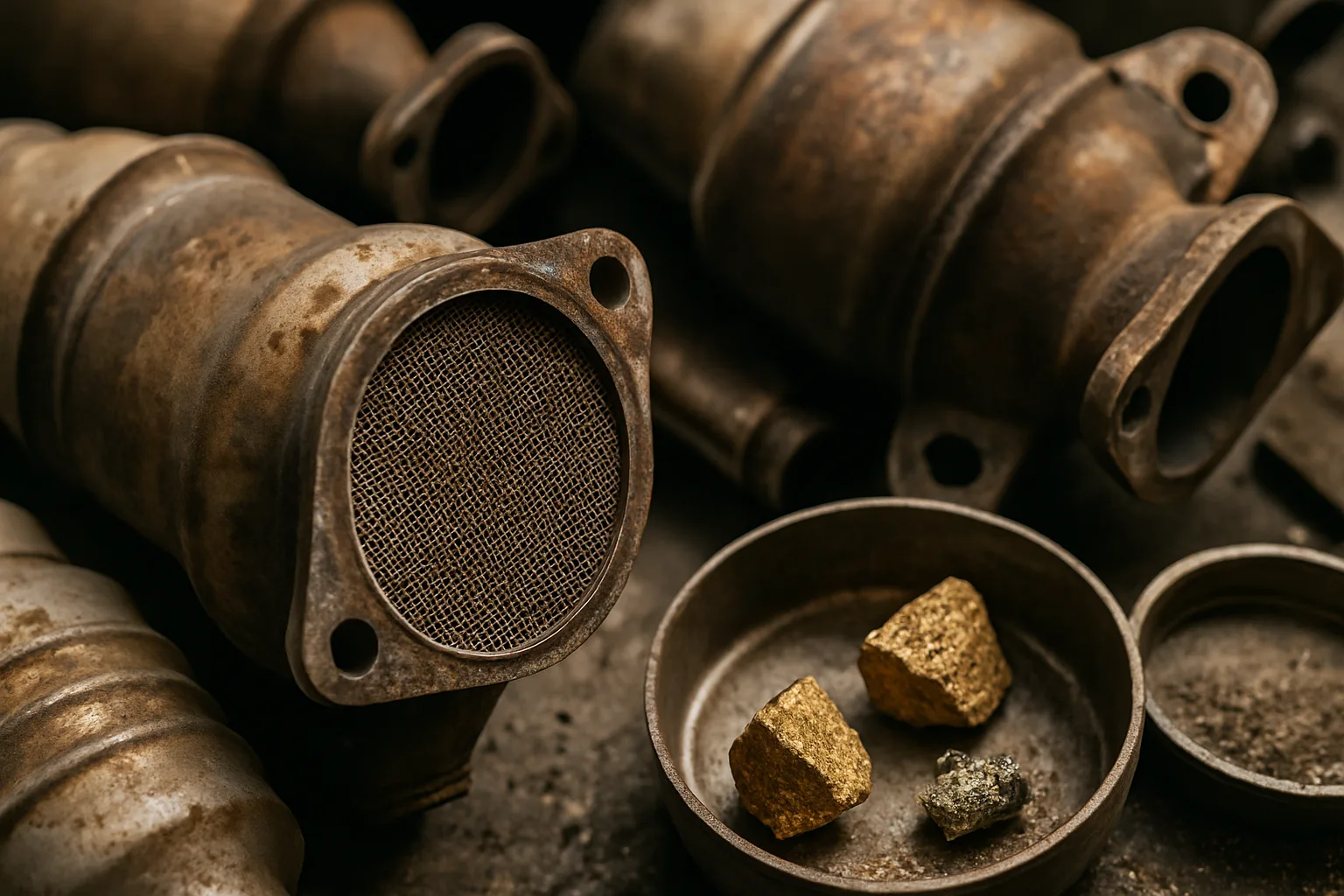
Most sellers have no idea why one catalytic converter pays $40 and another pays $400. The difference isn't random. It comes down to three metals — platinum, palladium, and rhodium — and how much of each is packed into your specific unit. If you're trying to get fair scrap catalytic converter prices in Moncton, understanding what drives value is the first step to not leaving money on the table.
This isn't academic. Precious metal markets move daily. A converter that paid well last month might price differently today. And the only way to protect yourself is to know what you have, who's buying, and how prices actually get calculated — before you hand anything over.
---The Three Metals That Set Your Scrap Cat Price
Platinum, palladium, and rhodium are collectively called platinum group metals, or PGMs. They're what make a catalytic converter work — they trigger the chemical reactions that reduce harmful exhaust emissions. They're also what make your scrap cat worth recovering. Recyclers aren't buying the steel shell. They're buying what's inside the ceramic substrate.
Each metal trades independently on global commodity markets, and each one behaves differently:
- Platinum (Pt): Used heavily in diesel converter applications. Prices are influenced by industrial demand beyond auto recycling — jewelry, fuel cells, and chemical manufacturing all compete for the same supply.
- Palladium (Pd): The dominant PGM in gasoline-engine converters. Palladium had a long bull run through the early 2020s and remains a major price driver for most common cats.
- Rhodium (Rh): The volatile one. Rhodium can swing harder than any other PGM. Even small concentrations inside a converter can make a significant difference to the final payout — or crater it if the market softens.
The practical takeaway: not all cats are created equal. A high-grade foreign unit from a late-model import might carry several times the PGM content of a domestic aftermarket replacement. The metal content, not the converter's age or size, sets the ceiling on what any buyer can responsibly pay you.
---How Buyers Calculate Cat Converter Prices in Moncton
Here's where sellers often get confused. Your buyer isn't pulling a number out of thin air — they're working backwards from refining returns. Once a converter is processed, the refiner reports back what PGM content was actually recovered. Buyers build their offers around projected assay results, minus processing costs and their own margin.
That process looks roughly like this:
- Identification: The converter is identified by OEM part number, VIN data, or physical characteristics. Established buyers maintain large databases linking converter types to known assay ranges.
- Grading: Foil cats, large foreign cats, small domestics, aftermarket units — each category carries different expected PGM content and commands different pricing tiers.
- PGM spot price check: Buyers apply current London Metal Exchange (LME) or LPPM spot prices for Pt, Pd, and Rh, then calculate gross metal value.
- Processing deduction: Refining, logistics, and handling costs come off that gross figure.
- Buyer margin: Whatever's left after costs is what's available to pay you.
The gap between gross metal value and what you receive is exactly where competition matters. A single buyer has no pressure to push their offer toward the top of that range. Multiple buyers competing for your load — that's a different story entirely. Platforms like SMASH exist precisely to create that competition, giving sellers across Canada, including yards and individuals in Moncton, access to a broader buyer pool rather than a single phone call.
---Why PGM Prices Are Volatile — And What That Means for You
Platinum group metals don't behave like steel or copper. They trade in thin markets with concentrated supply chains. Most of the world's PGM supply comes from South Africa and Russia — two regions with a history of supply disruptions. That geographic concentration means geopolitical events, mining strikes, and energy costs can move prices fast.
Rhodium is the extreme example. It has historically swung from a few hundred dollars per troy ounce to many thousands — sometimes within a single year. Palladium followed a similar trajectory through the 2010s and early 2020s as emissions regulations tightened globally and automakers loaded more Pd into converters to meet stricter standards.
What this means practically for sellers:
- Timing your sale matters. Not in a speculative way, but being aware of whether the market is in a trough or a recovery can inform whether you hold a load or move it now.
- Quoted prices can change between the time you request a number and the time you actually settle — always confirm the spot date your buyer is using.
- Staying informed is a competitive advantage. If you read Canadian scrap catalytic converter guides, you'll have enough context to ask the right questions when a buyer quotes you.
The market doesn't wait for anyone. A load sitting in your yard isn't appreciating — it's just exposed to price risk without any upside. Getting it in front of qualified buyers quickly is almost always the better move.
---What Sellers in Moncton Should Know About Catalytic Converter Buyers in New Brunswick
The Maritime market for scrap cats is real, but it's smaller than what you'd find in Toronto or Vancouver. Fewer local buyers means less natural competition — which is exactly the environment where a single-buyer relationship can quietly undervalue your material over time. You might not even realize it's happening.
This is where working with a platform that reaches catalytic converter buyers in New Brunswick and beyond changes the math. When your converter goes in front of multiple vetted buyers — not just one local contact who knows you'll probably call them first — you get actual price discovery instead of an estimate that's light on accountability.
Photo documentation matters here too. Buyers in remote markets often price conservatively when they can't physically inspect material. Detailed photos of the substrate condition, the end caps, and the part number stamp give remote buyers the confidence to bid more aggressively. If you're using Moncton scrap metal services that integrate proper documentation tools, you're already ahead of most local sellers.
And if you're sourcing cats from vehicles — whether through dismantling, estate purchases, or yard inventory — serial tracking and VIN lookup tools help establish clear provenance, which is increasingly important as regulations around converter resale tighten across Canada.
---Catalytic Converter Auctions vs. Direct Sales — Which Gets You More?
The traditional approach is direct sale: you call a buyer, they quote you a price, you take it or leave it. It's fast. It's familiar. And for the buyer, it's ideal — they face zero competition and maximum information advantage.
A catalytic converter auction flips that dynamic. Instead of one offer, you get multiple buyers competing against each other for your material. The auction format doesn't guarantee a higher price on every single load — nothing does — but it does guarantee that the price you receive reflects actual market demand rather than one buyer's margin preference.
SMASH runs exactly this kind of process. Vetted buyers, competitive bidding, transparent pricing, no subscription fees. You only win when you actually sell — there's no cost just for listing. That model matters because it aligns the platform's incentive with yours. If your cats don't sell at a fair price, nobody wins. To find the best scrap cat prices in Canada, the auction format is worth understanding seriously.
For sellers in smaller markets where local competition is limited, reaching national buyers through a platform like SMASH can be the difference between a price that reflects local supply and one that reflects actual continental demand. You can also compare scrap metal bids from Canadian buyers to see how your material stacks up across the market.
---How to Prepare Your Cats Before You Sell
Preparation isn't complicated, but most sellers skip it. A few basic steps can meaningfully affect the offers you receive — especially when selling remotely or through an auction format where buyers rely on the information you provide.
- Photograph everything. Both ends of the converter, the part number stamp, and any visible damage to the substrate. Shaken or broken substrate affects PGM recovery estimates — buyers will discount for it.
- Identify the part number. Even a partial number helps buyers cross-reference known assay data. More data means more confidence, which typically means stronger bids.
- Separate your grades. Don't mix high-grade foreign cats with aftermarket domestics in the same lot if you can avoid it. Keeping grades distinct allows buyers to price accurately rather than averaging down across the entire load.
- Know your quantities. Buyers need accurate counts and weights to provide real offers. Rough estimates lead to offers with extra buffer built in — and that buffer comes out of your pocket.
- Don't clean or modify the substrate. Tampering with the ceramic honeycomb is illegal and immediately flags a converter as suspect. Legitimate buyers walk away from modified material.
If you want to get a fair price for your scrap catalytic converters in Canada, the work starts before you ever contact a buyer. Good prep is free — and it pays.
---Frequently Asked Questions
Q: What determines scrap catalytic converter prices in Moncton?
Prices are driven by the platinum, palladium, and rhodium content in each specific converter, combined with current PGM spot prices on global commodity markets. Local buyers in Moncton apply the same underlying metal values as buyers anywhere in Canada — the difference is how much competition exists for your material and how efficiently that value gets passed back to you.
Q: How often do cat converter prices change?
PGM spot prices update every trading day on the London Platinum and Palladium Market (LPPM) and the London Metal Exchange. That means your converter's underlying value technically shifts daily. Most buyers update their price sheets at least weekly, though some adjust in real time. Always confirm what spot date is being used when you receive a quote.
Q: Are catalytic converter buyers in New Brunswick paying fair market rates?
That depends on the specific buyer and whether you have competing offers to compare. In smaller regional markets, the lack of local competition can quietly suppress offers over time. Using a platform that brings multiple buyers to your material — regardless of where they're physically located — is the most reliable way to verify whether a local quote is competitive.
Q: What's the difference between a foil cat and a ceramic cat — and does it affect price?
Yes, significantly. Foil cats (also called metallic substrate converters) typically carry higher PGM loadings than standard ceramic honeycomb units and often command higher per-unit prices. Identifying which type you have before you sell helps you avoid having your entire lot priced at the lower ceramic rate.
Q: Is a catalytic converter auction better than selling directly to a local buyer near me?
For most sellers, an auction format creates better price discovery — especially if you're in a market with limited local buyers, like Moncton. Competition between buyers puts upward pressure on offers. Direct sales are faster but carry the risk that the price reflects one buyer's margin rather than actual market demand. For larger loads especially, the auction route is worth exploring.
---Price disclaimer: Scrap catalytic converter prices fluctuate daily based on platinum, palladium, and rhodium spot markets. All pricing information in this article is general in nature. Always check current rates before making selling decisions.
If you've been selling cats through the same single buyer for years, it might be time to find out what your material is actually worth on an open market. The best place to start is by getting a real quote — not an estimate, not a ballpark, but a competitive number from vetted buyers who want your material. Find the best Canadian scrap cat prices and get a free quote at best-scrap-cat-prices.ca.
For ongoing scrap metal market updates and industry insights, follow SMASH on LinkedIn — it's worth keeping in your feed.