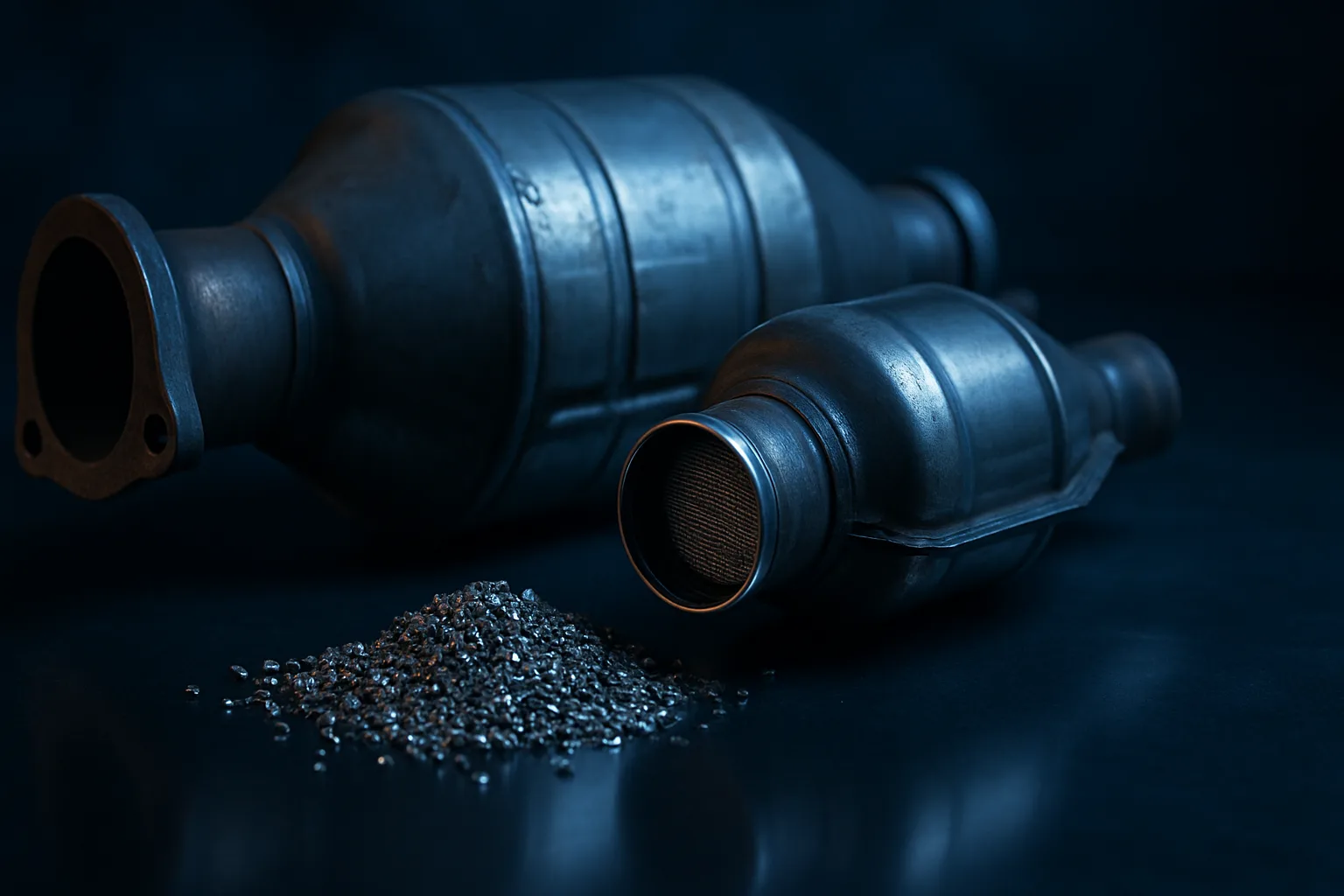
Most scrap yards treat all catalytic converters the same. They shouldn't — and if yours does, you're leaving money on the table.
Hybrid vehicles have been quietly flooding Canadian roads since the early 2010s, and by 2026, they represent a significant share of end-of-life vehicles showing up at yards across Saskatchewan and beyond. But here's what most sellers still don't know: the catalytic converters on hybrids aren't built like the ones on your average gas-powered truck. They're loaded differently. And that difference matters when it comes to catalytic converter recycling Yorkton sellers can actually profit from.
If you've got a hybrid vehicle cat sitting on your shelf — or a whole pile of them — this guide is for you. We'll break down why hybrid cats carry more precious metal content, what that means for scrap value, and how to make sure you're not selling them short. Platforms like get competitive bids for your scrap in Canada exist precisely to help sellers in markets like Yorkton get what these loads are actually worth.
Why Hybrid Catalytic Converters Are Built Differently
A standard internal combustion engine runs hot — constantly. That sustained heat is what activates the catalytic converter's precious metal substrate and keeps emissions in check. The converter has to be efficient, but it operates in a fairly predictable thermal window.
Hybrid engines don't work that way. They cycle on and off constantly, depending on battery charge, speed, and load. Every time a hybrid's gas engine kicks back in from a cold or semi-cold state, the catalytic converter has to light off faster and work harder to hit emissions compliance before the engine reaches full operating temperature. That's a fundamentally different operating demand.
To meet that demand, hybrid manufacturers load their converters with higher concentrations of platinum group metals (PGMs) — primarily platinum, palladium, and rhodium. These metals are the active catalysts that make the converter function. More of them means faster light-off and tighter emissions control during those frequent cold-start cycles. The result is a converter that costs more to manufacture — and is worth more at end of life.
The Precious Metal Content Difference: What Sellers in Yorkton Need to Know
Not all cats are created equal, and hybrid cats sit near the top of the value ladder for a reason. While it's not appropriate to publish specific prices here — PGM spot prices move daily and converter values shift with them — the general principle is well-established in the recycling industry: hybrid cats typically yield meaningfully higher returns per unit than standard passenger car converters.
Here's why that matters if you're doing catalytic converter recycling in Yorkton or anywhere in Saskatchewan:
- Palladium loading in hybrid cats tends to be elevated, and palladium has been one of the highest-value PGMs on the market in recent years.
- Rhodium content, though present in smaller quantities across all cats, is disproportionately valuable — and hybrid converters often carry more of it relative to their size.
- Substrate density in hybrid units is typically higher, meaning more active surface area packed into the same physical converter shell.
- Some hybrid models use two-stage converter systems — a smaller, high-loading pre-cat that handles cold-start emissions, plus a main underbody cat. Both have value. Don't let a buyer treat a two-piece system as a single unit without knowing what you have.
The takeaway: if you're sorting your inventory and treating a Toyota Prius converter the same as a standard Honda Civic cat, you're almost certainly under-pricing your load. Document what you have, identify the vehicle source, and get multiple bids before you sell.
How to Identify Hybrid Catalytic Converters in Your Inventory
Visual identification isn't always straightforward, but there are reliable ways to sort hybrid cats from standard ones. If you're building a pile of mixed inventory in Yorkton, doing this work upfront puts you in a much stronger position when it comes time to sell.
Start with the vehicle source. If you know the vehicle the converter came from, that's your most reliable data point. Common high-value hybrid sources include Toyota Prius (all generations), Toyota Camry Hybrid, Ford Escape Hybrid, Honda Accord Hybrid, and Chevrolet Volt/Plug-In variants. VIN lookup tools can help you confirm a converter's origin when you have partial information.
Beyond vehicle sourcing, look for these physical indicators:
- Smaller, dense pre-cats mounted close to the exhaust manifold — these are common on hybrids and carry significant PGM loading
- Unusual heat shielding or insulation materials around the converter body
- Manufacturer stampings or part numbers on the converter housing — these can be cross-referenced against known hybrid converter databases
- Serial numbers on OEM units — document these before selling; reputable buyers use them for accurate assay matching
Photo documentation matters too. Clear images of the converter body, stampings, and the substrate end (if open) give buyers the information they need to bid accurately. Vague lot descriptions get vague bids. Detailed inventory gets competitive ones.
Sell Catalytic Converters Online: Why the Old Way Doesn't Work for High-Value Cats
Here's the problem with calling one buyer and taking their offer on a pile of hybrid cats: they know what they're worth. You might not. That information asymmetry is what single-buyer relationships are built on, and it consistently costs sellers — especially those outside major urban centres — real money.
When you sell catalytic converters online through a competitive auction platform, you're introducing market forces into a transaction that's historically been kept quiet. Multiple vetted buyers bid against each other. The price discovery that results is a much more accurate reflection of actual PGM market value on that day.
This is especially relevant for Saskatchewan sellers. The recycling market in Yorkton isn't the same as Toronto or Vancouver — local buyer pools are smaller, and that can mean less price competition if you're only working with local contacts. Going online opens your inventory to a national buyer base. That's how you stop leaving money on the table on high-value hybrid cats.
Find the best scrap cat prices in Canada by getting your inventory in front of more than one buyer. It's not complicated. It's just math.
Using SMASH to Get Competitive Bids on Your Hybrid Cat Inventory
This is where the process gets practical. SMASH is an auction platform built for the scrap industry — designed by people who understand loads, cores, non-ferrous, and what it actually takes to move inventory efficiently. It's not a generic marketplace. It connects sellers with vetted buyers and lets the auction format do the work of price discovery.
For hybrid catalytic converters specifically, the SMASH platform supports the kind of detailed documentation that high-value loads require:
- Photo documentation — upload clear images so buyers know exactly what they're bidding on
- Serial tracking — log converter serial numbers for accurate buyer matching and assay confidence
- VIN lookup — confirm vehicle source to validate converter type and expected PGM content
- Inventory tool — organize your cats by type, source vehicle, and condition before listing
- Auto-invoicing — clean transaction records from the moment a load sells
No subscription fees. SMASH earns when the seller earns — that alignment matters. If you're sitting on a pile of hybrid cats in Yorkton and you haven't explored what competitive bidding looks like for your specific inventory, that's the first thing to change.
Want to get a fair price for your scrap catalytic converters in Canada? Start by getting more than one bid. SMASH makes that straightforward.
Making the Most of Every Hybrid Cat You Pull
The scrap recycling industry rewards the sellers who do their homework. Hybrid cats are a real opportunity — but only if you approach them with the same intentionality that buyers bring to every bid.
A few final habits worth building into your process:
- Never mix hybrid cats into a general lot without flagging them. They should be identified, documented, and either sold separately or grouped with other high-grade units.
- Track your sources. If a specific dealership, fleet yard, or dismantler is feeding you hybrid vehicles, build that relationship. Consistency in sourcing means consistency in inventory quality.
- Check PGM spot prices regularly. Palladium, platinum, and rhodium move independently. Understanding the market — even at a general level — helps you time larger lots when conditions favour sellers.
- Use platforms built for this. General commodity marketplaces aren't optimized for scrap cats. Industry-specific tools like SMASH, designed for sell catalytic converters Saskatchewan contexts and beyond, give you access to buyers who know what they're looking at.
If you're ready to stop guessing and start getting what your hybrid cat inventory is actually worth, read Canadian scrap catalytic converter guides to sharpen your knowledge — then get your inventory listed where real buyers compete for it.
The market for hybrid catalytic converters isn't going anywhere but up as more of these vehicles reach end of life across Canada. Sellers in Yorkton who position themselves now — with better documentation, better buyer access, and competitive bidding — will be the ones who capitalize on it.
Disclaimer: Catalytic converter scrap prices fluctuate daily based on PGM spot markets. Always check current rates before selling. The information in this article reflects general market dynamics as of August 2026 and should not be taken as a guaranteed price or valuation.
Frequently Asked Questions
Q: Are hybrid catalytic converters really worth more than standard converters?
Yes — in most cases, hybrid cats carry higher concentrations of platinum group metals (PGMs) due to the demands of frequent cold-start cycles. This translates to higher scrap value, though the exact premium depends on the specific vehicle model and current PGM spot prices. Always get multiple bids to understand what your specific units are worth.
Q: How do I find catalytic converter recycling in Yorkton?
For sellers in Yorkton, the most effective approach is combining local contacts with online platforms that give you access to vetted national buyers. Platforms like SMASH allow you to list your inventory competitively without being limited to a single local buyer. This is especially important for high-value hybrid cats where price differences between buyers can be significant.
Q: Can I sell catalytic converters online if I'm in Saskatchewan?
Absolutely. Online auction platforms are a practical tool for Saskatchewan sellers precisely because the local buyer pool is smaller than in major metros. Selling online opens your inventory to national competition, which supports better price discovery on every load — especially hybrid and other high-grade units.
Q: What information do I need before selling my hybrid cats?
At minimum: the vehicle source (make, model, year), photos of the converter body and any serial numbers or stampings, and a count of units by type. The more detail you provide, the more accurate and competitive your bids will be. Platforms that support serial tracking and VIN lookup make this process straightforward.
Q: How do I know I'm getting a fair price for my scrap catalytic converters?
The simplest answer: get more than one bid. A single buyer offering a flat rate has no competitive pressure to offer you full market value. Auction-based platforms create that competition automatically. Tracking PGM spot prices — platinum, palladium, and rhodium — also gives you a baseline for evaluating offers before you accept anything.
---Ready to stop guessing what your hybrid cats are worth? Find the best Canadian scrap cat prices and get a free quote at best-scrap-cat-prices.ca — it takes minutes and puts real market competition to work for your inventory. For Yorkton scrap metal services, local support is available alongside national buyer access.
Follow SMASH on LinkedIn for industry updates, PGM market insights, and scrap metal news that actually matters to your business.