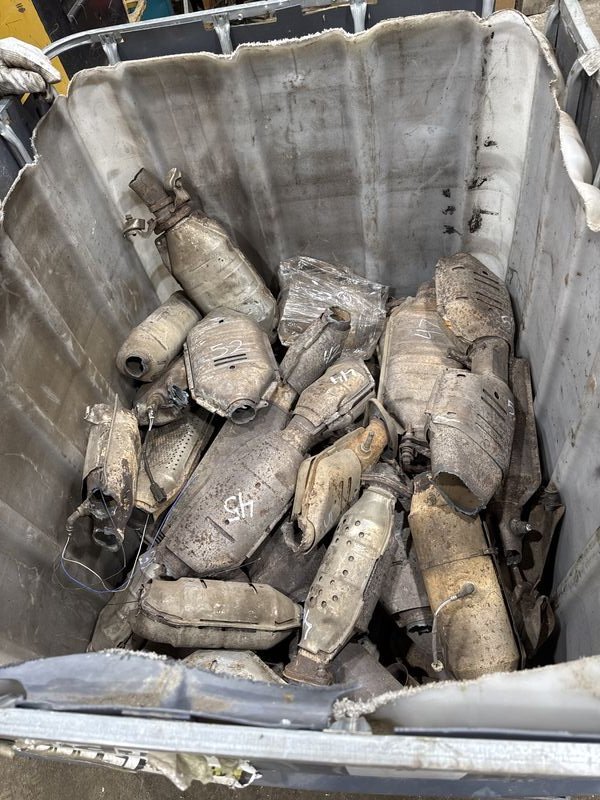
Most people don't think twice about the catalytic converter bolted underneath their vehicle — until emissions regulations tighten and suddenly that small canister becomes one of the most valuable pieces of metal you own. If you're sitting on used or end-of-life converters in Etobicoke, understanding why they're worth money puts you in a much stronger position when it's time to sell.
The short answer: catalytic converters contain platinum group metals (PGMs) — platinum, palladium, and rhodium — and global emissions standards keep pushing demand for those metals higher. That dynamic directly affects the catalytic converter scrap price near me that Canadian sellers can realistically expect. Let's break it down.
Why Emissions Regulations Push PGM Demand Through the Roof
Emissions standards across North America, Europe, and Asia have tightened significantly over the past decade — and 2026 is no exception. Governments continue raising the bar on allowable exhaust pollutants from internal combustion engines. Every time standards tighten, automakers need converters that do more work. And doing more work means loading more PGMs into each unit.
Here's the connection that matters to scrap sellers: more PGM loading in new converters means more PGM content in end-of-life converters hitting the recycling stream. A converter from a late-model vehicle often carries meaningfully more precious metal than one from fifteen years ago. That's not a guess — it reflects documented engineering trends in emissions compliance. The tighter the standard, the more platinum, palladium, or rhodium had to do the job.
- Platinum — used heavily in diesel catalysts; prices benchmarked in USD on global commodity markets
- Palladium — dominant in gasoline converters; has seen dramatic price swings over recent years
- Rhodium — used in smaller quantities but commands extremely high value per troy ounce
Global PGM benchmarks are priced in USD, but your payout as a Canadian seller comes in CAD — and the exchange rate, along with assay results and local market conditions, all factor into what you actually receive. A reputable catalytic converter buyer Etobicoke will be transparent about how they arrive at your offer. If they won't explain it, that's a red flag worth taking seriously.
What This Means for Catalytic Converter Recycling in Etobicoke
Etobicoke sits in the western part of Toronto, connected to some of the busiest automotive corridors in Ontario. Dealerships, fleet operators, independent mechanics, and auto recyclers in the area generate a steady flow of end-of-life converters. That volume matters because buyers in active markets tend to be more competitive — more volume means more transactions, and more transactions mean better price discovery.
For sellers doing catalytic converter recycling Etobicoke, the practical takeaway is this: you're not operating in isolation. The emissions-driven demand spike happening globally reaches your local scrap yard and your inbox when you request a quote. When rhodium prices jump on the London Platinum and Palladium Market, it affects what a buyer in Ontario will offer you for a high-rhodium converter the following week.
That said, not every converter is equal. Buyers grade units based on:
- Make, model, and year of the vehicle
- Serial number or part number stamped on the unit
- Physical condition — intact substrate vs. rattling or broken
- Domestic (North American) vs. foreign (import) unit designation
- Whether it's a standard or high-value converter (some diesel units and certain imports carry substantially more PGM)
Knowing your serial numbers before you call a buyer is the single fastest way to move the conversation from vague to concrete. Platforms like SMASH Recycling — where verified buyers bid on your metal use serial tracking and photo documentation to give buyers the information they need to make real offers — not lowball guesses.
How to Get a Competitive Scrap Cat Price in Canada — Not Just Any Price
The difference between a fair price and a bad price for a scrap catalytic converter is almost always information asymmetry. The buyer knows what your converter is worth. You don't. That gap is where sellers lose money — and it's a gap that's entirely closable if you do a bit of homework before you sell.
Start by identifying what you have. Pull the serial number off the converter body. Take clear photos — front, back, and sides. Note whether the substrate (the honeycomb inside) is intact or has been damaged. A rattled-out converter is worth less because the precious metal-coated substrate is what carries the PGMs. Buyers discount damaged units, and they're right to — there's simply less recoverable material.
Then, shop it. One call to one buyer is the old way of doing this. A single buyer with no competition has every incentive to offer you the floor, not the ceiling. When you find the best scrap cat prices in Canada by putting your inventory in front of multiple vetted buyers, the dynamic shifts. You're no longer guessing. The market tells you what the load is worth.
This is exactly the model SMASH operates on. Instead of calling around to find a catalytic converter buyer near me within 8.1 km and hoping whoever picks up will give you a straight answer, SMASH connects documented converter inventory with verified buyers who compete for the load. Competition does the work of price discovery so you don't have to hope you're getting a fair deal — you can see it.
The Role of Documentation in Scrap Metal Recycling Canada
Documentation isn't just good practice — in 2026, it's increasingly tied to compliance. Across Canada, provincial regulations on catalytic converter sales have tightened in response to theft concerns. Ontario is no exception. Sellers need to be able to demonstrate a legitimate chain of custody for the converters they're selling.
That means: bill of lading if you're shipping a load, vehicle information for converters pulled from vehicles you own or process, and clear records of quantities and serial numbers. This isn't burdensome if you've been tracking inventory properly. It's only a problem if you haven't.
The good news: proper documentation also works in your favor with buyers. A documented load is easier to price, easier to process, and easier for a buyer to commit to. Undocumented or loosely described inventory introduces risk for the buyer — and buyers price that risk by lowering their offer. When you show up with clean records, serial numbers, and photos, you're not just being compliant. You're making it easier for buyers to pay you more.
For scrap metal recycling Canada-wide, platforms that support photo documentation and serial tracking at the inventory stage make this process significantly smoother. You document once, and multiple buyers can assess the load without repeated back-and-forth calls. That's time back in your day and — typically — a better outcome on price.
If you're ready to get a fair price for your scrap catalytic converters in Canada, having your paperwork in order before you submit is the fastest path to a solid offer.
Selling Scrap Catalytic Converters in Etobicoke: Practical Steps
Whether you're an individual pulling a converter off a beater in your driveway or a recycler in Etobicoke moving regular volume, the process is the same in principle — it just scales differently. Here's a practical framework:
- Identify your units. Pull serial numbers or part numbers. If you can't find a stamped serial, photograph the converter clearly — buyers can often identify units visually.
- Document condition. Note whether the substrate is intact. Photograph any visible damage. Rattled-out or crushed converters are priced lower.
- Know your volume. Are you selling one unit or a pallet? Volume affects logistics and may affect per-unit pricing — some buyers offer better rates on larger lots.
- Get multiple quotes. One quote is not a market. Put your load in front of verified buyers who will compete for it. That's how you find out what your converters are actually worth in today's market.
- Understand your payout terms. CAD payout, timeline, and shipping or pickup arrangements should all be clear before you commit. Never ship a load without a confirmed offer and clear terms in writing.
- Stay compliant. Know Ontario's documentation requirements for converter sales and have your paperwork ready.
You can read Canadian scrap catalytic converter guides to go deeper on any of these steps — there's a lot of nuance in converter identification alone that can meaningfully affect what you're offered.
Why the Market Isn't Going Soft Any Time Soon
Some sellers worry that the rise of electric vehicles will eventually crater PGM demand and tank scrap cat prices. It's a reasonable concern — but the timeline is less dramatic than headlines suggest. In 2026, the internal combustion engine still dominates the Canadian vehicle fleet. The average age of vehicles on Canadian roads means converters from gasoline and diesel vehicles will be entering the recycling stream for years to come.
Meanwhile, emissions standards for ICE vehicles haven't loosened — they've tightened. That means newer converters coming off vehicles carry more PGM content than older ones. The secondary supply of PGMs from scrap converters is genuinely valuable to refiners who need those metals for new catalysts and industrial applications. Demand from the recycling side of the market remains real and active.
The honest answer is that prices will fluctuate — they always do, driven by global commodity benchmarks, exchange rates, and refining economics. But the structural demand for PGMs from scrap catalytic converters isn't disappearing in the near term. If you have converters to sell, the market exists, buyers are active, and competition between those buyers is what gets you the best result.
When you're ready to move your inventory, don't settle for the first number someone throws at you over the phone. Put your load where verified buyers can actually compete for it. That's what SMASH is built to do — and it's how sellers across Ontario stop guessing and start getting paid what their metal is actually worth.
Prices fluctuate based on PGM spot markets, exchange rates, and assay results — always check current rates before finalizing any sale. For the most current offers, get a free quote at best-scrap-cat-prices.ca.
Frequently Asked Questions
Q: How do I find a reliable catalytic converter buyer in Etobicoke?
Look for buyers who are transparent about how they price converters — they should reference serial numbers, PGM content, and current market benchmarks. Avoid buyers who offer vague estimates without seeing your units. Platforms like SMASH connect sellers with vetted buyers who compete on documented inventory, which removes a lot of the guesswork from the process.
Q: What documents do I need to sell scrap catalytic converters in Ontario?
Ontario regulations on converter sales require sellers to provide proof of ownership or chain of custody. For recyclers and auto dismantlers, this typically means vehicle records or bills of lading. Keep serial numbers and quantities documented. Requirements can evolve, so confirm current provincial rules before completing a transaction.
Q: Does a damaged or rattled-out catalytic converter have any value?
Yes, but less than an intact unit. A rattled-out converter has a damaged or degraded substrate, which means less recoverable PGM. Buyers discount these units to account for lower material yield. Be upfront about condition when requesting a quote — misrepresenting condition creates problems at the assay stage.
Q: How are catalytic converter scrap prices near me determined in Canada?
Prices are based on global PGM spot prices (benchmarked in USD), the specific converter type and its known PGM loading, physical condition, and current refining economics. Canadian sellers receive payouts in CAD, so the exchange rate also plays a role. The best way to get a current, accurate price is to submit documented inventory to multiple buyers and compare offers.
Q: Is it worth shipping my scrap catalytic converters rather than selling locally in Etobicoke?
It depends on volume and what local buyers are offering. Shipping introduces logistics costs but opens your load to a wider buyer pool, which can drive stronger competition and better pricing. For small quantities, local sale often makes more sense. For larger lots with documented serial numbers, a broader market typically yields better price discovery. Confirm shipping terms and payout clearly before sending anything.
Follow SMASH on LinkedIn for ongoing updates on scrap metal market conditions, PGM price trends, and industry news relevant to Canadian recyclers and sellers.
```