Most scrap yards will tell you a catalytic converter is worth whatever they feel like offering that day. But there's real science behind every price — and understanding it puts money back in your pocket. When you find the best scrap cat prices in Canada, you're not just getting lucky. You're working with a process grounded in chemistry, metallurgy, and market data. This article breaks down exactly how catalytic converter assaying and smelting works — and why that process directly determines catalytic converter prices today.
What's Actually Inside a Catalytic Converter?
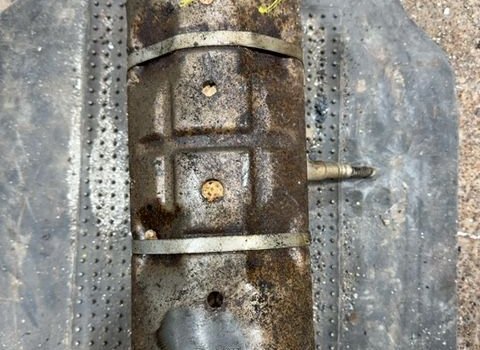
A catalytic converter isn't scrap in the traditional sense. It's a dense ceramic or metallic substrate coated with platinum group metals — specifically platinum (Pt), palladium (Pd), and rhodium (Rh). These three metals are what drive the value. The substrate itself is largely worthless. The PGMs sitting on it are traded on global commodity markets and priced in USD benchmarks, though Canadian payouts are settled in CAD.
The mix of PGMs varies significantly depending on the vehicle, the manufacturer, and the emissions standards the converter was built to meet. A converter from a late-model light truck won't have the same loading as one from a luxury European sedan or a commercial diesel vehicle. That's why how much your catalytic converter is worth as scrap by reg matters — the registration and VIN help identify exactly which unit you have before any assay takes place.
- Platinum: Found in diesel converters especially; a dense, stable metal with strong industrial demand
- Palladium: Dominant in gasoline-engine converters; has seen volatile pricing over recent years
- Rhodium: Used in small quantities but historically the highest-value PGM per gram
Understanding this composition is the foundation of everything that follows — from the assay process to the final settlement number on your invoice.
How Catalytic Converter Assaying Actually Works
Assaying is the process of determining the precise concentration of precious metals in a batch of converters. It's not a visual inspection, and no buyer can accurately eyeball a PGM loading. The real assay happens at a smelter or certified processing facility, and it follows a specific sequence.
Here's how the process unfolds step by step:
- Decanning: The outer steel shell is cut away and the ceramic or metallic substrate (called the "cat" or "brick") is removed and separated.
- Crushing and milling: The substrate is ground into a fine, homogeneous powder. This ensures the sample is representative of the entire lot.
- Sampling: A statistically valid sample is pulled from the milled powder. This sample weight and selection method are standardized — cutting corners here produces unreliable results.
- Fire assay or ICP analysis: The sample is either subjected to fire assay (a centuries-old technique using fusion and cupellation) or dissolved and analyzed via inductively coupled plasma mass spectrometry (ICP-MS). ICP is now more common for PGMs due to its precision at low concentrations.
- Results and settlement: The assay reveals exact grams per tonne of Pt, Pd, and Rh in the lot. Combined with the current benchmark price for each metal (quoted in USD on global markets), a payable value is calculated and settled in CAD for Canadian sellers.
This is why lot size matters. Sending a handful of converters to a buyer who doesn't process through a certified smelter often means you're accepting an estimate, not an assay. Estimates are almost always conservative — they protect the buyer, not you.
Smelting: Where the PGMs Are Recovered
Once the assay is complete — or in some cases, concurrent with it — the smelting phase recovers the actual precious metals from the substrate material. This is a high-temperature, high-precision industrial process that most recyclers never see directly but every seller is indirectly paying for.
The milled powder is blended into a smelting furnace charge, often alongside other PGM-bearing materials to achieve an efficient melt. At extreme temperatures, the base materials (ceramics, alumina, iron oxides) are separated from the precious metal-rich phase. The PGMs collect into a collector metal — typically copper or iron — which is then refined further to isolate individual metals.
The key point for sellers: smelting losses exist. A small percentage of PGMs are lost in slag or retained in process equipment. Reputable buyers and smelters are transparent about their recovery rates and deduct only standard industry losses — not inflated ones. If a buyer can't tell you their smelting deduction methodology, that's a red flag worth noting.
For sellers in Lethbridge and across Alberta, the distance to a smelter doesn't change your payout directly — but it does affect logistics, turnaround time, and which buyers have established smelter relationships to offer you a credible settlement.
Why Reg and VIN Matter for Catalytic Converter Prices Today
Before a physical assay ever happens, pre-assay pricing estimates use a different tool: converter identification databases. When a buyer asks for your registration or VIN, they're cross-referencing your converter against known data on PGM loadings for that specific year, make, model, and engine configuration.
This is how catalytic converter prices today get quoted before your lot hits the smelter. It's an estimate — not a guarantee — but a well-maintained database combined with current benchmark prices produces estimates that are often close to final settlement values for common converter types.
Platforms like the SMASH Recycling auction platform use VIN lookup and serial tracking tools to help document inventory accurately before it goes to market. That documentation gives multiple buyers the confidence to bid competitively — which is precisely how price discovery works in an auction format rather than a single-buyer negotiation. More buyers bidding on documented inventory means the price reflects the market, not one buyer's margin target.
If you're in Lethbridge and want to understand how your specific converters would be valued, start by pulling the VIN or reg for each unit. A buyer who doesn't ask for this information is likely quoting you a flat rate that doesn't reflect actual PGM content — which rarely works in your favour.
Best Catalytic Converter Price in Lethbridge: What to Actually Expect
Getting the best catalytic converter price in Lethbridge means understanding where you are in the supply chain. Southern Alberta is well-connected to major recycling corridors, but local buyers vary significantly in how they access smelter relationships and how transparently they pass assay results through to sellers.
Some key factors that affect what you'll actually receive:
- Lot volume: Larger lots typically qualify for better terms because smelter economics improve at scale
- Converter type and age: Older converters from certain platforms carry different loadings than newer emissions-compliant units
- Market timing: PGM benchmarks fluctuate daily. Palladium and rhodium in particular can move significantly week to week
- Buyer transparency: Are they showing you an assay certificate? Are smelting deductions disclosed? Can they tell you the settlement calculation?
- Competition: A single buyer quoting you a price has no incentive to sharpen their number. Multiple buyers competing for your lot do
That last point is where SMASH changes the dynamic. Rather than accepting the first number you hear, a catalytic converter auction format puts your lot in front of catalytic converter buyers in Alberta and across North America simultaneously. Competition can help reveal the true market value. That's not a promise of a specific outcome — it's how markets work when you let them function properly.
If you're ready to get a fair price for your scrap catalytic converters in Canada, the starting point is documentation — VINs, photos, weights, and an honest assessment of what you have before you approach any buyer.
Connecting the Science to Your Sale: Using SMASH for Catalytic Converter Recycling Near Me
Understanding assaying and smelting isn't just academic. It's practical leverage. When you know what drives value, you stop accepting vague offers and start asking the right questions. What smelter do you use? What's your sampling methodology? What deductions apply to this lot?
SMASH was built by people who know this industry from the yard level up. The platform's inventory tools — photo documentation, VIN lookup, serial tracking — exist specifically to give buyers the confidence to bid higher because they know exactly what they're buying. Documented converters don't get lowballed as easily as a pile of unsorted cats in a bag.
For sellers running catalytic converter recycling near me searches in and around Lethbridge, the goal is the same everywhere: get your lot documented, get it in front of multiple qualified buyers, and let the assay process confirm what the market already suspects your converters are worth. You can also explore Lethbridge scrap metal services to understand what's available locally before you decide how to sell.
Prices change. PGM benchmarks shift. What doesn't change is the process — and the advantage of being informed about it. Read Canadian scrap catalytic converter guides to stay current on how market conditions affect what your converters are worth right now.
Disclaimer: Catalytic converter prices fluctuate daily based on global PGM benchmark movements. All CAD payouts are subject to current exchange rates, lot composition, and individual buyer terms. Always verify current rates before committing to a sale.
If you want to stop guessing and start getting competitive quotes on your converters, the place to start is straightforward — get a free quote at best-scrap-cat-prices.ca and find out what your lot is actually worth in today's market.
Frequently Asked Questions
Q: How are catalytic converter prices today determined?
Prices are based on the platinum, palladium, and rhodium content in your specific converter, combined with current global PGM benchmark prices (quoted in USD) and settled in CAD for Canadian sellers. Converter identification databases and VIN lookups help estimate value before a full assay is completed at a smelter.
Q: What is a catalytic converter assay and why does it matter?
An assay is a laboratory process that precisely measures the grams of precious metals in your converter lot. It matters because pre-assay estimates are just that — estimates. A formal assay through a certified smelter produces the actual settlement number, and knowing this process helps you hold buyers accountable for transparent, defensible pricing.
Q: How do I find the best catalytic converter price in Lethbridge?
Start by identifying your converters using VINs or registration numbers, then document them with photos and weights. Compare multiple buyers rather than accepting the first offer. Platforms that use an auction format — like SMASH — put your lot in front of competing buyers, which supports better price discovery than a single-buyer negotiation.
Q: Does lot size affect what I'm paid for scrap catalytic converters in Canada?
Yes. Larger lots are more attractive to buyers with direct smelter access, and smelting economics often improve at scale. That said, even smaller lots can be competitively priced when the converters are well-documented and offered to multiple buyers simultaneously.
Q: What's the difference between a flat-rate offer and an assay-based settlement?
A flat-rate offer is a buyer's estimate based on visual inspection or database lookups — it's convenient but typically conservative because the buyer is managing their own risk. An assay-based settlement is calculated from laboratory results after smelting, reflecting actual PGM content. For high-value or large lots, assay-based settlement almost always produces a more accurate — and often higher — payout.
Stay current on scrap metal market trends and industry news by following SMASH on LinkedIn.