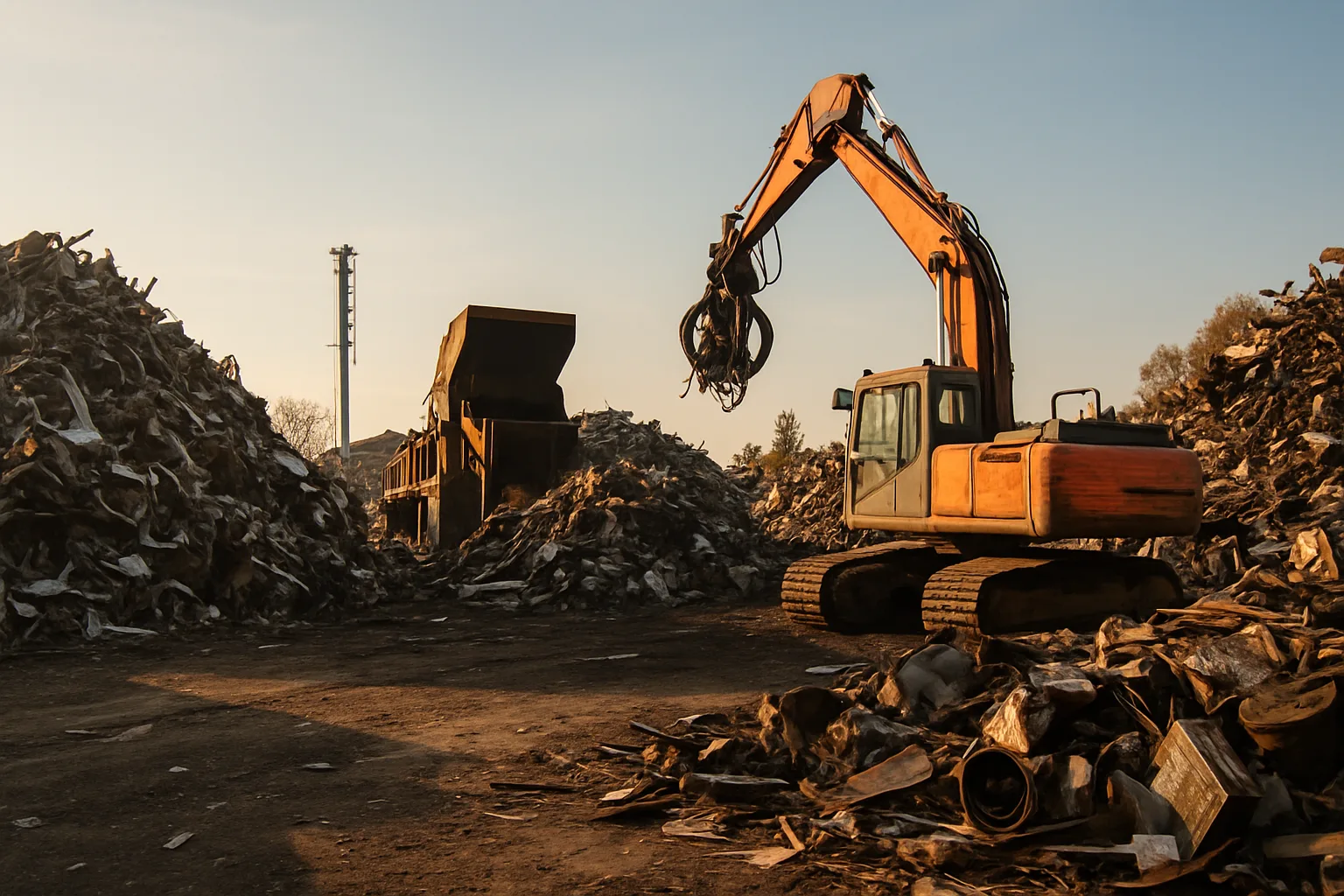
Most auto shops are leaving money on the table every single week. Not because they're doing bad work — but because they're selling their scrap catalytic converters the wrong way. One buyer. One phone call. One price. No competition. If that sounds familiar, this article is for you.
The palladium price today is a moving target. It shifts with precious metal markets, refinery demand, and global supply chains. If you're not actively tracking it — and selling into a competitive market — you're almost certainly getting less than your converters are worth. Auto shops that run high volumes of cat swaps have the most to gain from doing this right.
This isn't theory. It's what savvy shops across British Columbia are already doing. Here's what separates the shops getting top dollar from the ones quietly accepting whatever the local broker offers.
---Why Bulk Scrap Cat Sales Hit Different Than One-Off Loads
A single cat swap doesn't move the needle much. But an auto shop running 10, 20, or 50+ converter replacements a month? That's a real inventory position. Buyers notice volume. Volume creates leverage — but only if you know how to use it.
When you sell in bulk, buyers can look at your load holistically. They factor in the mix of high-value units (think late-model Toyotas, BMW DPFs, or large-displacement truck cats) against the lower-grade domestic units. A well-documented bulk load gives buyers confidence. Confidence drives bids. Higher bids mean better returns for your shop.
The problem is most shops don't treat their cat inventory like an asset. They toss converters in a bin, call one familiar buyer when the bin is full, and take whatever they're offered. That's not a strategy. That's a habit — and habits don't negotiate.
- Bulk lots attract serious buyers — processors and refiners who pay on actual assay, not gut feel.
- Documented loads move faster — buyers don't need to hedge their bids when they know what's in the lot.
- Consistent volume builds relationships — the right buyer will prioritize your shop when you show up regularly with clean, documented loads.
Tracking Palladium Price Today — And Why It Changes What You Should Do
Platinum group metals — palladium, platinum, and rhodium — are the reason your scrap cats have real value. The palladium price today directly affects what any honest buyer can offer you. When palladium spikes, cats with strong palladium-bearing substrates (common in gasoline-engine vehicles) are worth significantly more. When it dips, that same load fetches less.
Here's the discipline most shops skip: they don't time their sales at all. They sell when the bin is full, regardless of where the market sits. That's understandable — you're running a shop, not a commodity trading desk. But a basic awareness of where palladium is trading, and whether it's trending up or down, can make a real difference over the course of a year.
You don't need to become a metals analyst. You need two things:
- A reliable source for daily PGM spot prices — check a reputable metals index before you sell. Treat it like checking the weather before a road trip.
- A selling platform that reflects live market conditions — not a buyer quoting you last month's numbers because they think you won't know the difference.
Platforms like the SMASH Recycling auction platform put your inventory in front of multiple vetted buyers simultaneously. When buyers compete in real time, their bids naturally reflect current market conditions — including where palladium is sitting today. That's price discovery working in your favour, not against you.
Disclaimer: Precious metal prices fluctuate daily. Always verify current PGM spot rates before finalizing any sale. The prices referenced here are for illustrative purposes only.
---What Serious B2B Scrap Metal Marketplaces Actually Look For
If you want access to a real B2B scrap metal marketplace — the kind where multiple qualified buyers compete for your load — you need to show up like a professional seller. That means documentation. That means photos. That means knowing (or at least approximating) what you have.
Buyers on competitive platforms are not guessing. They're calculating. They look at your converter mix, estimate the substrate grades, factor in the precious metal content, and bid accordingly. The more information you give them upfront, the less they hedge their bids to compensate for uncertainty.
Here's what a well-prepared bulk cat lot looks like:
- Photos of each unit — top, bottom, and visible serial or part numbers where possible
- VIN or vehicle info if you know which car it came off (especially valuable for high-grade units)
- Serial number tracking — SMASH's inventory tools support this directly
- Rough count and condition notes — intact honeycomb versus broken, foiled, or hollowed units
- Weight — even a rough lot weight helps buyers calibrate their bids
Compare this to the old way: dumping a bin of mixed converters in front of one buyer and hoping they're honest about what they're worth. The documentation approach isn't more work — it's smarter work. And it pays off in the bids you attract.
For shops in Abbotsford and across British Columbia looking to get a fair price for your scrap catalytic converters in Canada, this preparation step is the single biggest differentiator between shops that maximize returns and shops that don't.
---Scrap Catalytic Converter Prices in Abbotsford: What's Affecting Your Local Market
Abbotsford sits at a useful geographic crossroads — close to the Lower Mainland's industrial base, accessible to major processing facilities, and home to a strong automotive service sector. That means local shops have real options when it comes to selling scrap cats. The question is whether they're using those options or defaulting to whoever happens to call first.
Scrap catalytic converter prices in Abbotsford are affected by the same global PGM markets that move prices everywhere — but local logistics, buyer competition, and the volume of converters in the regional market also play a role. A buyer who only operates locally has a narrower appetite than a national buyer working through a platform that aggregates inventory across Canada.
Shops working with Abbotsford scrap metal services that are connected to national auction infrastructure have a structural advantage. Their load competes in a wider pool. More bidders. Better price discovery. Less reliance on whatever one local broker decides is a fair price that week.
It's worth noting that international benchmarks — including scrap catalytic converter price per kg in South Africa and other major refining regions — feed into how global processors value PGM-bearing material. Canadian sellers benefit when their lots are visible to buyers who understand that global context, not just domestic spot guesses.
---How to Set Up a Consistent Bulk Selling System for Your Auto Shop
The shops doing this well aren't reinventing the wheel every time they have cats to move. They've built a simple, repeatable system. Here's how to do the same.
Step 1: Designate a clean storage process. Keep converters separated from other scrap. Store them in a way that preserves the substrate — no crushing, no stacking that cracks the honeycomb. Intact cats are worth more than damaged ones. This isn't complicated, it just takes intention.
Step 2: Document as you go. When a cat comes off a vehicle, snap a quick photo. Note the vehicle make, model, and year if you have it. A few seconds per unit saves significant time when you're ready to list a load. SMASH's inventory and serial tracking tools are built for exactly this workflow.
Step 3: Set a volume threshold — then sell strategically. Decide in advance what lot size makes sense for your shop. Some shops sell monthly. Others wait until they have a minimum count that justifies proper buyer attention. Either approach works — the key is not selling impulsively because the bin is full and it's Friday afternoon.
Step 4: Use a platform that creates competition. List your lot through a vetted buyer network rather than calling one contact. SMASH connects sellers with qualified buyers across Canada. No subscription fees. The model works because finding the best scrap cat prices in Canada requires actual competition, not a single quote from a single buyer.
Step 5: Track your results over time. Keep a simple record of what each lot sold for, what the PGM markets looked like at the time, and what your documentation looked like. Over several months, patterns emerge. You'll start to see which unit types drive the most value, and which timing windows tend to produce stronger bids.
For more practical guidance on navigating the Canadian converter market, read Canadian scrap catalytic converter guides that break down the variables affecting your returns.
---Platinum Group Metals Recycling: Why This Market Rewards Informed Sellers
Platinum group metals recycling is one of the most technically complex segments of the scrap industry. The value in a catalytic converter isn't visible to the naked eye — it's locked inside a ceramic or metallic substrate, measured in parts per million, and only fully realized through assay and refining. That complexity is exactly why uninformed sellers get taken advantage of.
Buyers who operate without transparency rely on information asymmetry. They know the PGM content of common converter types. They know where palladium is trading. They know their refining yield. The seller often knows none of this — and so they accept whatever price sounds reasonable.
The antidote is not becoming a metallurgist. It's using systems — documentation, competition, market data — that close the information gap. When buyers know you're getting multiple quotes, they bid differently. When they know your load is documented and photographed, they don't have room to low-ball on "condition uncertainty." When you check the palladium price today before you sell, you're not easily misled by a buyer quoting stale numbers.
This is the shift that professional auto shops in British Columbia are making. Not because it's complicated — but because once you see how much you've been leaving behind, it's hard to go back to the old way.
---Frequently Asked Questions
Q: How does the palladium price today affect what I get paid for scrap catalytic converters?
Palladium is one of the primary precious metals recovered from catalytic converters, especially in gasoline-powered vehicles. When the palladium price rises, buyers can offer more for PGM-bearing converter loads. Checking current spot prices before you sell gives you a baseline for evaluating any offer you receive. Prices fluctuate daily — always verify current rates through a reliable metals index.
Q: What's the best way for an auto shop in Abbotsford to sell scrap cats in bulk?
The most effective approach is to document your lot thoroughly — photos, serial numbers, vehicle info where available — and then sell through a platform that brings multiple vetted buyers to your inventory. Shops in Abbotsford benefit from connecting with national buyer networks rather than relying solely on local contacts. More competition means better price discovery on your load.
Q: Do I need a minimum quantity of scrap cats to use a B2B scrap metal marketplace?
Minimums vary by platform and buyer. In general, larger lots attract more buyer interest and stronger bids because processors can justify the cost of analysis and logistics. That said, even modest volumes are worth documenting and listing properly — a well-presented small lot often outperforms a poorly documented large one.
Q: How does SMASH handle scrap catalytic converter sales for auto shops?
SMASH connects sellers with vetted buyers through an auction format, creating genuine price competition on your inventory. The platform supports photo documentation, serial tracking, and inventory management — all the tools that help buyers bid with confidence. There are no subscription fees; SMASH only benefits when sellers do.
Q: Why do scrap cat prices vary so much between buyers?
Catalytic converter values depend on PGM content, which varies significantly by vehicle make, model, and engine type. Buyers also factor in their refining costs, current spot prices for palladium, platinum, and rhodium, and the condition of the substrate. A buyer quoting without full information will hedge low. A buyer who sees your documentation — and competes against other buyers — has every reason to bid accurately.
---If your shop is sitting on a bin of converters right now, you already have more leverage than you think. Document your load, check where the palladium price today sits, and put your inventory in front of a competitive buyer pool. That's not complicated — it's just a better system than the one most shops are running. When you're ready to stop guessing and start getting paid on actual market value, find the best Canadian scrap cat prices and get a free quote at best-scrap-cat-prices.ca.
Stay sharp on market moves and industry updates — follow SMASH on LinkedIn for scrap metal market insights and B2B recycling news you can actually use.