The price your scrap yard quotes on a catalytic converter this week has nothing to do with what happened in your yard — and everything to do with what happened in Zurich, Shanghai, and Johannesburg. Most sellers don't realize their converter's value is set by three precious metals trading on global commodity exchanges, thousands of kilometres away. If you're trying to get top OEM catalytic converter value in Canada right now, understanding that connection isn't optional — it's the difference between leaving money on the table and getting a fair deal.
This week's market recap breaks down how platinum, palladium, and rhodium prices move, why they move, and what that means for catalytic converter prices today — especially if you're selling in Richmond, British Columbia, or anywhere else in Canada.
Why Precious Metal Markets Dictate OEM Catalytic Converter Value
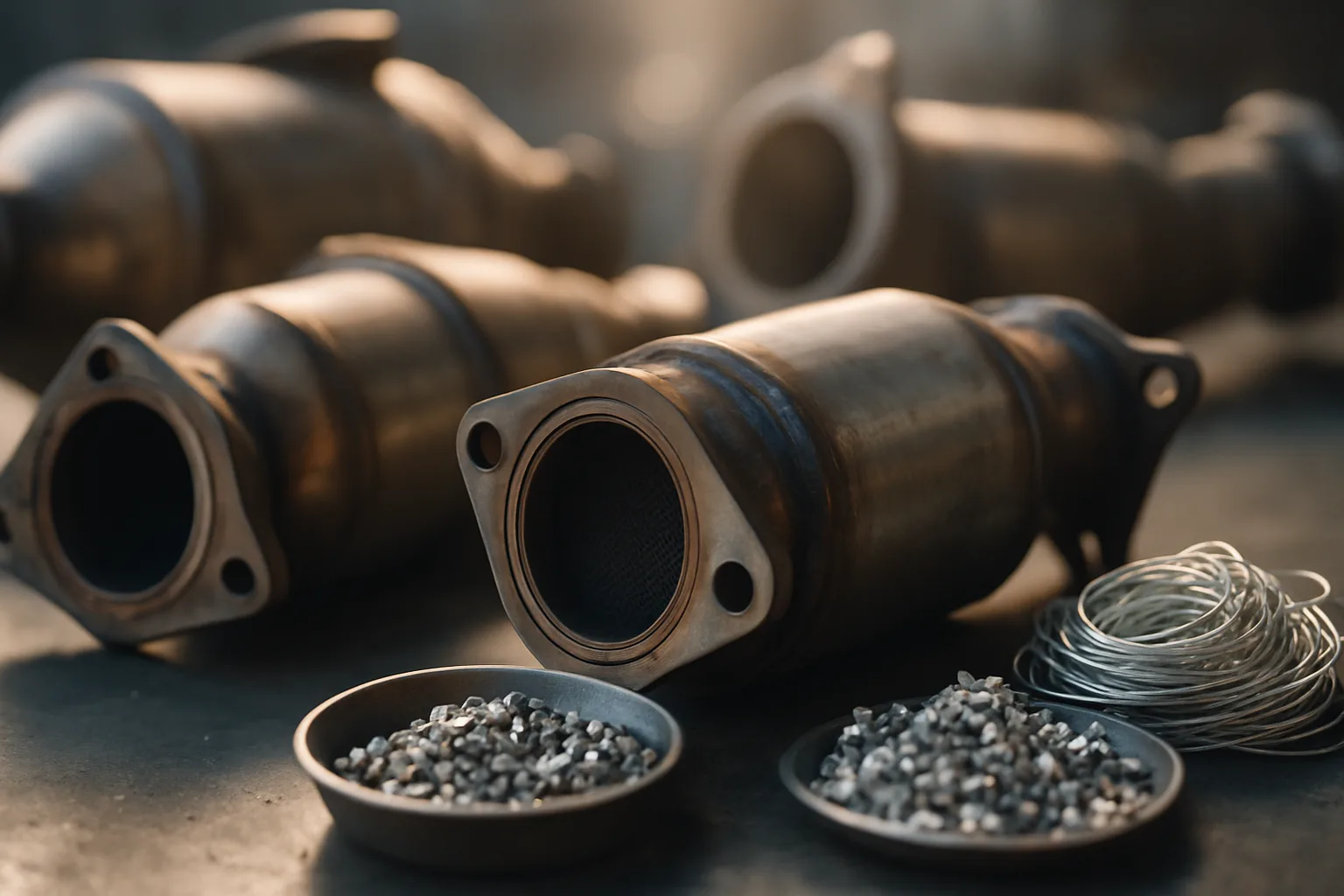
Every catalytic converter — OEM or aftermarket — contains a platinum group metal (PGM) washcoat. That washcoat is the only reason converters have scrap value. Strip away the steel shell and you're left with a small but meaningful amount of platinum, palladium, or rhodium. Processors recover those metals and sell them back into the commodity market. So the price you're offered at any scrap facility is essentially a downstream calculation of those global exchange prices, minus processing costs and margin.
OEM catalytic converter value tends to be higher than aftermarket because OEM units are loaded with denser, more consistent PGM washcoats. A factory converter from a full-size truck or an SUV can hold significantly more recoverable metal than a generic replacement unit. That gap in metal content is why buyers pay more for OEM — and why knowing what's in your specific unit matters before you accept any offer.
The metals driving value right now:
- Platinum (Pt): Heavily used in diesel converter systems and common in European OEM units. Prices are influenced by South African mining output, industrial demand, and hydrogen fuel cell investment.
- Palladium (Pd): Dominant in gasoline converters — the most common type in Canadian scrap yards. Sensitive to auto production rates and Russian supply constraints.
- Rhodium (Rh): The wild card. Rhodium can swing hundreds of dollars per troy ounce in a single month. Even trace amounts in a premium OEM converter can dramatically affect the unit's scrap value.
When any of these three metals move, your converter's price moves with them. That's not a system any single buyer or seller controls — but it is a system you can navigate smarter.
What's Moving Precious Metal Prices in Mid-2026
As of August 2026, PGM markets are dealing with a complex mix of signals. Global auto production has stabilized after two years of supply chain normalization, which keeps base demand for palladium relatively steady. However, the accelerating shift toward battery electric vehicles continues to apply long-term pressure on palladium demand forecasts — and the market prices that uncertainty in now, not later.
Platinum is getting attention from two directions. Industrial demand for hydrogen applications is increasing, giving platinum a new demand driver outside automotive. At the same time, South African power grid instability has created intermittent supply concerns that keep prices from collapsing. For yards in British Columbia holding diesel-heavy inventory, this is worth watching.
Rhodium remains the most volatile of the three. It trades in thin volumes compared to platinum and palladium, which means a single large order or a shift in smelter output can move the price sharply. Sellers with high-value OEM units — particularly from newer model year domestic trucks and SUVs — need to pay close attention to rhodium's direction before accepting a quote. A week's delay can mean a meaningful difference in your payout.
The practical takeaway: catalytic converter scrap metal values are not stable week to week. Treating them like they are costs you money.
How to Read Market Conditions Before You Sell in Richmond
Selling scrap cats in Richmond without checking the market first is the equivalent of listing a house without knowing what comparable properties sold for last week. You might get lucky. You probably won't.
Here's a straightforward process for reading the market before you commit to a sale:
- Check PGM spot prices. Platinum, palladium, and rhodium are published daily by major commodity exchanges. Even a rough sense of direction — up, down, sideways — helps you decide whether to move inventory now or hold.
- Identify what you have. OEM versus aftermarket matters. Make, model, and year matter. A VIN lookup or serial number check can confirm the converter type and give you a baseline expectation for recoverable metal content before you talk to any buyer.
- Get multiple quotes. This is the part most sellers skip. One buyer, one phone call, one quote — that's the old way. It's not a market. It's a take-it-or-leave-it offer that benefits the buyer, not you.
- Document your inventory properly. Photos, serial numbers, unit counts, and load conditions all affect what a buyer is willing to pay. Sloppy documentation gives buyers an excuse to discount. Clean documentation gives them confidence — and confidence gets you better offers.
Platforms like SMASH make steps three and four significantly easier. When you list your inventory through smashrecycling.ca, vetted buyers compete for your load instead of you chasing individual quotes. More competition means better price discovery — and with PGM-sensitive inventory like scrap cats, price discovery is exactly what you need. If you're looking to find the best scrap cat prices in Canada, starting with a competitive process beats starting with a single phone call every time.
Scrap Metal Inventory Management: Why Documentation Is Part of Your Price
Bad inventory management is one of the most expensive habits in the scrap cat business. Sellers who can't tell a buyer exactly what they have — unit counts, converter types, OEM versus aftermarket split, photos of actual condition — hand over negotiating leverage before the conversation even starts. Buyers will price in the uncertainty. You pay for that uncertainty with a lower offer.
Solid scrap metal inventory management for catalytic converters means maintaining a clear record of every unit: the vehicle it came from if known, the serial number or part number, photo documentation, and the condition of the substrate (cracked, intact, loaded). This isn't bureaucracy — it's the data that lets a serious buyer bid with confidence instead of padding their offer with a risk discount.
SMASH's platform supports photo documentation, serial tracking, and structured inventory listings that give buyers exactly what they need to bid aggressively. When buyers can see what they're getting, they compete harder. That's the entire point. For yards managing catalytic converter scrap metal volume in Richmond or across British Columbia, organized inventory isn't just good practice — it directly affects what you get paid.
You can read Canadian scrap catalytic converter guides for more detail on how to document loads and what buyers actually look for when they're evaluating converter inventory.
The SMASH Approach to Catalytic Converter Price Discovery
The single-buyer model has one fundamental flaw: it tells you what one buyer is willing to pay, not what the market will pay. Those are different numbers, and the gap between them is money you're leaving behind.
SMASH runs competitive auctions for scrap metal loads — including catalytic converter inventory — connecting sellers with a vetted network of buyers across North America. The auction format means your load gets real bids from real buyers competing against each other. When PGM markets are active and buyers want inventory, that competition reflects in the offers you receive. When markets are softer, you still get transparent price discovery instead of guessing whether the single quote you got was fair.
There's no subscription fee. SMASH only wins when you win — the model is aligned with the seller's outcome, not against it. For sellers in Richmond looking for a reliable path to get a fair price for your scrap catalytic converters in Canada, that structure matters. You don't pay to participate. You compete for the best offer available in the market at that moment.
If you're new to selling through an auction platform, local Richmond scrap metal services can help you understand how to prepare your first load and what documentation buyers expect before your listing goes live.
Weekly Market Recap: What Richmond Sellers Should Watch This Week
For the week of August 2, 2026, sellers in Richmond and across British Columbia should keep an eye on a few specific signals:
- Palladium direction. Gasoline converter inventory is the core of most Canadian scrap cat loads. Any movement in palladium — driven by auto production data or supply headlines — affects the majority of units you're holding.
- USD/CAD exchange rate. PGM prices are denominated in USD. When the Canadian dollar weakens against the US dollar, your CAD payout from a USD-priced commodity goes up — and vice versa. Currency is a real factor in your final number.
- Buyer activity levels. Market activity from processors affects how aggressively buyers bid. More active processors mean more competitive offers. Slower periods can compress bids even when spot prices are stable.
- Rhodium volatility. If you're holding premium OEM units, check rhodium pricing specifically before committing to any sale this week.
The market doesn't pause for convenience. Timing your sale isn't about predicting the top — it's about not selling into a soft week when a better week is coming, or holding too long when the market has already turned. Staying informed is the minimum baseline for getting fair value on your inventory.
If you want to understand your options clearly and get competitive offers on your scrap converter loads, start by getting a free quote at best-scrap-cat-prices.ca — that's where sellers across Canada, including right here in Richmond, start when they want to know what their inventory is actually worth today.
Disclaimer: Precious metal prices and catalytic converter scrap values fluctuate daily based on global market conditions. All pricing references in this article reflect general market context as of August 2026. Always verify current rates before selling.
Frequently Asked Questions
Q: What determines OEM catalytic converter value compared to aftermarket units?
OEM catalytic converters typically carry more recoverable platinum group metals (PGMs) than aftermarket replacements because they're built to tighter emissions standards with denser washcoats. The make, model, and year of the vehicle the converter came from directly affects how much platinum, palladium, or rhodium a processor can recover — and therefore how much a buyer is willing to pay. Aftermarket units often contain less metal and command lower offers as a result.
Q: How often do catalytic converter prices today change?
PGM spot prices update every trading day, and buyer offers can shift week to week or even mid-week during volatile periods. Rhodium in particular can move significantly in short windows. Checking current market conditions before you commit to a sale — rather than relying on a quote from several weeks ago — is standard practice for any seller managing meaningful converter inventory.
Q: Where can I find catalytic converter scrap price near me in Richmond?
The most reliable approach is to get multiple quotes from active buyers and compare them against current PGM spot prices. Platforms like SMASH connect sellers in Richmond with a vetted buyer network through a competitive auction process, which gives you real market feedback instead of a single take-it-or-leave-it offer. You can also visit best-scrap-cat-prices.ca to start the quoting process directly.
Q: Does the CAD/USD exchange rate affect what I get paid for scrap cats in Canada?
Yes — PGM prices are set in US dollars on international exchanges. When Canadian sellers receive CAD payouts, the exchange rate at the time of sale affects the final number. A weaker Canadian dollar increases your CAD payout from a USD-denominated commodity, while a stronger loonie reduces it. It's a factor worth monitoring alongside the metal prices themselves.
Q: How does proper documentation affect my scrap cat offer in British Columbia?
Clean documentation — photos, serial numbers, unit counts, OEM versus aftermarket identification — reduces the risk a buyer has to price in when making an offer. Buyers who can see exactly what they're bidding on compete more aggressively because they're not discounting for uncertainty. For sellers in British Columbia managing regular converter volume, organized inventory management is one of the simplest ways to improve the offers you receive without changing anything else about your operation.
Stay current on scrap metal market movements and industry insights — follow SMASH on LinkedIn at linkedin.com/company/scrap-metal-auction-sales-hub for weekly updates that matter to yards and sellers across North America.
```