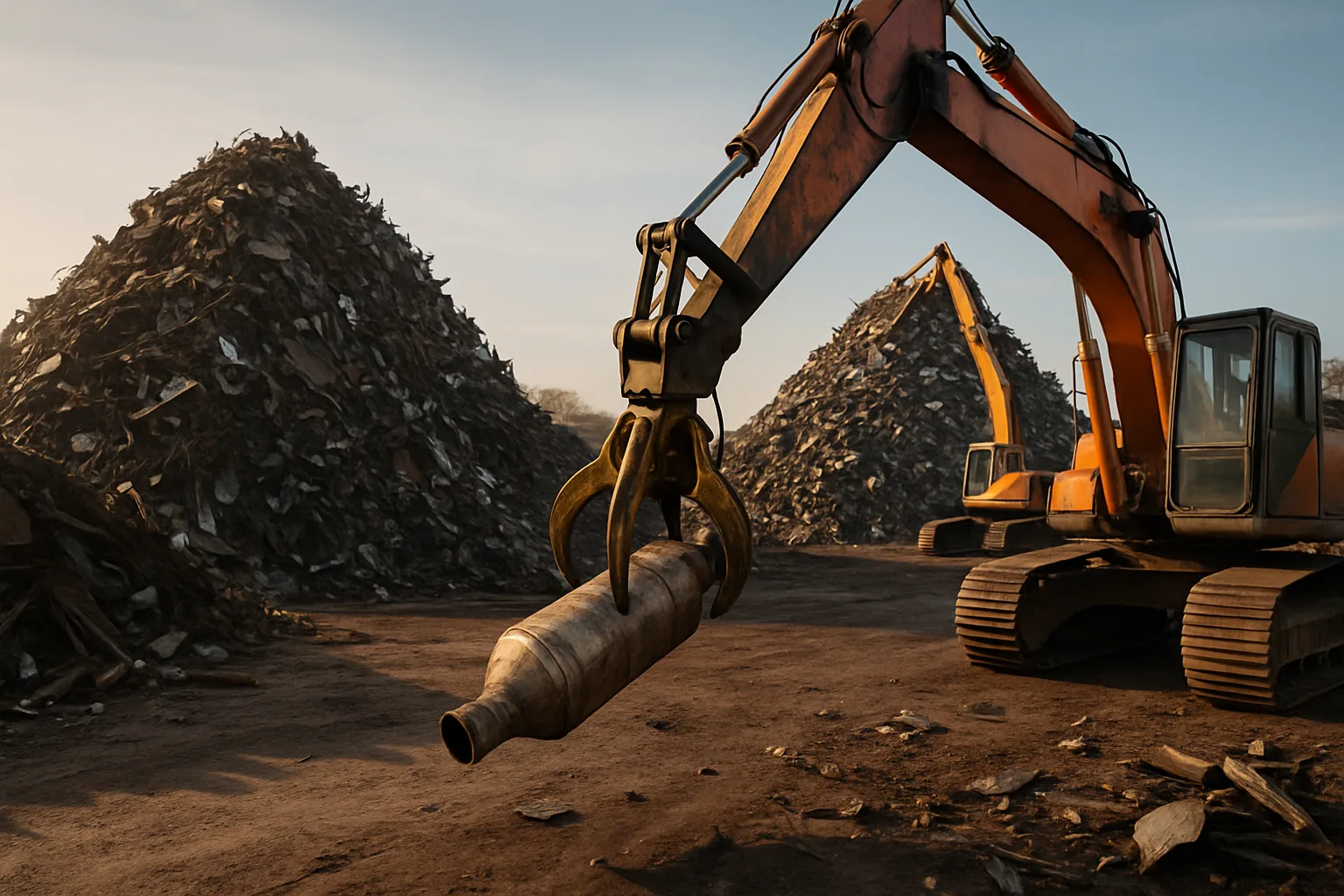
Why Hybrid Catalytic Converters Are Worth More at the Scrap Yard
Most scrap sellers underestimate what's sitting under a hybrid vehicle. A standard gasoline cat gets decent money. A hybrid cat? Often significantly more — and there's a specific reason why. If you're selling converters in Surrey or anywhere else in British Columbia, knowing the difference can change what you walk away with.
Hybrid vehicles carry catalytic converters loaded with higher concentrations of platinum group metals (PGMs) — platinum, palladium, and rhodium. These three metals drive catalytic converter scrap value more than any other factor. And hybrids, by design, need more of them. Here's why that matters to you right now.
How a Hybrid Drivetrain Changes What's Inside the Cat
In a conventional gasoline vehicle, the engine runs constantly. The catalytic converter heats up quickly, reaches operating temperature, and stays there. The chemical conversion process — turning harmful exhaust gases into less harmful ones — runs at a relatively steady rate.
A hybrid engine switches on and off constantly. Every time the engine shuts down and restarts, the catalytic converter goes through a cold-start cycle. Cold starts are the harshest condition a cat faces. The converter doesn't work efficiently until it reaches its light-off temperature, which is typically between 200°C and 300°C. During that cold window, unburned hydrocarbons pass through.
To compensate, manufacturers load hybrid catalytic converters with higher PGM concentrations. More platinum, palladium, and rhodium means the converter reaches its light-off temperature faster, even after repeated cold-start cycles. The result: cleaner emissions from a stop-start engine — and a converter worth more at the scrap yard than most sellers realize.
When you find the best scrap cat prices in Canada, understanding this chemistry is half the battle. The other half is finding a buyer who values it properly.
Catalytic Converter Scrap Value: PGM Content by Vehicle Type
Not all hybrid cats are equal. The scrap catalytic converter price by model varies based on which manufacturer built it, what emissions standards it was engineered to meet, and how large the substrate inside the converter is. That said, hybrids consistently outperform their gasoline-only counterparts when it comes to PGM loading.
Here's a general comparison of what drives value differences across vehicle types:
- Standard gasoline vehicles: Moderate PGM loading. Single or dual converter setups. Value varies widely by make and model.
- Hybrid vehicles (e.g., Toyota Prius, Ford Escape Hybrid, Honda Accord Hybrid): Higher PGM loading per converter due to cold-start cycling demands. Often have additional secondary converters.
- Plug-in hybrids (PHEVs): Can run on electric power for extended periods, meaning even more aggressive cold-start conditions when the gasoline engine does engage. PGM content can be very high.
- Diesel vehicles: Use different catalytic systems (SCR, DPF), less relevant to PGM recovery.
- Full EVs: No catalytic converter. Zero recovery value on this front.
The Toyota Prius is probably the most well-known example in the scrap industry. It's been on the road for decades, it's common in British Columbia, and its converter commands strong prices. But it's not the only one. Any hybrid model from a major manufacturer is worth identifying properly before you sell.
This is exactly why the scrap catalytic converter price by model matters so much. A generic "what's my cat worth" question gets you a generic answer. A specific model lookup gets you real money.
Why Surrey Scrap Sellers Need to Know This Before They Walk Into a Yard
Surrey is one of the most active automotive recycling markets in British Columbia. There are plenty of buyers in the area, and competition for quality material is real. But not every buyer prices hybrid cats correctly — or transparently.
The problem with the old way of selling is simple: you call one buyer, they give you a number, and you have no idea if that number is fair. You don't know the current PGM spot prices. You don't know if the buyer is accounting for the higher precious metal content in your hybrid unit. You just take the offer or walk away.
That's a broken system — especially when the converter under a hybrid SUV might contain meaningfully more palladium and rhodium than what you'd find in a standard sedan cat. For sellers using Surrey scrap metal services, accessing competitive pricing through an auction-based platform gives you actual market data instead of one person's opinion of what your material is worth.
Platforms like the SMASH Recycling auction platform let vetted buyers compete for your inventory. When multiple buyers see the same documented load, the pricing reflects reality — not whoever picked up your call first. That's especially valuable when you're holding high-PGM hybrid converters that deserve proper valuation.
How to Identify and Document a Hybrid Cat Before You Sell
Good documentation means better offers. Buyers need to assess what they're bidding on, and a properly identified hybrid cat — with the vehicle make, model, year, and serial number — gives them the confidence to bid higher. Here's what to do before you list or sell your converters.
- Identify the vehicle source. Know the year, make, and model the converter came from. Hybrid designation matters — a 2019 Toyota Camry Hybrid is not the same as a 2019 Toyota Camry in terms of cat value.
- Record the VIN. VIN lookup tools (SMASH has one built in) can confirm hybrid status and help associate the cat with the correct vehicle record. This eliminates guesswork.
- Photograph the converter. Serial numbers, physical condition, and size all affect pricing. Clear photos give buyers what they need to make confident offers without seeing the material in person.
- Note any secondary converters. Many hybrids have more than one cat in the exhaust system. Don't leave one behind. Both have value.
- Check the substrate condition. Damaged or rattling substrates (indicating a broken honeycomb core) affect recovery yield. Buyers factor this in. Be upfront — transparency builds trust and better long-term relationships.
This process doesn't have to be complicated. It takes a few minutes per unit and pays off in better offers. When you get a fair price for your scrap catalytic converters in Canada, it starts with giving buyers the information they need to price accurately.
Scrap Metal Prices Today and the PGM Market in 2026
PGM prices — particularly palladium and rhodium — have remained volatile through 2026. Rhodium in particular continues to trade at extreme premiums relative to gold, making rhodium-bearing converters among the most valuable scrap material per gram in the recycling stream. Palladium has also held strong, driven by ongoing automotive demand in regions where gasoline and hybrid vehicles dominate.
What does this mean practically? The precious metals inside a hybrid catalytic converter are tied to a live, global commodity market. Scrap metal prices today can shift week to week based on mining output, auto production data, and industrial demand signals. A converter worth a certain amount in May could be worth more or less in July — not because anything changed about the unit itself, but because the metals inside it moved.
This is why selling based on current, competitive bids matters. A static price list from a single buyer doesn't adjust dynamically to the market. An auction with multiple vetted buyers does. When you want to know what your catalytic converter is worth at the scrap yard right now — not last month, not as a general estimate — competition is the only honest answer.
For sellers across British Columbia, platforms like SMASH connect you to buyers who are pricing off current spot prices. That's the difference between leaving money on the table and getting what your material is actually worth in today's market.
If you're ready to stop guessing, read Canadian scrap catalytic converter guides to sharpen your knowledge before your next sale.
Disclaimer: Catalytic converter prices fluctuate based on PGM spot markets and buyer demand. Always check current rates before selling. The information above reflects general market conditions as of July 2026 and is not a guarantee of specific pricing.
Frequently Asked Questions
Q: Why do hybrid catalytic converters contain more precious metals than regular ones?
Hybrid engines cycle on and off repeatedly, creating frequent cold starts. Cold starts are the harshest condition for a catalytic converter, so manufacturers load hybrid cats with higher concentrations of platinum, palladium, and rhodium to maintain efficient emissions conversion. More PGMs means a faster light-off temperature — and a higher scrap value.
Q: What are cat converter prices in Surrey like compared to other parts of British Columbia?
Cat converter prices in Surrey are driven by the same PGM spot markets as everywhere else in British Columbia — the metal inside your converter doesn't change value based on your postal code. What changes is who's buying and how many buyers are competing for your material. Surrey has active buyers, but running competitive bids through a platform like SMASH ensures you're not leaving money on the table with a single-buyer offer.
Q: How do I know what my scrap catalytic converter is worth at a scrap yard?
The honest answer is: you don't, until multiple buyers tell you. A single buyer's quote is one data point, not a market price. Your converter's value depends on the vehicle it came from, its PGM content, the current spot prices for platinum, palladium, and rhodium, and the physical condition of the substrate. Documenting the unit properly and getting competitive bids gives you the most accurate real-world number.
Q: Does the Toyota Prius really command higher cat converter prices than a standard sedan?
Yes, generally. The Prius is one of the most widely recognized high-value cats in the scrap industry because of its elevated PGM loading. Other hybrid models from Honda, Ford, Hyundai, and Lexus also carry premium converters — the Prius just gets the most attention because there are so many of them on the road. Always identify the specific model before selling.
Q: Can I sell hybrid catalytic converters in bulk through an auction platform?
Yes. If you're a recycling yard or dismantler in Surrey or elsewhere in British Columbia processing multiple hybrid units, auction-based platforms like SMASH are built for exactly that. You document your inventory, vetted buyers compete, and you get a market-based price rather than one cold-call quote. It works for single high-value units and full loads alike.
---If you're sitting on hybrid converters and wondering what they're actually worth, stop guessing. The precious metal content is there — you just need buyers who price it accurately. Get a free quote and find the best Canadian scrap cat prices at best-scrap-cat-prices.ca.
Stay sharp on scrap metal market movements and industry news — follow SMASH on LinkedIn for regular updates on PGM markets, platform features, and what's moving in the North American recycling industry.