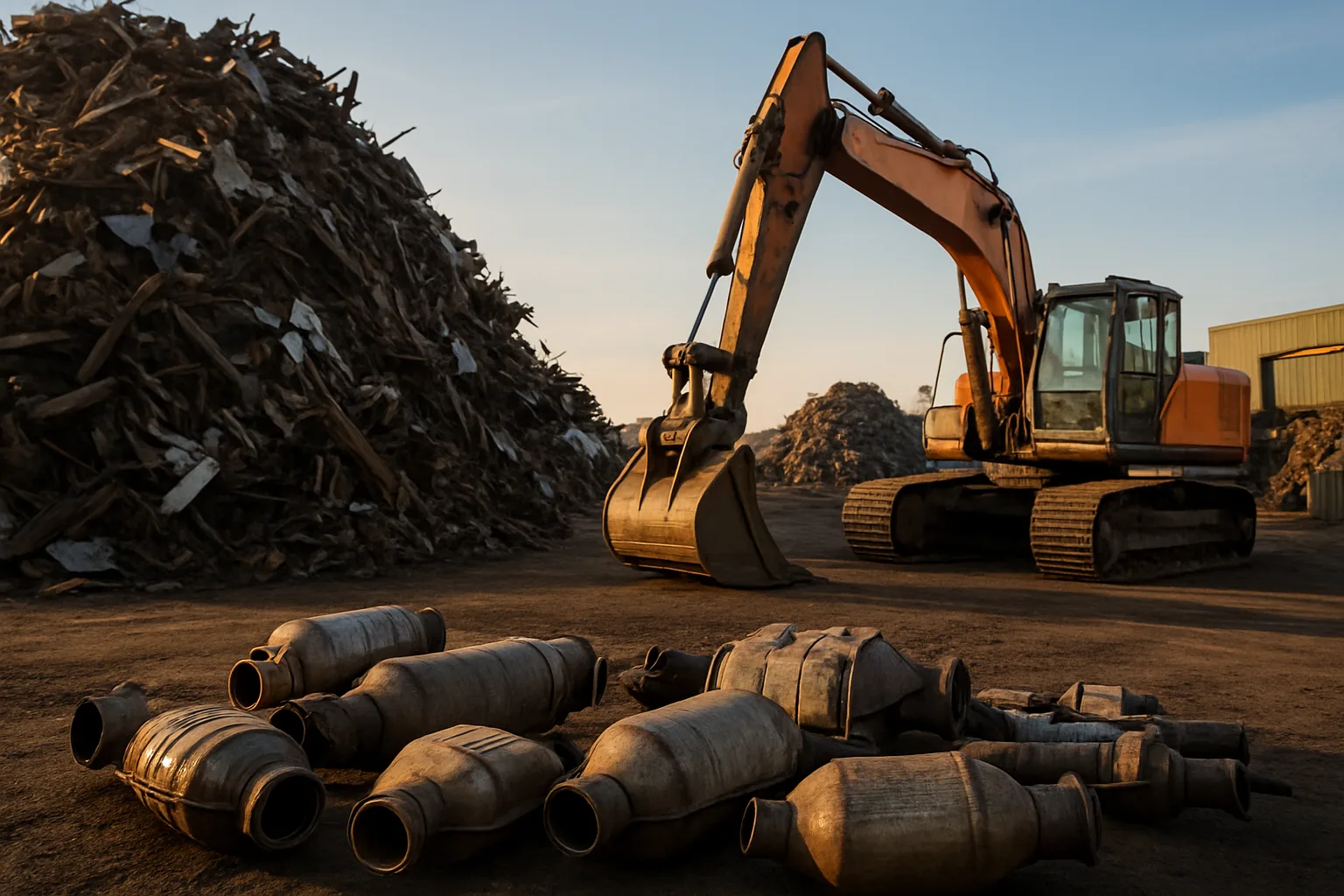
Most people know catalytic converters sit somewhere under a vehicle and have something to do with emissions. Far fewer understand what actually happens after a converter leaves that vehicle — and why the platinum price today has a direct line to what lands in your pocket at the end of that chain. If you're sitting on a pile of spent cats and wondering how the pricing actually works, this is the breakdown you need.
The lifecycle of a catalytic converter spans years, sometimes decades, before it reaches the end of its useful life. But that end point is far from the end of the story. Inside every spent converter is a substrate coated with platinum group metals (PGMs) — platinum, palladium, and rhodium — and those metals don't disappear when the converter stops working. They get recovered, refined, and fed back into the global supply chain. That process is where real value lives, and understanding it helps you make smarter decisions when you're ready to sell.
---Stage One: The Converter in Active Service
A catalytic converter's job is to reduce harmful emissions from internal combustion engines. Inside the ceramic or metalite substrate, a washcoat loaded with PGMs acts as a catalyst — breaking down carbon monoxide, hydrocarbons, and nitrogen oxides into less harmful compounds. A typical passenger vehicle converter runs hot, cycles through thousands of thermal expansions and contractions, and processes enormous volumes of exhaust gas over its service life.
Most converters in passenger vehicles last anywhere from 100,000 to 150,000 kilometers under normal operating conditions. Once contamination, physical damage, or catalyst depletion catches up to them, converter efficiency drops and the part gets flagged — either through a check engine light or a shop inspection. That's when the clock starts on the scrap side of the equation.
- Passenger vehicle cats: typically ceramic substrate, lighter weight
- Diesel and heavy equipment cats: often larger, denser, sometimes higher PGM loading
- Pre-2000 OEM cats: tend to have higher platinum content relative to palladium
- Aftermarket/direct-fit cats: lower PGM content, lower scrap value
Not all converters are equal. A Ford F-250 diesel cat and a compact car aftermarket replacement are not in the same pricing universe. Knowing what you have matters before you accept any offer.
---Stage Two: Removal, Sorting, and the Catalytic Converter Scrap Price Lookup
Once a converter comes off a vehicle — whether at a body shop, a garage, or a salvage operation — it enters the secondary market. This is where the path branches depending on who's handling the material and how informed they are about current pricing.
Sorting is the first real skill in this chain. Experienced yards and recyclers learn to identify converter types by make, model, serial number, and visual cues. A catalytic converter scrap price lookup tool cross-references those identifiers against known assay data to estimate PGM content and assign a scrap value. That number moves with the markets — platinum, palladium, and rhodium prices fluctuate daily based on commodity trading, industrial demand, and supply conditions from the dominant mining regions in South Africa and Russia.
This is where sellers often leave money on the table. A single buyer offering a flat rate per unit may not be reflecting current PGM spot values. A platform that brings multiple catalytic converter buyers in New Brunswick and across Canada into a competitive auction changes that dynamic entirely.
- Identify the converter by serial number or visual reference
- Cross-check against a current price guide or lookup tool
- Document weight, condition, and quantity accurately
- Photograph the substrate and serial markings before listing
Platforms like SMASH are built for exactly this step. Sellers who document their loads properly — photos, serial tracking, accurate weights — give buyers the confidence to bid higher. Vague listings attract cautious bids. Documented listings attract competitive ones. That difference shows up in your payout.
---Stage Three: The Auction and What the Platinum Price Today Has to Do With It
Here's where it gets real. The value of your spent converters is directly tied to PGM commodity prices — and the platinum price today is one of the key inputs every serious buyer is watching when they place a bid on your load.
Platinum trades on global commodity markets. Its price in USD or CAD per troy ounce shifts based on industrial demand (particularly automotive and hydrogen fuel cell sectors), mining output, investor flows, and macroeconomic conditions. When platinum prices climb, the per-unit value of cats with high platinum loading climbs with them. When prices drop, margins compress. Buyers price that risk into their bids — which is why the timing of your sale matters, and why getting multiple buyers competing for your load matters even more.
A scrap metal auction platform like SMASH creates the conditions for real price discovery. Instead of one buyer quoting you a number over the phone — a number that already builds in their margin and their risk buffer — you get vetted buyers competing against each other. That competition reflects the actual market. It doesn't guarantee a specific outcome, but more buyers bidding means better alignment with what your material is actually worth at the current PGM prices.
If you're in Fredericton or anywhere in New Brunswick and you've been selling cats to whoever shows up first, you're likely not seeing the full market value of your material. The market is bigger than your local contact list.
---Stage Four: Processing and Precious Metal Recovery
After the auction, the converters move to a processor — typically a smelter or a specialized refinery with the equipment to recover PGMs at scale. This is a multi-step industrial process:
- Decanning: The metal shell is cut away to expose the ceramic or metalite substrate.
- Crushing and milling: The substrate is ground into powder to expose the PGM-loaded washcoat.
- Sampling and assay: A representative sample is analyzed to determine the exact PGM concentration by weight.
- Smelting: The powdered material is processed at high temperatures to extract the metals into a collector alloy.
- Refining: Chemical separation processes isolate platinum, palladium, and rhodium to high-purity standards.
- Return to market: Refined metals are sold back into the supply chain — used in new automotive catalysts, electronics, jewelry, and industrial applications.
This is a closed-loop system. The PGMs in a converter from a vehicle sold in Fredericton ten years ago may well end up in a new vehicle rolling off an assembly line today. That's real circular economy — not just a marketing phrase. And the recycling yards and sellers who feed that chain are a critical part of keeping it running.
To find the best scrap cat prices in Canada, you need to understand where your material sits in this chain — and make sure you're connected to buyers who operate at that processing level, not just middlemen working two steps removed from the actual refinery.
---What This Means for Catalytic Converter Sellers in Fredericton
If you're running a shop, a salvage yard, or accumulating converters in the Fredericton area, the lifecycle model above has direct implications for how you should be selling. You are not dealing in scrap parts. You are handling industrial inputs that feed a precision refining operation. Price accordingly.
That starts with documentation. Know your serial numbers. Photograph your substrate condition. Weigh your loads. A buyer bidding blind on an undocumented lot is going to price in risk — and that risk comes out of your payout. The more clearly you can represent what you're selling, the more confidently buyers bid.
It also means choosing the right channel. Getting a fair price for your scrap catalytic converters in Canada isn't about finding whoever pays the most cash out of a van. It's about reaching buyers who are actually connected to the refining market and who bid based on current PGM values. A catalytic converter buyer in Fredericton working through a competitive auction platform has every incentive to come in strong — because if they don't, someone else will.
Our Fredericton scrap metal services are built around exactly that model — connecting local sellers to a vetted network that bids on what your material is actually worth.
SMASH was built for this. The platform handles inventory documentation, VIN and serial tracking, photo uploads, and connects your load to vetted buyers across North America. No subscription fees. No guessing. Just competition doing what competition does. Visit smashrecycling.ca to understand how the auction side of this works.
For a broader look at how Canadian sellers navigate this market, read Canadian scrap catalytic converter guides that break down pricing, documentation, and what separates a strong payout from a weak one.
---Frequently Asked Questions
Q: How does the platinum price today affect what I get paid for my scrap catalytic converters?
Platinum is one of three precious metals (alongside palladium and rhodium) recovered from spent converters. Buyers set their bids based on current PGM spot prices and estimated metal content in your material. When the platinum price rises, well-documented loads with high platinum content command stronger bids. Checking current commodity prices before you sell gives you a useful benchmark for evaluating offers.
Q: How do I find a reliable catalytic converter buyer in Fredericton or New Brunswick?
The best approach is to use a platform that connects you to multiple vetted buyers rather than relying on a single local contact. A competitive auction format means buyers are working against each other — not against you. Platforms like SMASH bring that competition to your load regardless of where you're located in Canada, including Fredericton and the rest of New Brunswick.
Q: What's the difference between an OEM catalytic converter and an aftermarket one for scrap value?
OEM (original equipment manufacturer) converters typically carry significantly higher PGM loadings than aftermarket replacements. An aftermarket direct-fit cat may look similar but contain a fraction of the platinum, palladium, or rhodium. For scrap purposes, OEM units — especially from trucks, SUVs, and older vehicles — tend to yield better prices. Serial number lookup tools can help identify what you actually have before you sell.
Q: Do I need to decann my converters before selling them as scrap?
Generally no. Most processors prefer to receive converters whole, as decanning in the field can lead to substrate damage, contamination, and inaccurate weight or assay readings. Sell the full unit, document it properly with photos and serial numbers, and let the processor handle the decanning and sampling stages.
Q: How do I do a catalytic converter scrap price lookup before I sell?
A catalytic converter scrap price lookup typically requires the serial number or part number stamped on the converter body. That number cross-references against a database of known assay results and current PGM prices to produce an estimated scrap value. Most serious buyers and platforms offer some form of this tool. Having that number ready before you engage any buyer puts you in a much stronger negotiating position.
---The path from a spent converter to refined platinum is longer and more structured than most sellers realize — and every step of that chain has a price signal attached to it. If you're ready to stop guessing and start selling into a market that actually competes for your material, find the best scrap cat prices in Canada and get a free quote at best-scrap-cat-prices.ca.
Disclaimer: Catalytic converter scrap prices fluctuate based on daily PGM commodity markets. Always check current rates before finalizing any sale.
Stay current on scrap metal market movements and industry updates — follow SMASH on LinkedIn for ongoing insights relevant to Canadian recyclers and cat sellers.