Emissions regulations don't just clean up tailpipes — they drive serious demand for platinum group metals, and that demand hits your wallet when you're sitting on a pile of scrap cats. If you're watching the palladium price today and wondering why it moves the way it does, regulations are a big part of the answer. Understanding this connection helps you time your sells smarter and get a better price for your cores.
Why Emissions Standards Are the Real PGM Market Maker
Every time a government tightens vehicle emissions limits, automakers respond the same way — they load more platinum, palladium, and rhodium into catalytic converters. That's not a coincidence. Those three metals are the active chemistry that turns toxic exhaust into less harmful gases. Stricter limits mean more metal per converter. More metal per converter means higher demand across the supply chain.
In 2026, that pressure is real. Euro 7 standards rolled out in Europe. China's 6b regulations are fully enforced. North American regulators have pushed Tier 3 compliance deeper into light-duty fleets. Each of these frameworks adds loading requirements. The result is a global market where platinum group metals — PGMs — remain structurally in demand even when economic cycles soften.
- Palladium: Dominant in gasoline-engine converters. High demand, tight supply from mining.
- Platinum: Heavier use in diesel converters. Also used as a palladium substitute in some applications.
- Rhodium: The smallest volumes, but the most volatile pricing. Handles NOx conversion.
When you sell a scrap catalytic converter, you're selling access to these metals. The price you get reflects — or should reflect — what refiners can actually recover from your unit. That's why where you sell matters as much as when you sell.
How the Palladium Price Today Connects to Your Scrap Cat Value
The palladium price today is a live number. It moves daily based on futures markets, mining output, geopolitical risk, and automotive production forecasts. When palladium trades high, converters from gasoline vehicles carry more value. When it dips, the spread between what a buyer offers and what you should get tends to widen — unless you have competing bids forcing honest pricing.
Here's the problem with the old way of selling. You call one buyer. They quote you a number. You don't know if that number reflects today's actual palladium price or last week's. You don't know their margin. You have no leverage. That single call is where a lot of Canadian scrap yards quietly leave money behind.
Platforms like SMASH change that dynamic. When multiple vetted buyers compete on the same load, the offer has to track real market conditions. One buyer hiding behind stale pricing gets outbid fast. That's how competition reveals the market — and it's why sellers consistently find better price discovery through an auction format than a single cold call.
Disclaimer: PGM prices fluctuate daily. Always check current rates before finalizing any transaction. The information here reflects general market dynamics, not a price guarantee.
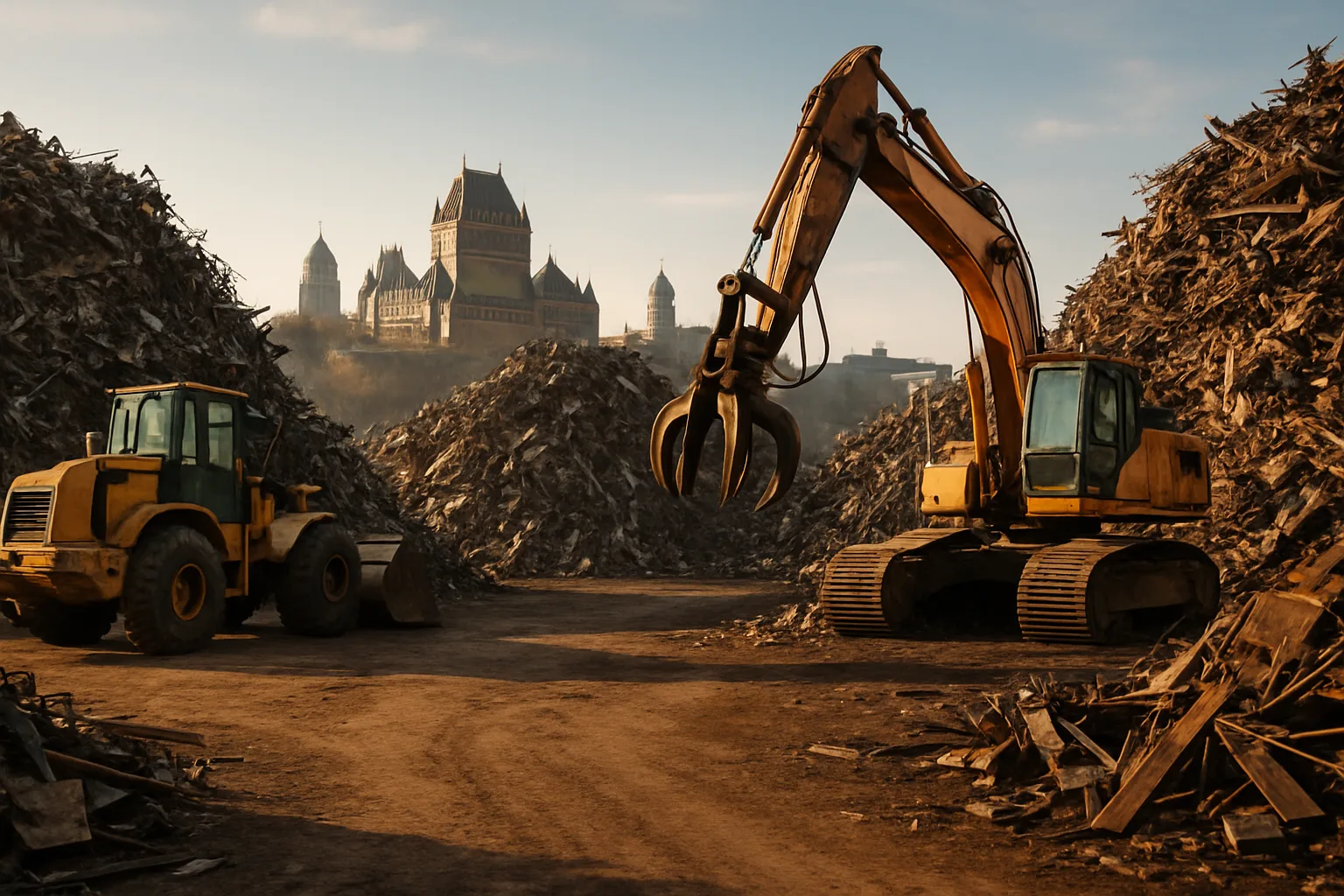
Scrap Catalytic Converter Prices in Quebec City — What Local Sellers Need to Know
If you're running a yard in Quebec City or moving cores out of Quebec, you're operating in a market with its own logistics realities. Distance to major refiners, cross-province shipping costs, and local buyer networks all affect your net return. A buyer quoting great gross numbers might still leave you short once freight and handling eat into the margin.
Quebec City scrap yards dealing in converters need buyers who understand Canadian geography and pricing. That means buyers who account for GST/HST on transactions correctly, who handle BOLs and packing lists without hand-holding, and who move fast enough that you're not sitting on inventory while the palladium price shifts underneath you. You can explore Quebec City scrap metal services to connect with buyers who actually know this market.
The smarter move for Quebec City sellers is to stop treating buyer relationships as fixed. Diversify. Test the market. Use platforms that bring multiple buyers to your load, not just the one guy who's been calling you for years. That relationship might be comfortable, but comfort isn't the same as competitive pricing.
A few things Quebec sellers should track specifically:
- Current palladium and rhodium spot prices (check daily — these move)
- Shipping costs from Quebec to Ontario or U.S.-based refiners
- Whether your buyer is offering assay-based pricing or flat-rate per unit
- Turnaround time from pickup to payment
5 Ways Emissions Regulations Drive Scrap Cat Demand — And What It Means for Sellers
Understanding the regulation-to-demand chain isn't just interesting — it's practical. When you know what's driving prices, you can make better decisions about when to hold inventory and when to move it. Here's the chain broken down.
- Stricter emissions limits → higher PGM loading per unit. Newer vehicles carry more precious metal per converter than older ones. A 2024 or 2025 model year cat often pays more than an equivalent unit from a decade earlier. Know your vehicles.
- Broader fleet compliance → more converters in circulation. As older non-compliant vehicles get retired and replaced, the volume of spent converters hitting the scrap market grows. More volume is good for buyers and sellers both — but only if the market stays competitive.
- Global adoption of tighter standards → sustained PGM demand. This isn't a one-country story. Euro 7, China 6b, and North American Tier 3 all run parallel. Mining supply hasn't kept pace. That structural tightness supports prices even through economic slow patches.
- EV adoption → partial offset, but slower than forecasts. Electric vehicles don't use catalytic converters. As EV penetration grows, the long-term demand for PGMs from new vehicles will shift. But the transition is slower than early forecasts suggested. The internal combustion fleet is massive and turns over slowly. Scrap cat demand stays strong through the mid-2020s and likely beyond.
- Tighter theft enforcement → cleaner market data. Converter theft has driven tighter tracking requirements across several U.S. states and Canadian provinces. That enforcement creates better documentation trails — which is actually good for legitimate sellers. Documented inventory with serial tracking commands more buyer confidence and cleaner transactions.
Scrap Metal Inventory Management: Why It Changes What You Get Paid
Sloppy inventory management costs you money. Not in a vague, theoretical way — in a direct, per-unit way. When you can't tell a buyer exactly what you have — year, make, model, serial number, photos — they price in risk. Their risk becomes your discount.
Good scrap metal inventory management means knowing your stock before the buyer calls, not after. It means having photos, VIN lookups where applicable, and serial tracking so each unit is identifiable. When a buyer reviews a documented load versus a mystery pile, the documented load wins on price every time. Buyers bid higher when their uncertainty is lower.
SMASH includes inventory tools, VIN lookup, serial tracking, and photo documentation built into the platform. It's not a nice-to-have — it's what makes your auction listing credible to vetted buyers across North America. If you want to find the best scrap cat prices in Canada, the process starts before the auction, with how well you've documented what you're selling.
For Quebec yards specifically, good documentation also smooths the GST/HST handling that SMASH manages on Canadian transactions. Auto-invoicing, proper tax treatment, and clean paper trails aren't glamorous, but they matter when you're running volume and need the accounting to hold up.
How to Get Better Scrap Catalytic Converter Prices — Practical Steps for Canadian Sellers
You don't need to be an expert on PGM futures markets to sell smarter. You need a few practical habits that shift leverage back toward you.
First, don't accept the first number you hear. Whether you're in Quebec City, Calgary, or anywhere in between, one call equals one opinion. That opinion is not the market. The market is what happens when multiple buyers compete on the same load. That's the difference between guessing your price and discovering it.
Second, document everything. Phones are free. Taking photos of every unit before it moves costs you nothing and protects you if any dispute arises. It also gives buyers the information they need to bid confidently and competitively. If you want to get a fair price for your scrap catalytic converters in Canada, documentation is the unglamorous step that actually moves the number.
Third, use platforms that bring buyers to you, not the other way around. Cold calling buyers on their terms is a losing position. Listing your load on SMASH and letting vetted buyers compete is a different game entirely. You can also read Canadian scrap catalytic converter guides to stay current on what's moving markets and what buyers are actually paying.
No subscription fees. No commitment to a single buyer. Just competition — which is the only thing that reliably reveals what your scrap is actually worth. Compare scrap metal bids from Canadian buyers and see what multiple offers actually look like on your inventory.
If you're moving cats out of Quebec, Calgary, or anywhere across Canada, the smartest first step is a free quote. Head to best-scrap-cat-prices.ca and find out what your converters are worth in a market that's actually competing for your load — not just offering you whatever the phone guy quoted this morning.
Frequently Asked Questions
Q: Why does the palladium price today matter for my scrap catalytic converter?
Palladium is one of the three primary precious metals extracted from scrap catalytic converters, alongside platinum and rhodium. The palladium price today directly affects what buyers are willing to pay for gasoline-engine converters. When palladium trades higher, your scrap cats are worth more — which is exactly why getting multiple bids matters instead of accepting the first offer you receive.
Q: Are scrap catalytic converter prices in Quebec City different from other parts of Canada?
They can be. Logistics costs, local buyer networks, and shipping distances to refiners all affect your net return in Quebec City and across Quebec. Gross price quotes don't always reflect what lands in your account after freight and handling. Using a platform with multiple competing buyers helps normalize those differences and keeps the pricing honest.
Q: How do emissions regulations affect long-term demand for scrap cats?
Stricter emissions standards require automakers to put more platinum, palladium, and rhodium into each catalytic converter. That increases the scrap value of newer units and sustains long-term PGM demand even as electric vehicle adoption grows. The global internal combustion fleet is large and slow to turn over, which keeps scrap cat demand solid through at least the late 2020s.
Q: Does documenting my inventory actually change what buyers pay?
Yes — significantly. Buyers price in uncertainty. An undocumented load forces them to estimate what's in it, and they estimate conservatively. A documented load with photos, serial numbers, and VIN data lets buyers bid with confidence, which typically results in stronger offers. Tools like those built into SMASH are designed specifically to close that gap.
Q: Is there a fee to list my scrap catalytic converters on SMASH?
No subscription fees. SMASH operates on a model where they only win when you win — there's no upfront cost to list your inventory and get competing bids from vetted buyers across North America, including Canadian buyers familiar with GST/HST handling and cross-province logistics.
Stay current on scrap metal market conditions and PGM pricing — follow SMASH on LinkedIn for industry updates and insights from across the North American recycling market.