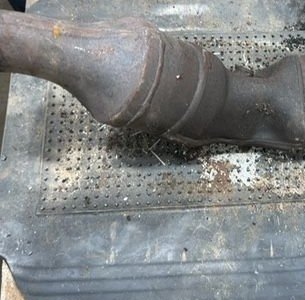
The price you get for your scrap catalytic converter this morning could be meaningfully different from what you get this afternoon. That's not an exaggeration — it's just how precious metal markets work. If you're sitting on a pile of cats and waiting for "the right time," you need to understand what's actually driving the number before you make your move.
Catalytic converter scrap value isn't pulled from thin air. It's tied directly to live commodity markets — specifically platinum, palladium, and rhodium. Those three metals sit inside every converter, and their spot prices shift constantly based on global supply and demand signals. Knowing how that system works puts you in a stronger position when it's time to sell.
What Actually Drives Catalytic Converter Scrap Value Day to Day
Three precious metals determine what your cats are worth: platinum, palladium, and rhodium. Each converter holds a different ratio of these metals depending on the vehicle make, model, engine type, and year of manufacture. A diesel application leans heavily on platinum. Gasoline-engine converters from the last decade skew toward palladium. Rhodium — the rarest of the three — appears in smaller quantities but punches far above its weight in value.
Palladium price today is one of the most-watched signals in the scrap cat market. Palladium peaked dramatically a few years back, collapsed, then stabilized into a trading range that still creates significant week-to-week swings. When automotive production data comes out, when South African mining output changes, or when EV adoption headlines hit the wire — palladium moves. And when palladium moves, your cat payouts move with it.
- Platinum: Primarily driven by diesel demand, industrial applications, and South African mining output.
- Palladium: Closely tied to gasoline vehicle production and Russian/South African supply chains.
- Rhodium: Thin market, extreme volatility. Small shifts in industrial demand create outsized price swings.
The buyer on the other end of your phone call knows these prices in real time. The question is whether you do too.
Why Your Reg Number Matters More Than You Think
One of the most common mistakes sellers make is treating all cats like a commodity pile. A buyer asks how many you have, you say forty, and they quote you a flat per-unit price. You feel okay about it. But here's the problem: those forty units likely span a dozen different precious metal profiles, and a flat rate almost always favors the buyer.
When you're trying to figure out how much is my catalytic converter worth scrap by reg, you're asking the right question. Your vehicle's registration — or more precisely, the make, model, year, and engine code — determines which substrate is inside your converter and what the assay is expected to yield. Two cats that look identical from the outside can have very different values once you know what's inside. A large-body domestic truck cat is not the same as a compact import cat, even if they're the same physical size.
Platforms like SMASH use VIN lookup and serial tracking tools that let you document each unit properly before it ever goes to auction. That documentation gives buyers real confidence in what they're bidding on — and more confident buyers tend to bid more competitively. If you want to find the best scrap cat prices in Canada, inventory accuracy is where the process starts.
How Edmonton and Alberta Sellers Get Caught Chasing Bad Quotes
Here's a pattern that plays out constantly in Alberta. A yard operator in Edmonton gets a call from a buyer. The buyer quotes based on a palladium price from three days ago, or based on a conservative assumption about what your cats contain. You accept because you don't have a competing offer and the buyer sounds confident. The load ships. You get the settlement. The number is lower than expected. Sound familiar?
This isn't the buyer being dishonest — it's just the natural outcome of a one-buyer negotiation with information asymmetry. The buyer knows the current palladium price today. They know the assay history on that cat type. You may not. That gap is where margin gets lost.
Edmonton scrap yards dealing in high volumes of cats — everything from domestic pickup trucks to imported SUVs — have more leverage than they often realize. Alberta generates significant converter volume from oil field service vehicles, fleet operators, and auto wreckers. That's a meaningful pool of inventory. The question is whether you're getting paid based on real competition or based on what one buyer decided your load is worth.
If you're looking for Edmonton scrap metal services that actually put your inventory in front of multiple buyers, the process starts with how you list and document what you have.
Comparing Scrap Cat Markets Across Canada: Edmonton vs. Other Regions
Sellers outside major urban centres often assume they're stuck with whatever their nearest buyer offers. That assumption costs money. Whether you're in Edmonton, selling in smaller Alberta communities, or looking at catalytic converter scrap price in Winnipeg, the fundamentals of the commodity you're holding don't change by geography — palladium is palladium regardless of where the converter sits.
What does change by region is buyer access. A seller in a market with fewer local buyers has traditionally had less negotiating power. That's the structural problem that online auction platforms solve. When you find the best price for your scrap in Canada through a vetted buyer network rather than a local single-buyer relationship, geography stops being a disadvantage.
The ability to sell scrap metal online has fundamentally changed the leverage equation for Canadian sellers outside major metros. Your cats don't need a local buyer — they need the right buyer. Those aren't always the same thing.
- Edmonton: High volume from fleet and oil sector vehicles. Strong inventory diversity.
- Winnipeg and Prairie markets: Solid domestic truck cat volume. Historically underserved by competitive buyer networks.
- Southern Ontario: Dense buyer market, but not always better pricing — competition isn't guaranteed just because buyers are nearby.
- Rural Alberta: High-value loads from heavy equipment converters. Often sold at a discount due to limited local buyer access.
The Right Way to Document and List Cats Before You Sell
If you want to sell catalytic converters in Alberta at the best possible return, documentation isn't optional — it's the foundation. Buyers bidding blind on poorly described inventory will discount aggressively to protect themselves. Buyers looking at clear photos, accurate counts, and properly identified units by vehicle application will bid with more confidence and less margin built in for uncertainty.
Here's a practical approach to prepping your cat inventory for a competitive sale:
- Photograph every unit — both the inlet and outlet end, plus any visible serial numbers or markings.
- Record vehicle source data — year, make, model, and engine size where known.
- Separate by type — domestic vs. import, diesel vs. gasoline, OEM vs. aftermarket. Aftermarket cats are worth significantly less and should be clearly identified.
- Count and weigh — total unit count and approximate weight help buyers scope the load accurately.
- Note condition — cracked substrates, physical damage, and missing end caps all affect value.
SMASH provides tools specifically designed for this process — inventory management, photo documentation, and serial tracking built into the listing workflow. That structured documentation is what allows multiple vetted buyers to bid confidently, which is the mechanism that drives better price discovery. More buyers means more competition. More competition means the market sets your price, not one buyer's risk tolerance.
To get a fair price for your scrap catalytic converters in Canada, the process matters as much as the platform.
Understanding Market Timing Without Playing a Guessing Game
Sellers often ask whether they should wait for palladium to recover before moving their inventory. It's a reasonable question, but it's also a trap. Holding physical inventory in anticipation of a commodity move ties up floor space, working capital, and your time. You're not running a precious metals fund — you're running a yard.
A more practical approach: understand the direction of the market without betting on a specific price point. Watch the weekly trend on palladium and rhodium. If both are trending upward over a two-to-three week window, it may be worth holding a load a bit longer. If they're in a sustained downtrend, moving inventory sooner is usually the better call. But trying to time the exact peak is a losing game even for full-time commodities traders.
What you can control is your buyer access. Running your load through a competitive auction format means you're getting the market price — whatever it is on that day — rather than one buyer's interpretation of it. That's the real advantage. Not timing the market perfectly, but making sure you're not leaving margin on the table when you do sell.
If you want to read Canadian scrap catalytic converter guides that break down market dynamics in more detail, that resource is worth bookmarking for ongoing reference.
Whether your yard is in Edmonton, across Alberta, or anywhere else in Canada — the fundamentals are the same. Document accurately, put your inventory in front of real competition, and let the market tell you what your cats are worth. That's how you stop guessing and start getting paid. If you're ready to stop leaving money on the table, get a free quote at best-scrap-cat-prices.ca and find out exactly where your inventory stands today.
Disclaimer: Catalytic converter scrap prices fluctuate daily based on live precious metal spot prices. Always check current rates before making a sell decision. The values referenced in this article reflect general market dynamics and do not constitute a specific price offer or guarantee.
Frequently Asked Questions
Q: What determines the catalytic converter scrap value of my specific unit?
The value is determined by the precious metal content — primarily platinum, palladium, and rhodium — inside the substrate. The make, model, year, and engine type of the source vehicle tell you which metals are present and in what approximate ratio. Aftermarket converters contain significantly less precious metal than OEM units and are priced accordingly.
Q: How does palladium price today affect what I get paid for my cats?
Palladium is the dominant precious metal in most gasoline-engine catalytic converters, which make up the majority of scrap cat volume in Canada. When palladium spot price rises, payouts on gasoline-application cats rise with it. When it drops, payouts follow. Buyers adjust their offers based on real-time commodity data, which is why the same load can yield different numbers on different days.
Q: Is it worth selling catalytic converters in Edmonton through an online platform rather than locally?
For most Edmonton sellers with meaningful inventory volume, yes. A local single-buyer arrangement limits your negotiating leverage. An online auction with multiple vetted buyers creates competition for your load, which typically results in better price discovery. Geography matters less than buyer access when you're dealing in a globally-priced commodity like precious metals.
Q: How do I find out how much my catalytic converter is worth scrap by reg number?
Your vehicle's registration data — specifically the year, make, model, and engine code — maps to a known converter type and approximate precious metal profile. Platforms and buyers with strong inventory databases can look up expected assay values by vehicle application. The more accurately you document what you have, the more confident buyers can be in their bids, which directly affects what you get paid.
Q: Does catalytic converter scrap price differ much between Edmonton and Winnipeg?
The underlying commodity price is the same everywhere in Canada — precious metals trade globally. What varies by region is buyer access and competition. A seller in a market with fewer active buyers may receive less competitive offers simply because there's less pressure on any one buyer to bid higher. Online auction platforms reduce that regional disadvantage by connecting sellers across Canada to a vetted national buyer network.
Follow SMASH on LinkedIn for ongoing industry updates, precious metal market insights, and scrap sector news across North America.
```