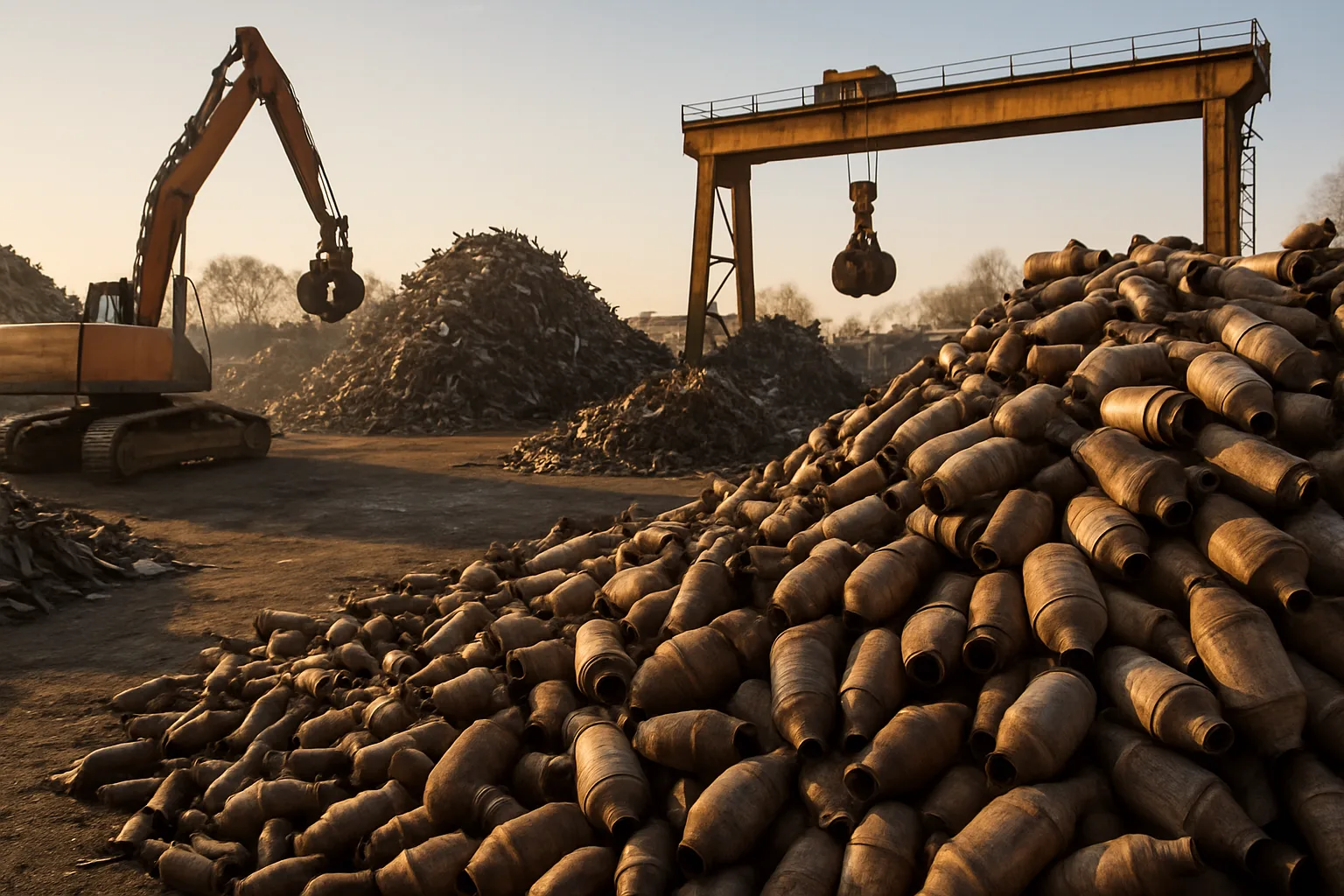
What Actually Happens to Your Catalytic Converter After You Sell It
Most scrap cat sellers in Burnaby focus on one thing: getting paid. That makes sense. But understanding what happens after you hand over your converters — the assaying, the smelting, the price discovery — gives you real leverage when you negotiate. It explains why two buyers quote you completely different numbers for the same unit. And it tells you exactly why platforms like SMASH Recycling — where verified buyers bid on your metal exist in the first place.
This guide breaks down the full process, from the moment a cat leaves your hands to the moment precious metals get extracted and priced. If you want to find the best scrap cat prices in Canada, you need to understand what drives those numbers.
How Catalytic Converter Assaying Works — and Why It Matters for Your Price
Assaying is the process of determining exactly how much platinum, palladium, and rhodium a catalytic converter contains. These three platinum group metals — commonly called PGMs — are what give a scrap cat its value. The ceramic or metallic substrate inside the converter holds them. Nothing else in the housing is worth much.
Here's the process a professional recycler runs:
- Decanning: The outer steel shell gets cut away to expose the ceramic monolith or metallic foil substrate inside.
- Crushing and sampling: The substrate is crushed into a fine powder. A representative sample gets pulled from the batch — typically following strict sampling protocols to ensure accuracy.
- Fire assay or ICP analysis: The sample gets analyzed using either fire assay (a high-temperature fusion technique) or Inductively Coupled Plasma (ICP) spectrometry. Both methods quantify exact PGM content in grams per tonne.
- Settlement calculation: The lab returns a certificate showing platinum, palladium, and rhodium concentrations. The buyer applies current spot prices and their processing margin to arrive at a payable value.
This is why a visual inspection at a scrapyard tells you almost nothing reliable. Two converters that look identical can carry very different PGM loads. A high-grade unit from a diesel truck might carry three to four times the recoverable value of a standard passenger car converter. Until that material goes through proper assay, no one — not even an experienced buyer — knows the exact number.
In British Columbia, most small scrapyards are not running their own assays. They're pricing visually or using database lookups based on OEM part numbers. That's not necessarily dishonest — it's just an estimate. The gap between that estimate and the actual assay result is where sellers either win or lose money.
The Smelting Process: Turning Substrate Into Recoverable Metal
Once converters are purchased and consolidated into large lots, they move to a smelter. This is where the actual PGM recovery happens. It's a capital-intensive, industrial process — most smelters handling scrap catalytic converters operate at massive scale, processing tonnes of material per run.
The smelting process works in stages:
- Crushing and homogenization: Crushed substrate from hundreds or thousands of converters gets blended together. Homogenization ensures the sample pulled for assay represents the full lot accurately.
- Smelting: Material enters a high-temperature electric arc furnace or rotary kiln. At temperatures above 1,400°C, the ceramic substrate breaks down. PGMs dissolve into a molten collector metal — typically copper or iron.
- Slag separation: The molten collector metal, now carrying the PGMs, separates from the slag (the waste ceramic material). The slag gets discarded or used as aggregate fill.
- Refining: The collector alloy goes through hydrometallurgical refining — a series of chemical leaching and precipitation steps — to isolate and purify each PGM. The result is refined platinum, palladium, and rhodium ready for industrial use.
- Final settlement: The refiner issues a final assay certificate confirming recovered weights. Settlement to the seller is calculated from this number, minus agreed processing fees and refining charges.
The entire smelting and refining cycle can take anywhere from a few weeks to several months depending on the facility, lot size, and contract terms. Sellers who understand this timeline know why "spot price today" quotes from a local buyer always involve a processing margin — the buyer is carrying both the price risk and the time lag between purchase and final metal recovery.
Why the Buyer's Pricing Model Affects What You Get Paid in Burnaby
This is where catalytic converter recycling in Burnaby gets practical. Every buyer you approach is running a version of the same math: estimated PGM content × current spot price × recovery rate − processing costs − their margin = what they offer you.
The problem is that most of those variables are invisible to you. You don't see their recovery rate assumptions. You don't see their processing fee structure. You definitely don't see their margin. You just see a number on a whiteboard or a text message.
That's exactly why competition matters. When multiple vetted buyers are looking at the same lot — knowing they'll lose the deal if they low-ball it — their pricing gets tighter. They bring their real numbers, not their opening-offer numbers. Platforms built around catalytic converter recycling that use a competitive auction format change this dynamic fundamentally. Instead of one buyer setting the price, the market sets the price.
If you're in Burnaby or anywhere else in British Columbia and you've only ever called one buyer, you have no idea whether your number is fair. That's not an accusation — it's just math. One data point is not a price. It's a guess, and it's their guess, not yours.
How to Sell Catalytic Converters Online and Actually Get the Right Price
The shift toward being able to sell catalytic converters online has changed the game for yards and individual sellers alike. Instead of being limited to whoever picks up the phone in your area, you can reach vetted buyers across North America who specialize in PGM recovery and compete aggressively for quality loads.
Here's what a strong online selling process looks like:
- Document your inventory properly. Photos, serial numbers, and part numbers help buyers price accurately. Better documentation means more confident bids — and more confident bids trend higher.
- Use VIN lookups and serial tracking where possible. Identifying units precisely lets buyers apply accurate database values rather than conservative visual estimates.
- Let buyers compete. Submit your lot to a platform that puts multiple buyers in the room. A single quote from a single buyer is a starting point, not a final answer.
- Understand settlement terms before you sell. Know whether you're getting a quick-pay estimate or an assay-back settlement. Both are legitimate — they carry different risk profiles and payout timelines.
SMASH gives sellers in Burnaby and across Canada a structured way to do exactly this. Your documented inventory goes in front of multiple verified buyers. They bid. You see real competition. That's how price discovery is supposed to work — not a single call to a single contact who knows you have no alternative.
To get a fair price for your scrap catalytic converters in Canada, the process starts with knowing what you have and making sure more than one serious buyer sees it.
What Sellers in Burnaby Should Know Before Their Next Load Ships
A few practical points worth knowing before you move your next lot of scrap cats:
- Grade your material before you price it. High-grade diesel units, mid-grade passenger car converters, and aftermarket replacement cats all carry different PGM loads. Mixing them without noting the breakdown costs you money.
- Decan only if the buyer requests it. Some buyers want whole units. Others prefer decanned substrate. Know what your buyer wants before you process the material — doing extra work they don't need doesn't add value.
- Moisture matters. Wet substrate loses weight through drying before assay. Shipping wet material means you're paying freight on water. Dry your substrate if you're shipping decanned material.
- Watch PGM spot prices. Palladium in particular has historically shown significant volatility. Timing your sale around spot price movements can meaningfully affect your outcome — especially on larger lots.
- Ask about returns and assay protocols. Professional buyers should be able to tell you exactly which smelter or refinery they use and what the assay and settlement timeline looks like. Vague answers on this point are a red flag.
For more practical guides on maximizing your returns, read Canadian scrap catalytic converter guides covering pricing, grading, and selling strategy across different provinces and market conditions.
Disclaimer: Catalytic converter scrap prices fluctuate based on PGM spot prices, lot composition, and market conditions. Always verify current rates before selling. No prices quoted in this article should be taken as current market offers.
Frequently Asked Questions
Q: How long does catalytic converter assaying take before I get paid?
It depends on the settlement type. Quick-pay or advance settlements happen fast — sometimes same day or within a few days — but they're based on estimated PGM content, not confirmed assay results. Full assay-back settlements take longer, typically two to six weeks after your material reaches the smelter, but they reflect actual recovered metal. Understand which type you're agreeing to before you ship.
Q: Can I sell catalytic converters online from Burnaby?
Yes. Selling catalytic converters online is straightforward when you use a platform with verified buyers. You document your inventory — photos, serial numbers, part numbers — and buyers across North America can submit competitive bids. Geography matters less than documentation quality. A well-documented lot from Burnaby can attract the same buyer pool as a lot from any major U.S. city.
Q: Why do two buyers give me completely different prices for the same converter?
Because they're making different assumptions about PGM content, using different spot price references, and applying different margin structures. Without a formal assay, every price is an estimate. That's why competitive bidding matters — it surfaces the range and lets the market, not a single buyer's model, determine value.
Q: Does it matter if my cats are whole units or decanned substrate?
It matters for shipping cost and buyer preference, not intrinsic value. The PGMs are in the substrate either way. Decanned substrate is denser and cheaper to ship per unit of value. Whole units are easier to handle and some buyers prefer them for their own processing lines. Ask your buyer before you process — decanning takes labor and equipment, and it only makes sense if the buyer requires it.
Q: How does SMASH help me get better catalytic converter prices in British Columbia?
SMASH connects sellers — including those in Burnaby and across British Columbia — with vetted buyers who compete in an auction format. Instead of relying on a single quote from one local contact, your documented lot goes in front of multiple serious buyers. Competition between buyers drives pricing closer to actual market value. There are no subscription fees — SMASH earns only when a deal closes.
---If you're sitting on a load of scrap cats and you've only talked to one buyer, you're leaving real money on the table. Understanding how assaying and smelting work gives you the confidence to ask the right questions — and the competitive process at SMASH Recycling — where verified buyers bid on your metal gives you the leverage to get real answers. When you're ready to move your next lot, find the best scrap cat prices in Canada by letting the market work for you.
Stay current on PGM markets and scrap metal industry news by following SMASH on LinkedIn — practical updates for serious sellers, no filler.